

U.S. President Donald Trump has pared back the National Security Council since returning to the White House and, according to CNN, has relied on a small circle of close advisers, running the campaign against Iran without a structured decision-making process.
“There’s no doubt there were missed opportunities,” former administration officials said. They argue the approach weakened coordination with the military and Gulf allies and led to an underestimation of Tehran’s response and the threat to the Strait of Hormuz. “This [NSC now] seems to be exclusively top-down decision-making and fear of bringing bad news to the president,” one former official said.
Gallery
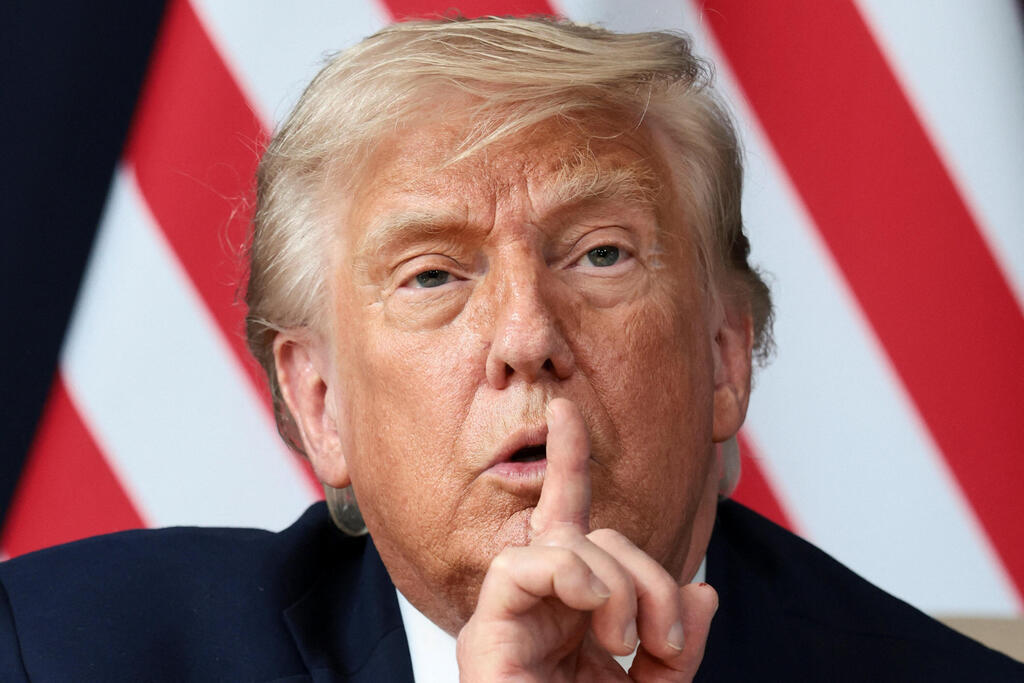
US President Donald Trump has pared back the National Security Council since returning to the White House
(Photo: REUTERS/Evelyn Hockstein)
When the U.S. Congress established the National Security Council after World War II, the goal was to prevent a president from effectively waging a global war alone, without a structured system to centralize information, present options and warn of consequences. Eight decades later, according to a CNN investigation, the body designed to be one of the most important decision-making hubs in the White House has been hollowed out precisely as President Trump was managing a confrontation with Iran.
Since returning to the White House, Trump has cut the NSC staff from about 200 employees to less than half that number. Three sources estimated the cuts were driven at least in part by pressure from Laura Loomer, a far-right activist and conspiracy theorist who has claimed the council is filled with people insufficiently loyal to the president.
Instead of relying on a broad system of experts from across the federal government, Trump relied during deliberations on Iran on a narrow circle of close advisers, including Secretary of State and National Security Adviser Marco Rubio and special envoy Steve Witkoff. According to CNN, this made planning more difficult: military planners were excluded from prewar discussions and then suddenly required to reposition U.S. assets to the Middle East.
Four former senior officials from Trump’s second term said the hollowing out of the NSC altered U.S. foreign policy at critical moments in the Iran and Ukraine conflicts, aligning it with the president’s impulsive management style.

Laura Loomer, a far-right activist and conspiracy theorist who has claimed the council is filled with people insufficiently loyal to the president
(Photo: David Dee Delgado / GETTY IMAGES NORTH AMERICA / Getty Images via AFP)
A smaller council also has advantages, two former officials acknowledged, saying it allows leaders to bypass bureaucracy and act more quickly in a crisis. However, in the Iran case, officials said a broader council could have better coordinated with Gulf allies, prepared for an Iranian response and more deeply assessed the possibility that Tehran would try to close the Strait of Hormuz.
That possibility was not theoretical. About 20% of global oil flows through the strait and Iran did indeed shut it in an attempt to extract concessions from the United States in negotiations to end the war. According to CNN, the administration underestimated Tehran’s willingness to act there even though the U.S. military had rehearsed such a scenario for years. Trump announced Sunday night a framework agreement between the United States and Iran ahead of a formal signing scheduled for Friday in Switzerland, but officials say the path to that deal exposed the cost of overly centralized decision-making in the White House.
Trump himself said in March that the “biggest surprise” of the war was the intensity of Iran’s missile attacks on Gulf Arab states. According to the report, interagency coordination gaps were visible early on, when the Pentagon prioritized strikes on Iranian military targets instead of allocating resources to deter a closure of the strait.
A source familiar with the discussions said that although the United States had significant military assets in the Middle East before the strike on Iran, they were not suited to preventing a closure of the Strait of Hormuz. “After bombs started falling, there is nothing else the carrier strike groups could have provided that would have changed the calculus on closure,” the source said.

'After bombs started falling, there is nothing else the carrier strike groups could have provided that would have changed the calculus on closure'
(Photo: REUTERS/Stringer)
The White House rejected the claims. White House spokesperson Anna Kelly told CNN that the National Security Council is “more effective and responsive to the President’s priorities than ever before.”
She called the suggestion that relevant agencies — including the Department of War, State Department, Energy Department, Treasury Department, the CIA and others — were not involved in planning Operation Epic Fury and its aftermath “beyond laughable.”
Kelly added that Trump regularly meets with his national security team, hears a range of views and ultimately makes the decisions himself. “Through a detailed planning process, the Department of War was prepared for any potential action taken by the Iranian regime,” she said. “Any suggestion otherwise is laughable.”
However, according to sources briefed on early planning meetings before the strike, while representatives from the Energy and Treasury departments attended some sessions, agency analyses and forecasts — once a central part of decision-making — were pushed to the margins.
Trump: "And if I don't like it (deal), we'll go back to shooting at them (Iran)'


One example involved energy markets. Sriprakash Kothar, whom Trump appointed as assistant Treasury secretary for economic policy, told Senate staff he was unaware of any Treasury officials conducting energy market analysis before the military operation against Iran, according to Democratic Senator Ron Wyden. Treasury Secretary Scott Bessent responded that the department “relies on hundreds of career economic experts” but did not specify whether they provided war-related advice.
“The cabinet departments can do a lot of the heavy lifting,” a former administration official said, “but the distilling of complicated information at scale is what the NSC thrives at.”
The NSC, established in 1947, was created precisely for this purpose: to bring together representatives from the Pentagon, intelligence agencies, the State Department, the Treasury Department and other bodies to provide the president with a broad situational picture and oversee policy implementation. Historian John Gans, a former Pentagon speechwriter and author of White House Warriors, told CNN the council was created because of fears after World War II of a president “running a global war by the seat of his pants.”
In the Iran context as well, the NSC once played a central role. It was deeply involved in shaping and implementing the 2015 nuclear deal between the Obama administration and Iran. Robert Malley, one of the senior negotiators, also served as a senior NSC official. Nate Swanson, then a State Department official working on Iran, said the council held extensive discussions and helped shape the agreement.
A contrasting example came during the first Gulf War. Before President George H.W. Bush authorized military action following Saddam Hussein’s invasion of Kuwait in 1990, the NSC held a series of structured meetings. Representatives from the Pentagon, intelligence community, State Department and Treasury reported to national security adviser Brent Scowcroft on coalition-building efforts, sanctions on Iraq and stabilization of oil markets.
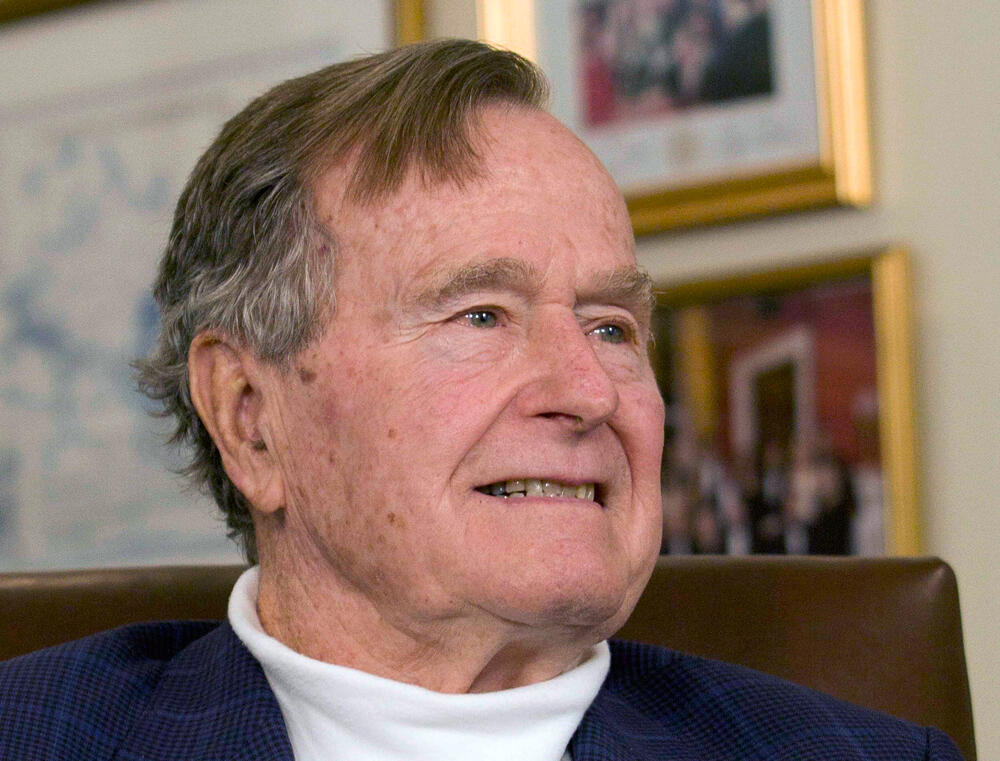
President George H.W. Bush
(Photo: Reuters)
Even that model was not perfect or consistent. Gans, who called the first Gulf War NSC process the “gold standard,” said Bush eventually stopped convening formal council meetings as the war progressed, underscoring how even presidents who rely on structured processes tend to narrow decision-making over time.
At the same time, a broader model has drawbacks. A former official said a larger council can handle more issues in parallel but may become a bureaucracy that believes it has authority over decisions reserved for the president. Another Trump administration official said “this is not a traditional administration,” and that the president and senior aides set policy from the top down. He said the approach is “way more efficient.”
According to Gans, Trump is not the first president to grow frustrated with the national security bureaucracy. Since World War II, he said, every U.S. president has at some point been annoyed with the system — whether due to bureaucratic slowdown or media leaks — and has narrowed his inner circle of advisers.
The administration 'abandoned the process altogether'
Since its founding, the NSC has periodically frustrated the Pentagon, where officials have sometimes viewed it as encroaching on military planning authority. According to CNN, this tension also existed in the Biden administration, but few presidents have weakened the council as significantly as Trump. By comparison, the Biden NSC had more than 300 staff members, while Trump’s reportedly fell from about 200 at the start of his term to less than half that number.
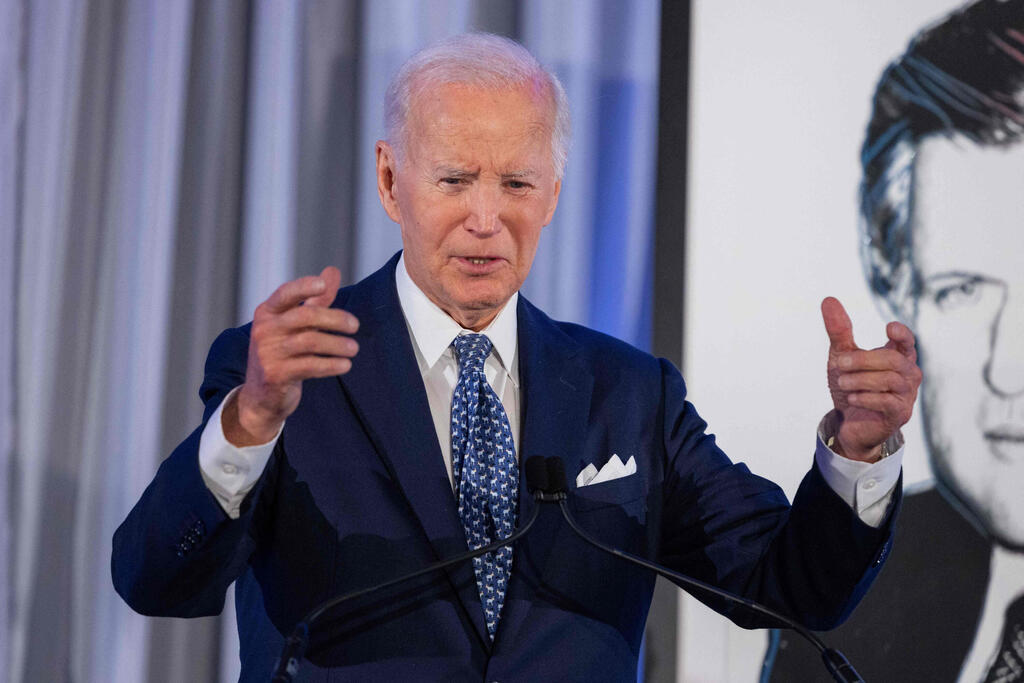
The Biden NSC had more than 300 staffers
(Photo: Scott Eisen / GETTY IMAGES NORTH AMERICA / AFP)
A former Trump administration official said the lack of bureaucracy helped the president quickly formulate a plan to end the Gaza war. In other cases, however, bureaucracy continued to interfere: early in Trump’s second term, nearly every NSC appointment had to pass through Sergio Gor, then head of White House personnel. While the Gaza war continued, only a handful of staff worked in the NSC Middle East desk because Gor blocked several new hires.
At the same time, not all planning processes disappeared, but some shifted to other power centers within the White House. The Homeland Security Council, created after the September 11 attacks and focused on threats to the U.S. homeland and led by Stephen Miller, coordinated planning for a “post-Maduro Venezuela.”
In Ukraine policy as well, the NSC was increasingly sidelined. In July, Secretary of War Pete Hegseth halted weapons shipments to Ukraine without informing the White House. It was the second time that year he had paused U.S. arms deliveries to Kyiv, surprising senior national security officials.
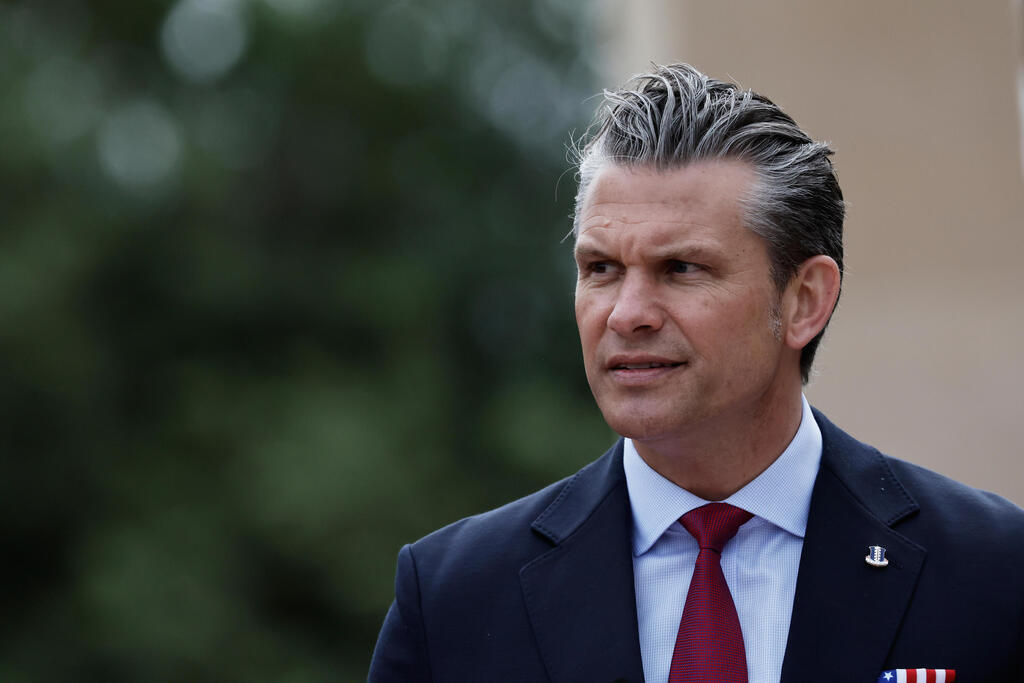
US Secretary War Pete Hegseth halted weapons shipments to Ukraine without informing the White House
(Photo: AP Photo/Jeremias Gonzalez)
When Trump was asked in a cabinet meeting who authorized the pause, he replied: “I don’t know, why don’t you tell me?” A former official said “It’s kind of a miracle we haven’t seen more” public examples like that of the NSC being blindsided by big national security decisions.
Nate Swanson, who served as an Iran adviser on the NSC under Trump’s first administration and later under Biden, said the first Trump term included intense, structured deliberations on Iran. In the second term, he said, the administration appears to have “abandoned the process altogether.”
Swanson himself was removed from a State Department negotiating team early in Trump’s second term after Laura Loomer described him as an “Obama holdover.” He said the NSC today resembles a system of top-down decision-making in which there is fear of bringing the president bad news.