

Over the past several months, I've had the opportunity to meet Sergei Loznitsa in Israel couple of times. I can't recall another filmmaker — and the Ukrainian director is among the most prominent working today — who has visited Israel so frequently. Last November, he came to once again lead a master class at Tel Aviv University's Steve Tisch School of Film and Television and appear at the Arava International Film Festival. A few weeks ago, he returned to present a new short film at Docaviv.
Now, he is the guest of honor at the 43rd Jerusalem Film Festival, which opened last Thursday with its traditional ceremony at Sultan's Pool, where Loznitsa received the festival's lifetime achievement award. He is also serving as president of the jury for this year's Israeli competition.
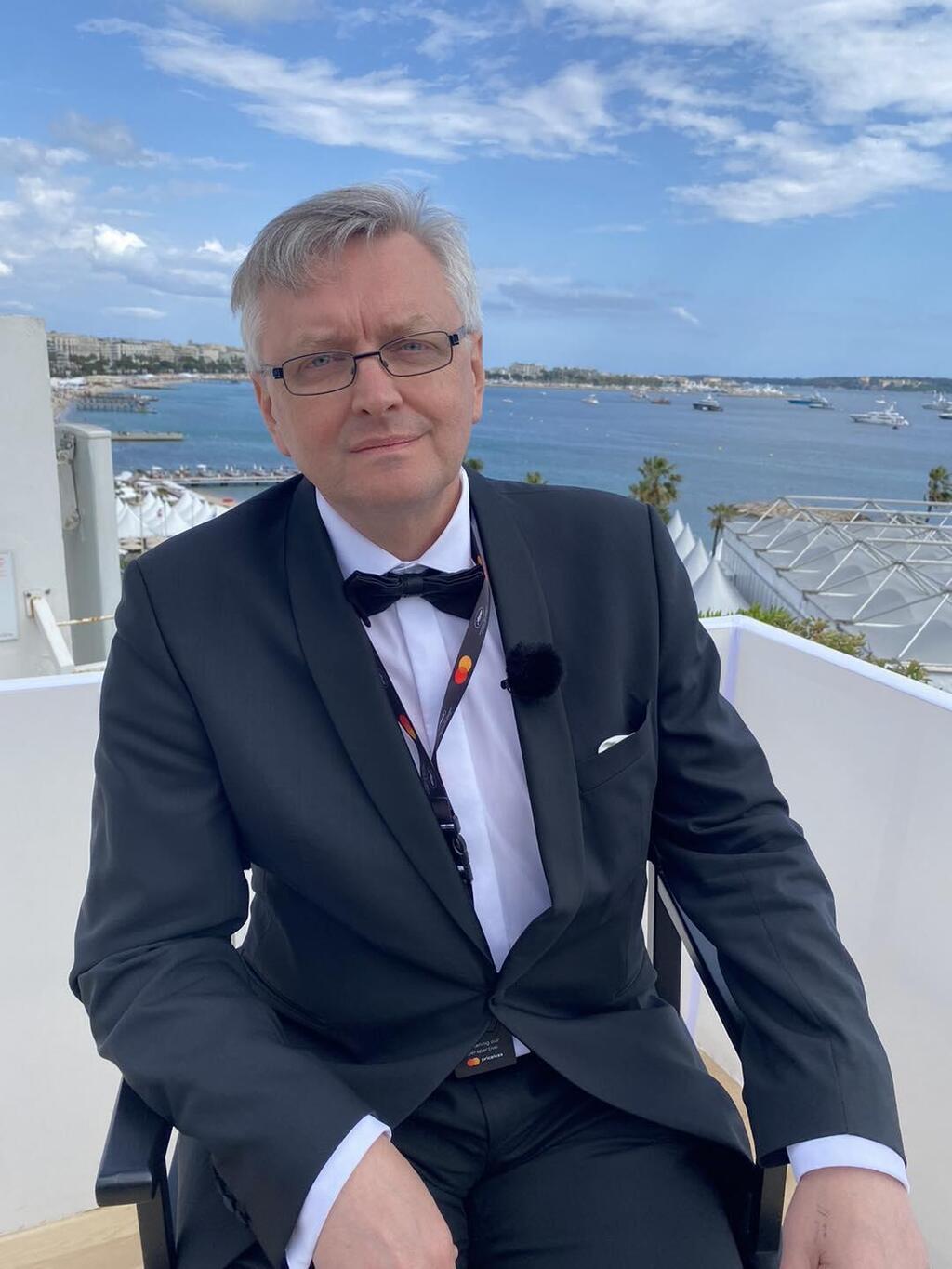
Beyond the welcome frequency of his visits, Loznitsa's decision to come to Israel at a time when many artists are boycotting the country is itself a statement of his belief in culture's ability to transcend political borders. Over the years, he has become known not only for his films but also for his independent views. Following Russia's invasion of Ukraine, he voiced unequivocal support for his country's struggle while opposing a blanket boycott of Russian artists who had also spoken out against Vladimir Putin's regime. That position led to his expulsion from the Ukrainian Film Academy. In his view, responsibility is personal rather than national, and artists should be judged by their actions, not the passport they carry.
"I've always believed that conversation is better than silence," the 61-year-old Loznitsa says in a Zoom interview with ynet before arriving for the festival. "Communication is always better than aggression or any other alternative."
One reason he came to Israel, he says, was his desire to meet filmmakers, engage with audiences and continue teaching.
"I enjoy teaching very much and there are outstanding students at Tel Aviv University. I'm coming with great joy and also to support my friends, Israeli filmmakers."
Loznitsa's opposition to cultural boycotts stems not only from politics but also from personal experience.
"The whole idea of a cultural boycott is very alien to me," he says. "Fighting culture is one of the most futile things you can do. It's like fighting the wind, the rain or the sun."
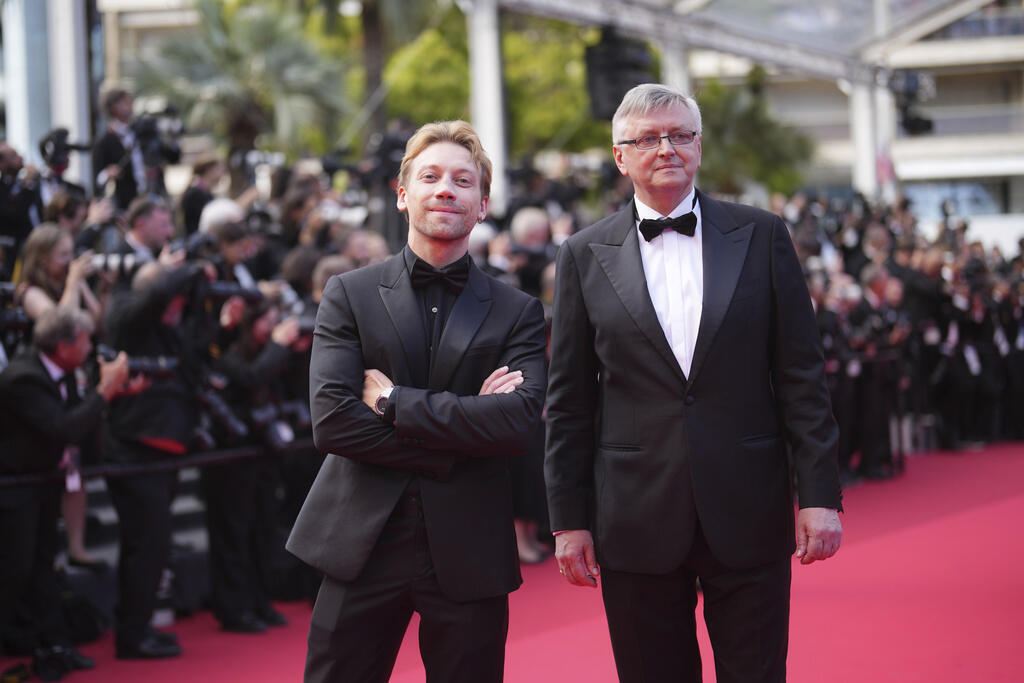
Sergei Loznitsa (right). 'I've always believed that conversation is better than silence'
(Photo: Lewis Joly/Invision/AP)
He notes that during World War II, Shakespeare stopped being performed in Germany while Wagner disappeared from British concert halls, yet no one succeeded in erasing their work.
"Culture is a very easy target. You can decide not to read a certain book or not to screen a certain film, but what do you really achieve?"
His memories of the Soviet Union reinforce that view.
"I remember very well a reality in which books and entire groups of writers were banned. James Joyce's Ulysses wasn't published in our country until 1991. We ended up with a gap of nearly a century between us and books that had long been part of humanity's cultural heritage. But you can't erase culture. These works already exist. In that sense, a cultural boycott is an attempt to fight the past."
Over more than two decades, Loznitsa has established himself as one of Europe's leading filmmakers. His fiction features, including My Joy, In the Fog and Donbass, explore moral collapse and political violence. His acclaimed recent film Two Prosecutors, whose young idealistic protagonist is crushed under Stalin's purge regime, was recently screened in Israel.
Much of Loznitsa's contribution to cinema, however, lies in documentary filmmaking. Films such as Babi Yar. Context (2021), which recounts the massacre of Jews at the Kyiv ravine in September 1941, and The Natural History of Destruction (2022), inspired by W.G. Sebald's book and built from World War II archival footage, use rare archival material to reexamine how history is written, erased and at times distorted. Unlike filmmakers who use archival footage merely to illustrate a preconceived argument, Loznitsa turns the images themselves into the arena in which memory is contested.
That approach is directly connected to the way he makes films. He says he repeatedly returns to archival footage because he wants to restore history to the public.
"I grew up with a version of history that was essentially propaganda. Only after the collapse of the Soviet Union did we begin to understand what had really happened. I see my work as an attempt to return history to the public. The first thing I want to do is simply show what took place. I don't want to judge individuals, societies or groups. I want to present events as they happened and allow viewers to form their own opinions. Of course I have my own perspective, but I don't state it explicitly. It's present in the films in a subtle way, through stylistic choices and the way I construct them. I want to raise questions for discussion, questions that don't have clear answers."
The conversation then turns to cinema's ability to help societies confront national trauma — such as the Oct. 7 attack — and broader questions of responsibility, themes that run through both his fiction and documentary work.
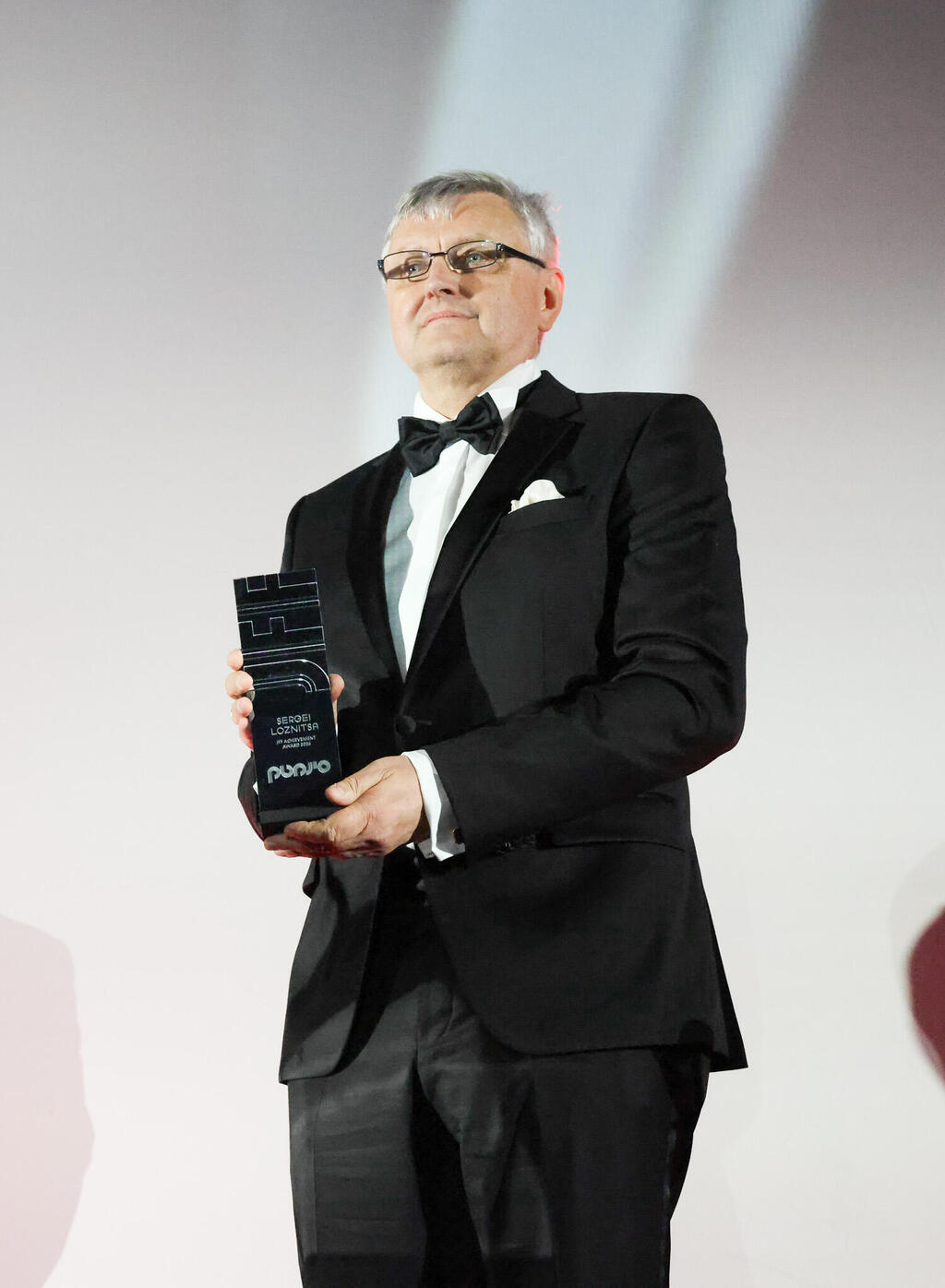
Sergey Loznitsa at the opening event of the Jerusalem Film Festival
(Photo: Sivan Farage)
"It's not just cinema, but art in general. Art works through empathy," he says. "It allows us to experience something and understand a reality we didn't know."
One of the greatest compliments he has received, he says, came from viewers who told him they were unable to speak for hours after watching his films.
"A film should shake you. It should confront you with questions you've been trying to avoid."
That, he says, is also why the shared experience of watching films matters.
"We all sit together in a dark theater. Each of us is alone in front of the screen, but at the same time we're part of a community. It's a community of solitude. That's a very powerful energy. That's why I'm sorry that more and more people watch films at home. In my view, cinema should be experienced at the same time, in the same place, together with other people. Only then is it possible to have a conversation afterward, to share thoughts and emotions. But ultimately, that's true not only of cinema. All art can help us understand ourselves and the world a little better. And if we understand a little more, perhaps we'll avoid some of our mistakes and find the right door to walk through."
When asked whether there are Israeli filmmakers who have particularly impressed him, he smiles and declines to name names.
"There are many, and I wouldn't want to mention one and forget someone else. But Israeli cinema has a very strong tradition and I'm curious to see the films competing this year."
Toward the end of the interview, I ask whether, in a world where cinema itself has increasingly become a political battleground, he still believes filmmaking has meaning. Can cinema change the way people experience the world?
The question leads him to Albert Camus' The Plague. He recalls the conversation between Dr. Rieux and Tarrou, who asks whether there is any point in continuing to fight the epidemic when everyone will eventually die.
"My answer is similar," Loznitsa says. "I don't have time to ask whether what I'm doing has meaning. I simply have to make films. Everything we do gains meaning precisely because we're doing it now. This is the time to act, not to sink into doubt."