

Last week, Israel and the United States jointly launched a war against Iran. On the operational level, the two militaries are closely synchronized, carrying out coordinated airstrikes against institutions of the Islamic Republic’s regime. These strikes produced significant results on the ground in the first days of the campaign, including the assassination of Supreme Leader Ayatollah Ali Khamenei.
Politically as well, Prime Minister Benjamin Netanyahu and U.S. President Donald Trump have largely aligned their messaging. Yet when it comes to media coverage, a significant gap is evident between the two sides of the Atlantic.
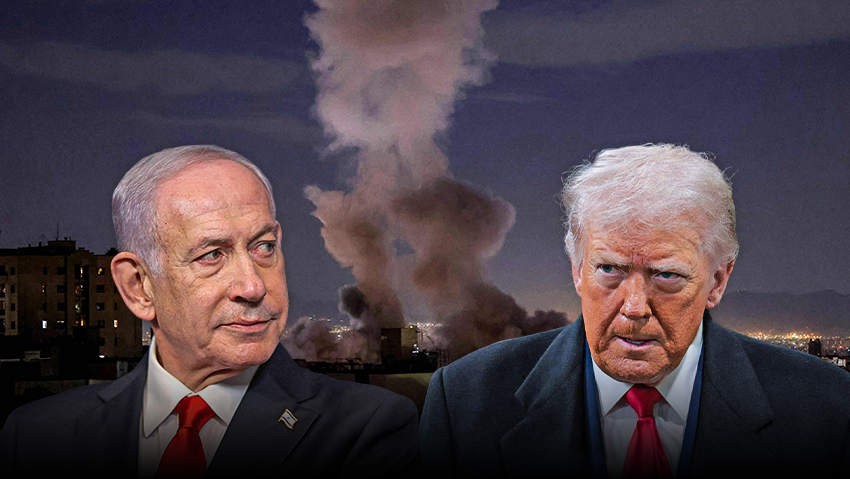
While most Israeli journalists have fallen in line with the war effort, political and military commentators in the United States have sharply criticized the administration’s policy and questioned the move itself, as well as the feasibility of achieving its objectives, which appear to have shifted repeatedly from day to day and remain unclear.
From an Israeli perspective, shaped by a current sense of existential threat, criticism from American media may appear detached from reality at best, or hostile and even antisemitic at worst — a perception similar to that adopted by many Israelis during the information battle surrounding the war in Gaza. But the truth is more complex. Netanyahu and Trump may be coordinated — as are their generals — yet the American public views the military initiative very differently. What may be seen in Israel as a justified war of necessity is widely perceived in the United States as unnecessary and avoidable.
Public opinion polls in the U.S. indicate broad opposition to the war, ranging between 60% and 75%, across both the political right and left. This is understandable given that Americans, from Florida to Alaska, do not feel directly threatened by Iran and are not living under missile fire.
The decision to go to war has prompted warnings from commentators who see it as another reckless and dangerous adventure by Trump — one that does not serve the interests of ordinary Americans but instead flatters the president’s sense of superiority. Some commentators suggest the war may also help him deflect from domestic problems: voter disappointment with his economic policies, complaints about the rising cost of living, and his supposed entanglement in the Epstein affair.
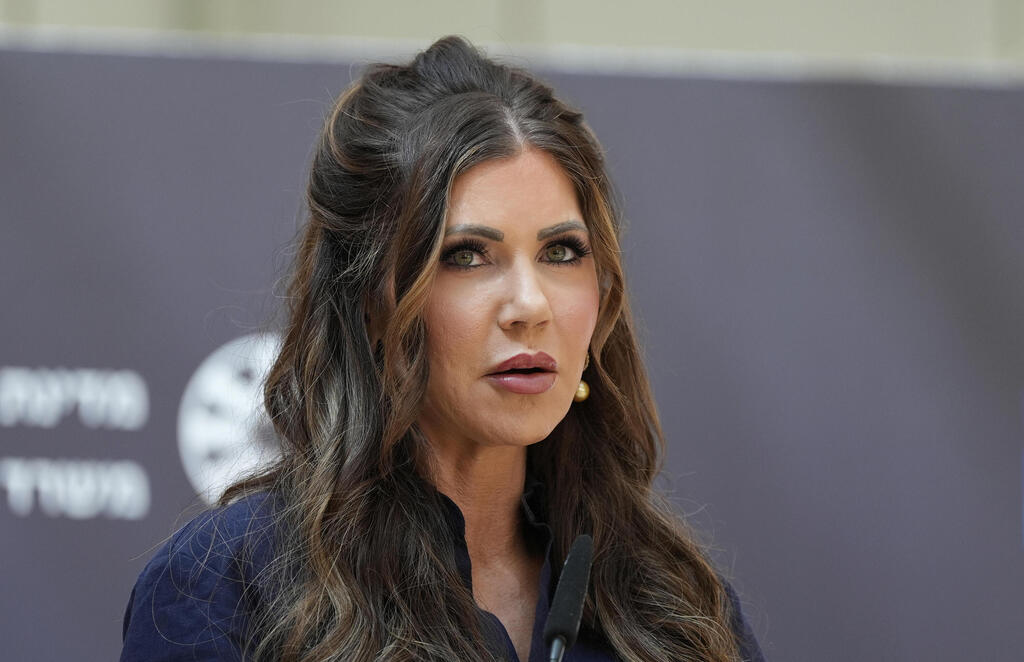
Kristi Noem was fired due to mismanagement of the country's immigration authorities
(Photo: Alex Brandon, Pool/AP)
These dynamics also shape coverage of the war through the isolationist lens of the “America First” approach that Trump has championed. Alongside reporting from Israel, Iran and Gulf states, the media spotlight repeatedly returns to the war’s implications for the American public, which tends to consume domestic news above all else. It is therefore no surprise that last weekend — at the height of fighting in the Middle East — major headlines instead focused on the dismissal of Homeland Security Secretary Kristi Noem amid criticism of the country’s immigration authorities.
Just as Israeli audiences and media rarely dwell on tensions between the United States and China, the American public and media interpret the war through their own daily reality — one very different from Israel’s. For Americans, the concerns include the economic burden of funding the war, rising fuel prices, uncertainty over the war’s goals, the administration’s apparent bypassing of the constitutional requirement for congressional approval, fears of American casualties and the lingering national trauma from the protracted military interventions in Iraq and Afghanistan that ended in failure.
All these factors shape coverage of the war independently of what some view as exaggerated claims about security risks or moral obligations toward Israel. Indeed, some commentators argue that Israel and its prime minister dragged Trump into this venture against America’s national interests.
A major investigation by The New York Times portrayed Netanyahu as pushing Trump toward action against Iran. “The United States’ decision to strike Iran represented a victory for Netanyahu, who had pressed Trump for months on the need to target what he described as a weakened regime,” the report stated, citing conversations with numerous figures close to the president and within the political and military establishments in both the United States and Israel.
The report also claimed Trump was inspired by the operation to capture Venezuelan leader Nicolás Maduro and was captivated by the appeal of limited military operations — even when they were not necessarily justified politically. “He made little effort to persuade the American public that this war was necessary now, and the limited explanation he and his aides offered included misleading claims that Iran posed too great a threat to the United States.”
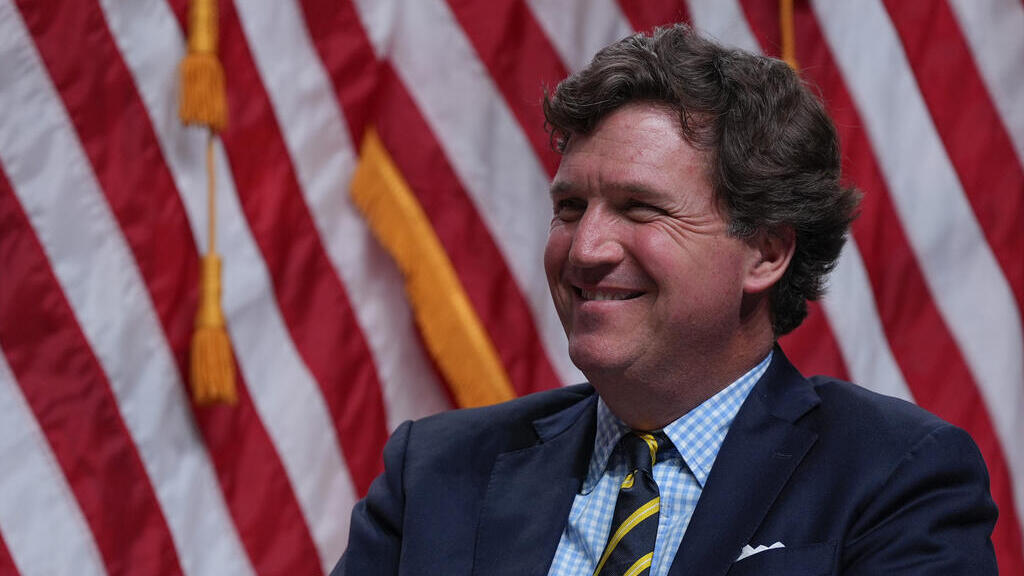
Tucker Carlson says Netanyahu convinced Trump to go to war against Iran
(Photo: Julia Demaree Nikhinson/AP)
The investigation also mentioned Trump’s meeting at the White House with journalist Tucker Carlson, a prominent figure on the American right who warned the president not to fall into what he described as an "Israeli trap." According to Carlson, Israel’s “desire to attack Iran is the only reason the United States is even considering a strike,” and he advised Trump to restrain Netanyahu.
Carlson — once considered one of Trump’s strongest allies but known for his fierce criticism of Israeli influence in Washington — did not hold back. He echoed conspiracy theories about Chabad and the war and declared on his popular podcast: “It’s hard to say this, but the United States didn’t make the decision here — Benjamin Netanyahu did.”
Somehow, Carlson's position intersected with that of the satirical left-leaning magazine The Onion. The publication released a meme showing Trump alongside the caption: “Myth: As commander-in-chief, Trump has the authority to order military action. Fact: It is unconstitutional for an American president to declare war without approval from the Knesset.”
The joke suggests that the U.S. president is taking orders from Israel’s government, but it also points to another issue dominating domestic political and legal debate: whether Trump exceeded his authority by launching military action without congressional approval. This question may not interest Israeli readers, but American media outlets continue to scrutinize it because it represents yet another confrontation between the president and the Constitution. As a result, officials have avoided even referring to the move as a “war” or clearly defining its objectives — a stance widely criticized by the press.
So what exactly are the war’s goals from the administration's perspective?
It's hard to tell, since Trump and his team have not committed to clear objectives and have changed them frequently, often in response to media criticism. Kinsey Crowley of USA Today attempted to summarize the latest goals outlined by White House press secretary Karoline Leavitt:
- Destroy Iran’s ballistic missile system.
- Disable its navy.
- Halt its “axis of terror” that destabilizes the region.
- Ensure Iran never obtains nuclear weapons.
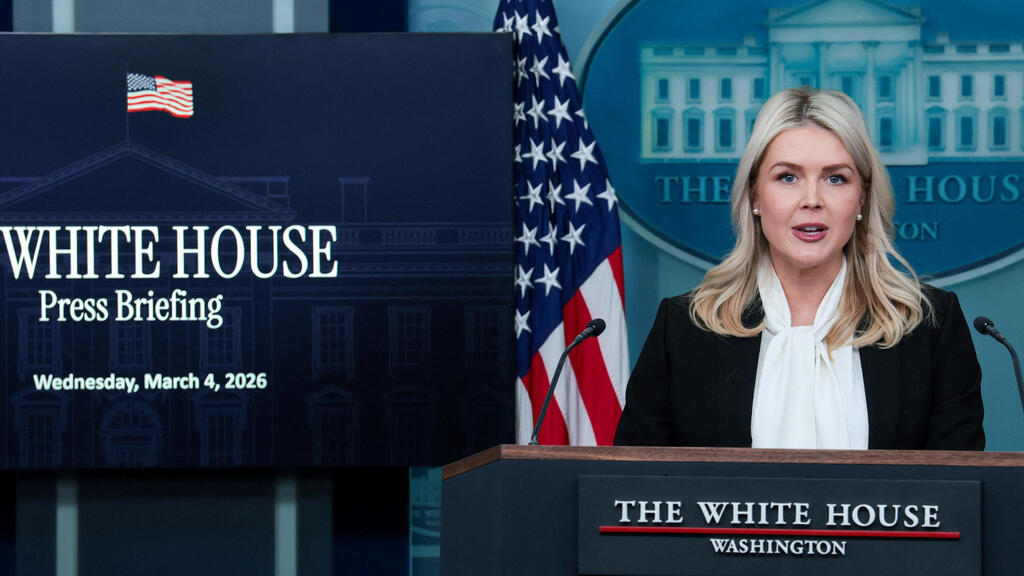
White House press secretary Karoline Leavitt
(Photo: Jonathan Ernst/Reuters)
American commentators quickly seized on the final point, noting that it directly contradicts Trump’s claim during the previous round of fighting that Iran’s nuclear program had been "obliterated" by the airstrikes he ordered last June. Now, suddenly, his envoy Steve Witkoff says Iran is very close to producing a nuclear bomb.
This contradiction-filled uncertainty surrounding the administration’s conduct has become a central focus of media coverage — even more than the war itself. For example, Secretary of State Marco Rubio argued that the United States had to join the war because Israel was planning to attack on its own anyway — a statement later contradicted by Trump, who insisted he was leading the initiative.
David Sanger, the New York Times’ senior national security correspondent, described the episode as further evidence of chaos in the White House. “The next day Rubio tried to walk back his remarks, and on Wednesday White House press secretary Karoline Leavitt said Mr. Trump acted because he had a ‘good feeling’ that Iran was about to target American interests,” Sanger wrote. “This back-and-forth confirmed what nearly all of his former aides have reported: Trump’s determination to bypass bureaucracy, reduce the number of advisers to a tiny circle he trusts not to leak, and rely on his instincts rather than intelligence briefings was evident even when he made the most consequential decision a president can make.”
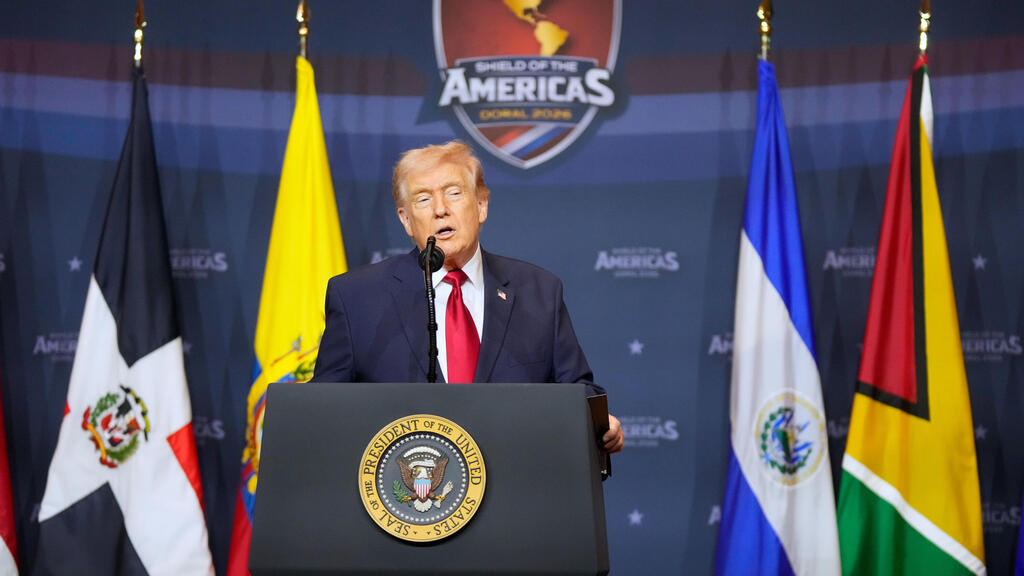
Trump tends to act on gut instinct
(Photo: Mark Schiefelbein/AP)
Fareed Zakaria, a columnist for The Washington Post, also wrote about Trump’s tendency to act on gut instinct — the same instinct that led him to declare war alongside Israel despite the countries’ differing interests.
“The most dangerous element of this war is not that the main actor is improvising like a saxophone player,” Zakaria wrote, “but that the two countries launching it have separate and perhaps incompatible agendas. For Israeli Prime Minister Benjamin Netanyahu, the clear goal of the war is to destroy the Islamic Republic. He has admitted that this war fulfills a 40-year dream.”
Zakaria praised Israel for its military achievements and focused strategy, executed brilliantly and aligned with its objectives. But he warned the outcome could be a civil war in Iran — something that might serve Israeli interests but not American ones.
“For Israel, this would be an acceptable outcome,” he wrote. “It would remove the country’s greatest enemy, and if it produces chaos in Iran (and Lebanon), so be it. Syria’s civil war improved Israel’s security because it meant there was no longer an Arab state confronting it. But an Iranian civil war is not in America’s interest, nor in the interest of America’s closest Arab partners, which depend on regional stability and predictability so that oil, goods, money and people can flow freely.”
Oil, goods and money are what concern the American public most these days — far more than the freedom the Iranian people deserve, and even more than the security of ally Israel. While Israelis run to bomb shelters every night, fearing for their daily lives, Americans are primarily focused on the cost of living and the state of the economy.
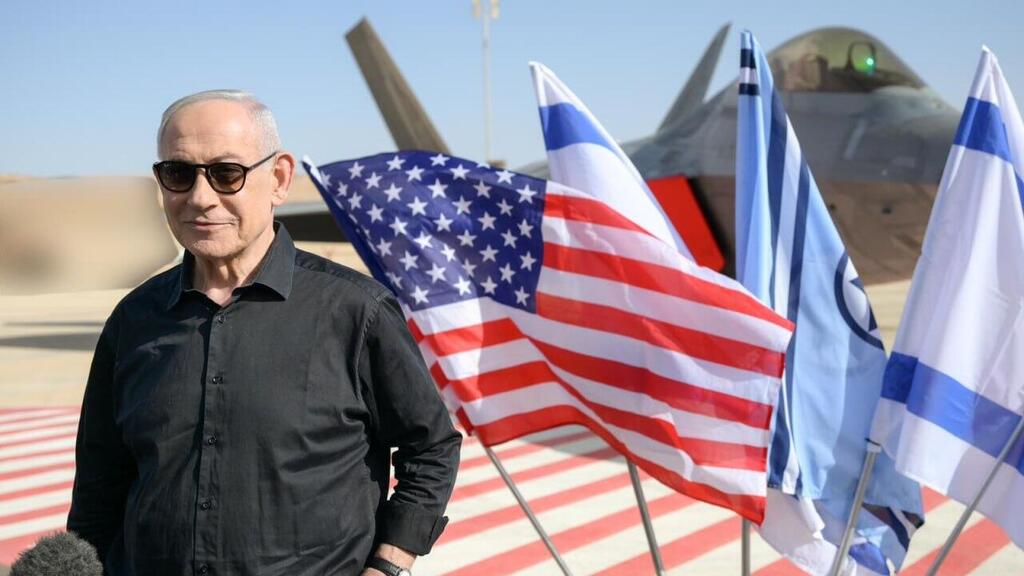
Prime Minister Netanyahu on an Air Force base in southern Israel
(Photo: Maayan Toaf/GPO)
That has always been what shapes public opinion in the United States. Trump’s promise of economic prosperity brought him electoral victory — not the Israeli issue — and disappointment with his policies and rising prices has fueled recent political shifts in favor of the Democratic Party, signaling potential Republican losses in the approaching midterm elections.
This intersection of politics and economics occupies American media more than anything else, particularly as the war has caused stocks to decline and dramatic increases in fuel prices.
The possibility that these developments could hit the pocketbook of every American citizen worries the public far more than the hypothetical prospect of an Iranian missile striking New York or Los Angeles — and even less so the possibility of a drone strike in Tel Aviv or Doha.
“The purpose of military action is to make us safer,” wrote veteran columnist Nicholas Kristof in The New York Times. “But Iran was not in a position to pose a substantial threat to the United States in the coming years.” He argued that if there is a real security threat, it comes from China and North Korea, not the Middle East.
“Despite the claims of Trump and his aides, Iran’s missiles are unlikely to reach the United States, and its nuclear program is stalled,” Kristof wrote. “By attacking Iran, I fear the risks increase rather than decrease. Another cost of the war is the depletion of munitions — such as Tomahawk missiles and interception systems — whose supplies are already dwindling, diverting us from America’s long-term strategic challenges in Asia. We are weakening our military capabilities ahead of the next crisis.”
In a follow-up column published over the weekend, Kristof said he had received messages from Iranians who argued that U.S. military action is justified and gives them hope.
“I sympathize with those Iranians because I have witnessed their repression firsthand in my reporting from Iran over the years,” he wrote. But for now, he said, regime change does not appear imminent, and the war has so far brought only destruction, death and instability — at a cost of $5 billion in the first three days alone.
He pointed to both Netanyahu and Trump as responsible, each for his own reasons. “I don’t know how much Netanyahu pushed Trump toward this war,” Kristof wrote, “but I believe Trump and Netanyahu see tactical brilliance driving strategic confusion without clear goals or an exit strategy.”
“A president’s first duty is to make us safer,” he concluded. “Instead, it seems to me that Trump has pushed us into an unnecessary crisis that costs Iranian and American lives, costs billions of dollars and harms the economy — all while drawing us into danger.”