

While the internet was abuzz over the final two episodes of the fifth season of “Fauda," one of the show’s stars, actress Dafi Shoshana-Alpern, was undergoing treatment with a shamanic healer to confront for the first time what she had gone through during filming. The two episodes, 7 and 8, which aired with a trigger warning, depict what happened to a mother and her two children in a Gaza border kibbutz on October 7, from the moment the first Color Red alert sounded to the bitter end for all three.
The broadcast prompted many reactions: protests over the difficult images, but also appreciation for their historical importance. Following the uproar, the Yes broadcaster released both episodes for free viewing in Israel and around the world.
Gallery
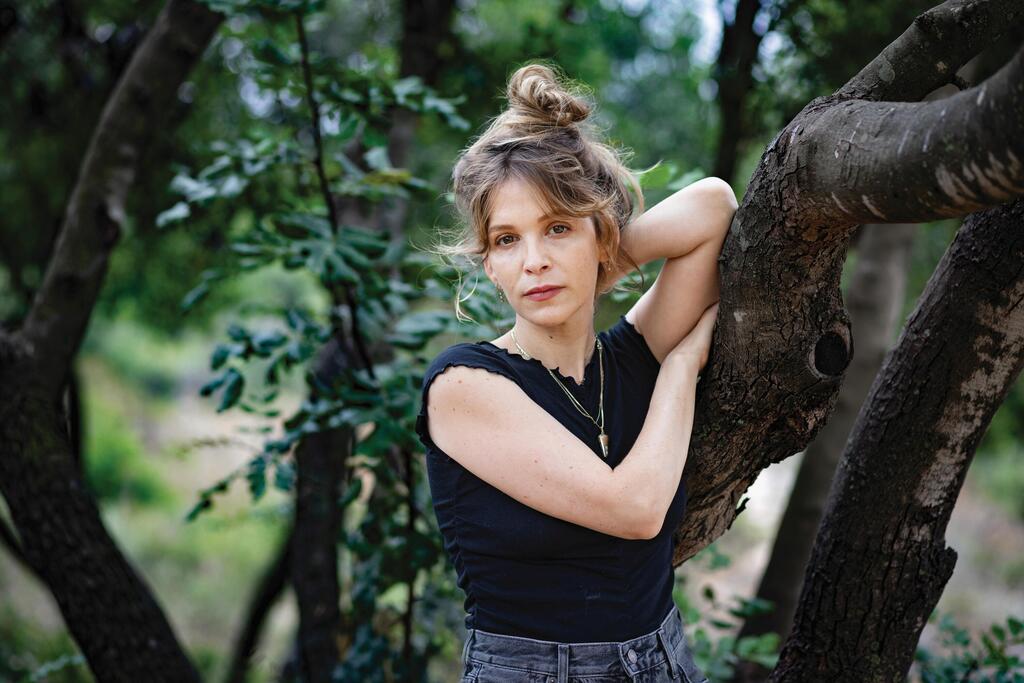
Dafi Shoshana Alpern sought therapy after filming the October 7 episodes of 'Fauda'
(Photo: Alex Kolomoisky)
“After the filming, I had some kind of repression, as if it didn’t happen,” says Alpern. “Only after watching the episodes did I start having flashbacks from the situations I went through. I went to a shamanic healer who gave me holistic treatment through touch and guided imagery, and along the way, things also came up that were not necessarily connected to the filming.”
Alpern began her journey on “Fauda” in the third season and appeared in the series for three seasons as Hagit Ben-Horin, the widow of Avihai (Boaz Konforty), the unit’s sniper. When Avihai is mistakenly killed by friendly fire during a complex operation, she finds comfort in the arms of Eli Aharon (Yaakov Daniel Zada), the team’s new commander, and the two become a couple. On October 7, when Eli is called to the unit at dawn “because something is happening,” she is left alone with her two children on the kibbutz. When the sirens begin, they barricade themselves in the safe room together with their Arab worker, and she reassures her children that it will be over soon, “because that’s how it always is.” But this time it is not like that. After hours of attempts by Nukhba terrorists to get them out of the safe room, the terrorists set the door on fire, force them to escape through the window, then capture them, rape her and finally kill them all.
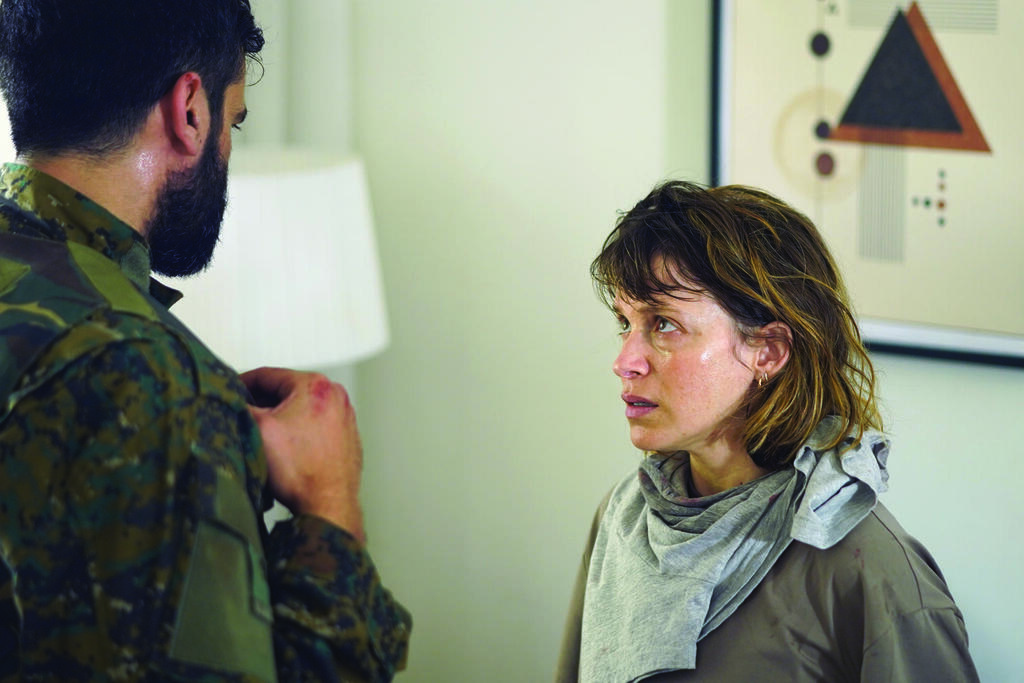
Alpern's character is held by a Nukhba terrorist on October 7
(Photo: Elia Spinopoulos, courtesy of Yes and +STING)
“When Avi Issacharoff called to tell me what was going to happen to my character in the new season, I understood it was going to be something big, but I didn’t understand how big,” she recalls. “It was in August 2024, less than a year after the disaster, and I remember I couldn’t speak. He didn’t elaborate much, he just said these would be episodes the whole world would watch and that I would be their hero.”
How did you feel at that moment?
“I was stressed by the idea that I was bringing that level of trauma to the screen. How can you even act something like that? I had this heaviness, real nausea. I lay down on the bed and my mind ran through all kinds of thoughts, and then I thought about myself on that morning of October 7. We had gone to spend the holiday with the parents of my husband, Hillel, in Moshav Ramat Raziel, and we didn’t return to Tel Aviv for four months because I didn’t have a safe room in the apartment. I was postpartum and so badly wanted to enlist in public diplomacy, to volunteer and help. I did what I could, joined all kinds of creative groups, but in practice I couldn’t really function. When I understood in that conversation where my character in "Fauda" was going, I suddenly felt that I had actually received what I wanted, that I was being given an opportunity here to do public diplomacy and tell the whole world what happened here on that day.”
Did you understand it would create such a stir?
“Yes, but I didn’t expect it to be at this volume. I walked around for several days overwhelmed by the number of responses and by the embrace I received. People thanked me.”
I read it and trembled with fear
The entire cast watched the two difficult episodes together at Lior Raz’s home. “We knew in advance that we would watch them together, and it was embracing and pleasant, because it is very hard and painful viewing,” she says. “I felt it was harder for me to watch them than to act in them, but maybe I had simply repressed it. I remember that the cinematographer Nitai Netzer said to me, ‘Do you remember that during filming you came out of the safe room every 10 minutes?’ and I didn’t remember that. I’m claustrophobic. It was hard for me to be in a closed room for so many hours and film a situation like that. The gathering at Lior’s was also a kind of farewell for me. I said goodbye to the series and the cast after three seasons.”
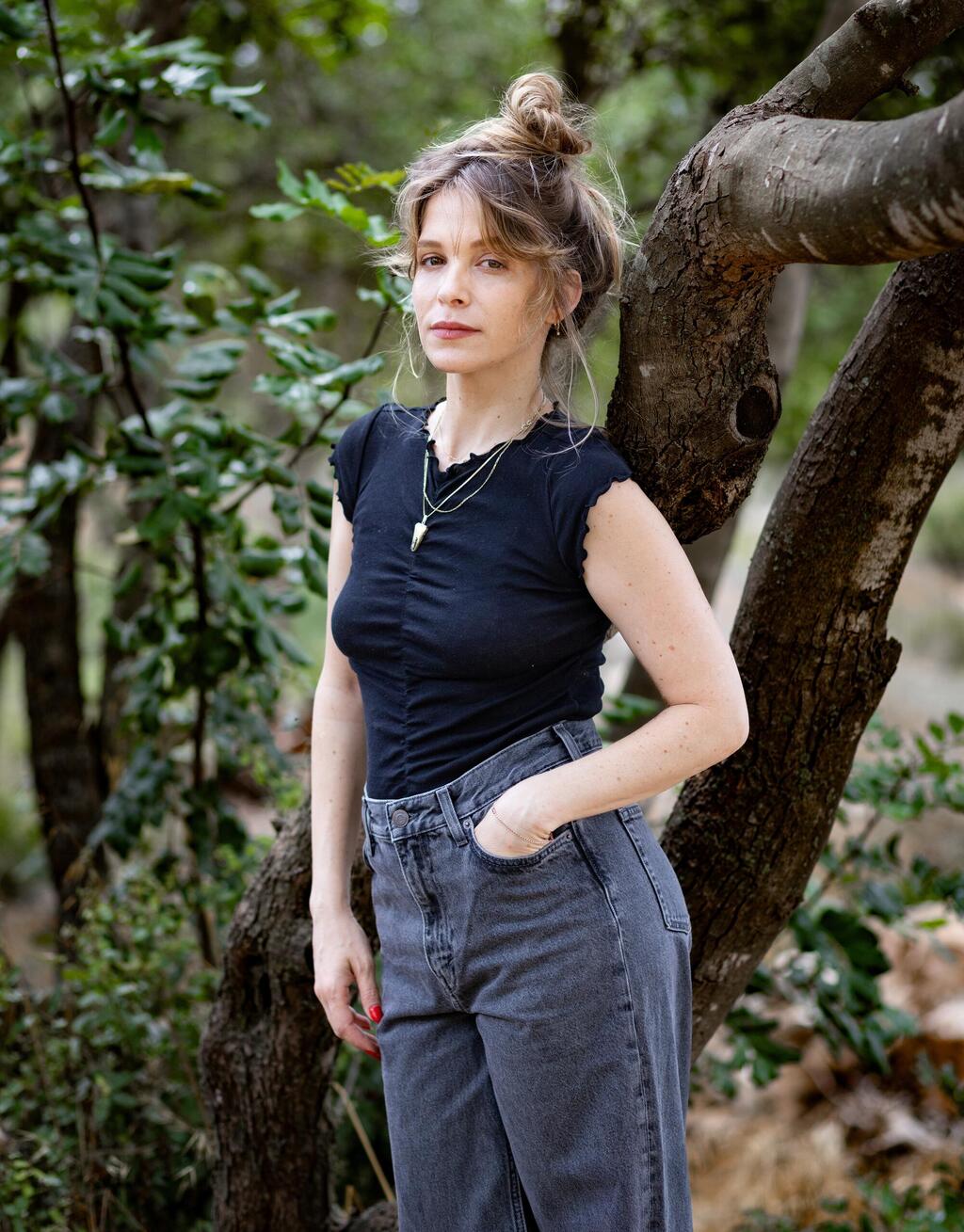
Alpern: 'I would have wanted to act in Fauda forever'
(Photo: Alex Kolomoisky)
How upset were you that they killed off your character?
“Of course, I would have wanted to act in ‘Fauda’ forever, but I think that for the sake of the series there is a story here that must be heard and told around the world, with an emphasis on the women who suffered sexual abuse on October 7 and whose voices were not heard. That is more important than me and my role in ‘Fauda.’ After filming, I reached out to the Dinah Project, which works to achieve justice for victims of sexual violence in conflict zones, in order to collaborate with them on public diplomacy. I asked them for data because I know these episodes will air around the world and I want to travel and speak about it everywhere. I wanted to learn how to speak about the subject so I could be the voice of these women, because unfortunately, most of the women who were raped and sexually abused were murdered in the end.”
How did you get to the series?
“The truth is that I auditioned for another role. After four auditions, they told me they had given the role to someone else and offered me the role of Hagit. Of course, I was bummed because the role they offered me was significantly smaller than the other one, but today, in retrospect, I’m happy about it and just keep reminding myself that what is mine is mine.”
How concerned were you ahead of filming?
“I was very concerned. I was tense and stressed, but I received a warm support system. They had many conversations with us ahead of it. They told me I could feel comfortable stopping the filming if I needed a moment. Every morning I started with a migraine. I lived on pills during filming because maybe in my head I knew it was only acting, but my body reacted differently. We filmed the two episodes chronologically, exactly as you see them. The set was very contained and very respectful of the situation, and that is why it took a long time, much longer than a regular episode.”
How did you prepare for the role?
“The first time I read the script, I trembled with fear. It was very hard to prepare for something like that. Emotionally, I fell apart. The first thing that guided me was to be in the consciousness of October 6, the day on which we all believed that even in our worst nightmares, something like this could not happen. I had to bring the element of surprise fully. Who would have believed that the army would not come for an entire day? Hagit has no doubt that they will come to save her, while I, Dafi, know that no one will come.”
What was hardest for you?
“There were several moments of breaking down, for example the scene in which I leave the safe room to answer the phone and see through the window the terrorists with the green headbands. In the script, Hagit is supposed to fall to the floor, but it was so real, I simply fell on my own. On the second day of filming I saw Amjad Bader, who plays Maher, the terrorist who ultimately rapes me. We ignored each other, but after a few days, at lunch, I suddenly found myself standing in front of him. I apologized and explained to him why I wasn’t speaking to him, but he immediately said, ‘We’re on the same page.’”
Do you see the role as a springboard to work abroad?
“I can only hope. To be honest, I’m afraid of the reactions and what it might bring out of people when it airs abroad. It saddens me that I’m afraid of being identified in the world as Israeli, really on a security level. Today we are in a problematic international situation, but of course I would be happy for my career to get that far. It’s not as if I’ll now fly to Hollywood to try my luck, certainly not when I have a family and children, but if an opportunity comes up, of course I’ll be happy to give myself to it.”
I didn’t want to return to Tel Aviv
Alpern, 38, was born and raised in Tel Aviv, the youngest daughter of the late Orit and Rami, a pharmacist and former lawyer who together founded the Pharma Plus pharmacy chain. Her older sister, Dr. Sharon Alpern, 42, is a gynecologist. She studied at Herzliya Hebrew Gymnasium and was a member of the youth troupe “The Neighbors of Chich.” In the IDF, she served as a company clerk in the Paratroopers Brigade, and after her release began studying acting at Yoram Loewenstein’s school. She later studied directing and teaching at Seminar Hakibbutzim.
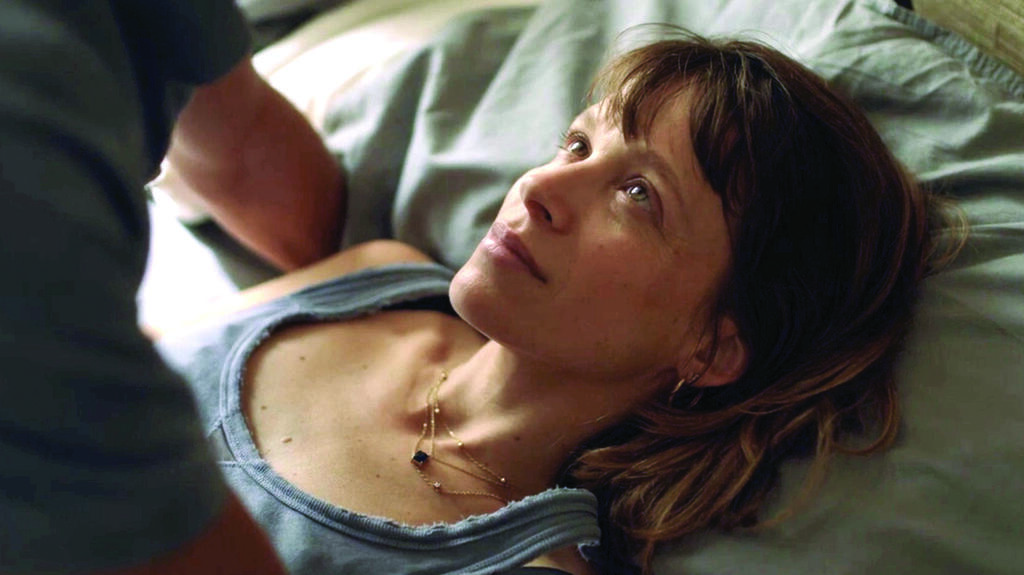
Alpern in the TV series 'Don't Fight'
(Photo: Dalia Geller)
“Since I can remember, I was drawn to the stage, both at school and in the youth troupe,” she explains. “My parents allowed me to do that. There was a period when they wanted me to move to Thelma Yellin so I would have somewhere to release the energy and express those abilities, but I refused because I wanted to stay in the Scouts and I knew it wouldn’t work together.”
At Yoram Loewenstein, she met her husband, Hillel Cappon, 38, a former actor who studied two years below her. They have two children: Ben, 5½, and Asia, 3. “I had my eye on him from the beginning, but we both had partners and only years after we finished school did we become a couple,” she says. “We acted together in the play ‘Games in the Backyard’ at the Orna Porat Theater. Once, on the way back in the van from a performance in Haifa, it just happened. Hillel left the acting world, and today he is a partner in the ‘Public Speaking Lab’ and runs workshops on interpersonal communication and improving expression and public speaking abilities.”
The couple lives in a moshav in Ramat Raziel, near Cappon’s parents. “When we stayed here after October 7, I had already enrolled my son in kindergarten and didn’t want to return to Tel Aviv,” she says. “In the end, we went home because we had no choice, because we couldn’t find a house here, but I was not well in Tel Aviv. I was very anxious because we were still at war and I didn’t have a safe room, and then this house came up two years ago and we grabbed it.”
Her mother, Orit, died of breast cancer 15 years ago at age 57. “Completely prematurely,” she says sadly. “It was terribly hard and very infuriating. She was sick for many years. She first discovered the cancer when I was in kindergarten, and died when I was 24. She lived with it for 20 years. It went and came back until it spread completely. She died when I was in my third year at Yoram Loewenstein, right in the middle of rehearsals for a play in which I had a leading role. Hillel studied two years below me and was an assistant director on the play. I didn’t really know him then.”
Did you check whether you carry the BRCA gene?
"I don’t have the gene and she didn’t have it either, but I’m under close monitoring, doing MRIs, ultrasounds and now I’m also starting to do a mammogram every two years. I believe it won’t happen to me, alongside all kinds of fears and other thoughts,” she says.
When do you miss her most?
“It meets me all the time. My mother always believed in me and in the path I chose. It’s very upsetting that she doesn’t see me now and that she doesn’t know my children. Today, as a mother, I understand even more the difficulty she had when she knew she was going to part from her children. In the filming for ‘Fauda,’ we shot at Kibbutz Givat Hashlosha and, completely by chance, my mother is buried there. I remember walking into the house where we filmed, and suddenly I saw in front of me the manager of the kibbutz cemetery, whom I know personally. I asked, ‘What are you doing here?’ and he said, ‘This is my son’s house.’ It was as if I received regards from her. On the last day of filming, I felt I had to go to the cemetery, and that was the first time I visited my mother alone. I had a very powerful moment there.”
An unbearable character
When her mother died, most branches of the pharmacy chain closed, leaving only the branch in Herzliya. When the subject of medical cannabis began gaining momentum in Israel, her father decided to enter the field and become the owner of a pharmacy, and offered Alpern and her husband the chance to take on the management. “It was exactly during COVID and there was no work, and I was also after the birth of my eldest son, so we decided to go for it,” she says. “We entered into about two years of bureaucracy and renovations, and today we manage the pharmacy together.”
What is the difference between a regular pharmacy and a pharmacy that has cannabis?
“It’s the same thing, just with cannabis. We have all the medications of a regular pharmacy, except that we also sell cannabis. There are many diseases for which only medical cannabis helps, for example Parkinson’s, fibromyalgia, back pain, various types of cancer and of course post-trauma.”
Is there special security around the pharmacy?
“Of course, you have to. There is a lot of bureaucracy and strict criteria. We have, for example, a huge safe inside the pharmacy just for the cannabis.”
Do you use cannabis yourself?
“Not really. I hope I won’t need to.”
What would your mother have said about it?
“I think she would have been happy. When I was a girl, I would stand at the register. I loved giving change. Whenever people asked her if I was the heir and whether I would be a pharmacist when I grew up, she would answer, ‘God forbid.’ But in this constellation, I think she is happy that we are continuing with it and making a living from it.”
But you don’t make a living only from that.
“No, there is also acting. I want to be an actress my whole life, but I cannot make a living only from that. Today I also help people tell their story through developing lectures, workshops and digital content. In addition, I provide creative and content guidance for the organization Masa Shichrur, which runs journeys for released soldiers to process trauma. I was with them not long ago in Pennsylvania.”
Alpern came to “Fauda” after acting in television series including “The Women’s Balcony,” “The Missing File,” “Into the Night,” and the recommended “Don’t Fight,” available on Kan Box and YouTube.
At the center of the series, written by Gur Koren and Erez Drigues, three siblings, played by Shai Avivi, Yael Sharoni and Ofer Shechter, discover after their father’s death that he left his apartment to a mysterious woman and try to find out who she is. Alpern plays Moran, the wife of Gur, played by Shechter, who is struggling to get pregnant.
The series was directed by Shay Capon, who is, entirely by chance she insists, her husband’s uncle. “There were people who raised an eyebrow, but I know what happened in practice and how many auditions I had to go through like everyone else to get the role,” she says. “I’ve been an actress for so many years, I did things before that too, but it’s fine, people will always talk.”
How was the chemistry between you and Ofer Shechter?
“Excellent. Thanks to him, it was very easy for me to connect to Moran’s character. He is an annoying character and it was easy for me to be annoyed by him thanks to his wonderful acting. His character is written in an unbearable way, and Ofer managed to take it to the extreme. Brilliant casting.”
After two such significant roles, are you already recognized on the street?
“It’s starting to happen. Before that it was always, ‘How do I know you?’ For all these years I avoided it. It took me a long time to answer that I’m an actress and that they must have seen me in some series. Now I assume it will be easier, because people already recognize that I am ‘the one from TV.’”