

Rich, buttery and perfectly textured, salmon has earned its place at the top of the world's most popular fish list, particularly in the United States. Salmon is arguably one of the most versatile ingredients in the modern kitchen. Whether enjoyed raw in sushi and sashimi, smoked, cured, baked, grilled, fried or even simmered in a hot stew, salmon consistently delivers. Thanks to its accessibility and ease of preparation, it has become a household favorite.
Salmon: the star of the Israeli kitchen
Gallery

Rich, buttery and perfectly textured, salmon has earned its place at the top of the world's most popular fish list
(Photo: Jacek Chabraszewski, Shutterstock)
Salmon is far more than just another fish. It is a global culinary cornerstone that different cultures have adapted in their own ways. Among Indigenous peoples of the Pacific Northwest in North America, salmon has been considered sacred for thousands of years. It is served smoked, baked or in soups during ceremonial meals, and every part of the fish — including the skin and bones — is used out of respect for nature.
On the other side of the map, Ashkenazi Jewish cuisine gave rise to lox, a salt-cured salmon fillet that became the perfect companion to a bagel with cream cheese. Meanwhile, Nordic cuisine introduced gravlax, cured with dill, and lohikeitto, Finland's rich salmon and cream soup.
Travel farther east and you encounter the Japanese revolution. It is hard to believe, but until the 1980s, Japanese consumers generally did not eat raw salmon in sushi because of concerns about parasites in wild fish. The breakthrough came through a highly successful Norwegian marketing campaign that introduced farm-raised salmon as a clean and safe option. The rest is history, transforming sushi bars around the world.
Atlantic vs. Pacific: two different salmon worlds
The global salmon market is generally divided into two commercial categories: Atlantic salmon and Pacific salmon.
Atlantic salmon dominates supermarket shelves and restaurant menus, largely because it is almost entirely farm-raised and available year-round. Countries such as Norway, Chile, Scotland and Canada have become major producers. Atlantic salmon is generally fattier, milder and more tender, making it particularly suitable for grilling, baking, sushi and dishes that benefit from a soft, consistent texture.
Opposite it stands the Pacific salmon family — not a single fish but a group of species that includes Chinook (also known as King salmon), Sockeye (often called Red salmon), Coho (Silver salmon), as well as Pink and Chum salmon.
Unlike Atlantic salmon, much of the Pacific salmon sold worldwide comes from wild fisheries, particularly in Alaska and along North America's West Coast, although Chinook and Coho are also farmed.

Atlantic salmon dominates supermarket shelves and restaurant menus
(Photo: Shutterstock)
The differences are noticeable on the palate. Pacific salmon tends to be less uniform than Atlantic salmon and is often leaner, firmer and more intensely flavored. Sockeye is known for its deep red-orange color, firm texture and rich taste. Chinook is considered one of the most luxurious and fattiest Pacific varieties, while Coho falls somewhere in between — milder than Chinook but still more distinctive than farmed Atlantic salmon.
The Secret behind salmon's orange color
The striking orange-red color associated with salmon is one of its defining features, but where does it come from?
In the wild, salmon feed on plankton, crustaceans and krill rich in natural pigments that color their flesh. Farmed salmon, however, do not have access to this diet, and their natural flesh color tends to be pale grayish-white.
To achieve the appearance consumers expect, fish farmers add pigments to the processed feed. They do this using a specialized color scale known as the Roche Color Card, or SalmoFan. Similar to a paint color chart, it serves as an industry-standard guide for salmon coloration.
Farmers use the numbered scale to determine how much pigment to add to feed, allowing them to tailor the fish's color according to consumer preferences — from lighter orange shades favored in Germany, to brighter orange tones preferred in Israel, to the deep red hues sought after in Japan's sushi market.
'Eat it two to three times a week"
Salmon is considered one of the most nutritious fish available, but questions frequently arise about its health benefits, differences between varieties and the best ways to prepare it. To separate fact from fiction, we spoke with Meital Levy, a clinical dietitian at Leumit Health Services.
What are salmon's main nutritional benefits?
"Salmon is rich in high-quality animal protein and omega-3 fatty acids, which have one of the healthiest fat profiles available. It also contains significant amounts of vitamin D, vitamin B12, selenium, potassium and iodine. It provides an excellent combination of vitamins, minerals, protein and omega-3."
How often should salmon be eaten?
"The general recommendation is about 150 grams per serving, two to three times per week, in order to obtain enough omega-3 fatty acids. Twice a week is recommended, but three times a week is also considered safe. There's no need to eat more than that, although larger amounts generally should not pose a problem."
Is there a meaningful health difference between farmed and wild salmon?
"Farmed salmon is fed a controlled diet and therefore contains a reliable amount of omega-3. However, it is fattier, meaning it contains more calories and sometimes more organic pollutants because it is not raised in deep waters.
"Wild salmon, on the other hand, is leaner, contains fewer calories and fewer pollutants. Although it is often considered healthier, its omega-3 levels may be lower because its diet is not controlled. Another consideration is cost — wild salmon is more expensive."

Bear eats pacific salmon, Alaska
(Photo: R. Harding Photography/Shutterstock)
Is there a risk of mercury or other toxins?
"Salmon is generally considered safe and contains relatively low levels of mercury, certainly less than tuna. Still, moderation is advisable, especially for pregnant women and children. For the general population, there is no need to restrict consumption."
Are the pigments added to farmed salmon safe?
"Based on current knowledge, yes. The pink color comes from astaxanthin, a carotenoid compound that occurs naturally in the food chain. These pigments provide the fish's color, are safe for consumption and are not known to cause health problems."
Which cooking method best preserves nutrients and omega-3?
"Steaming is the best method because the short cooking time helps preserve omega-3, vitamins and texture. Baking at a moderate temperature of around 160–180 degrees Celsius is also recommended. Frying is the least recommended option because it adds calories, promotes oxidation of fatty acids and can create less desirable compounds."
What foods should salmon be paired with?
"First and foremost, vegetables. A fresh salad or steamed vegetables alongside salmon is an excellent choice. Vegetables such as bell peppers and tomatoes, which are rich in vitamin C, can improve iron absorption. It's also recommended to add a quality carbohydrate such as sweet potatoes, quinoa or legumes."
Is smoked or cured salmon as healthy as fresh salmon?
"Smoked and cured salmon still provide protein and omega-3, but some vitamins are reduced during processing. In addition, smoking can create less healthy compounds, and smoked salmon contains significantly more salt."
Are there populations that should limit salmon consumption?
"Fresh salmon should mainly be limited by pregnant women, children and people who need to restrict protein intake because of kidney problems. With smoked or cured salmon, which contains a lot of salt, anyone with kidney disease or high blood pressure should limit consumption, just as they would with other salty foods."
Is frozen salmon nutritionally different from fresh salmon?
"In most cases, the difference is very small. Fish is frozen shortly after being caught, which helps preserve both protein and omega-3. There may be a slight reduction in vitamin levels, but not enough to justify catching the fish yourself."
Chefs' tips: how to make perfect salmon at home
Over the past two decades, salmon has become one of the most popular fish in the Israeli kitchen. Some would even argue that it has nearly replaced the once-iconic carp and St. Peter's fish. It stars at many Friday night dinners — often in spicy hraimeh sauce, sweet Asian-style glazes or simply baked with olive oil and herbs. It is also a favorite solution for quick family lunches and remains the undisputed king of Israel's endless sushi delivery orders.
It's not a steak. Treat it accordingly.
"Israelis like their salmon well-done, but tastes are changing and people are gradually moving toward rarer preparations," says Elad Amitay, chef, cooking instructor and the man behind "HaCarmel 40" in Tel Aviv's Carmel Market.
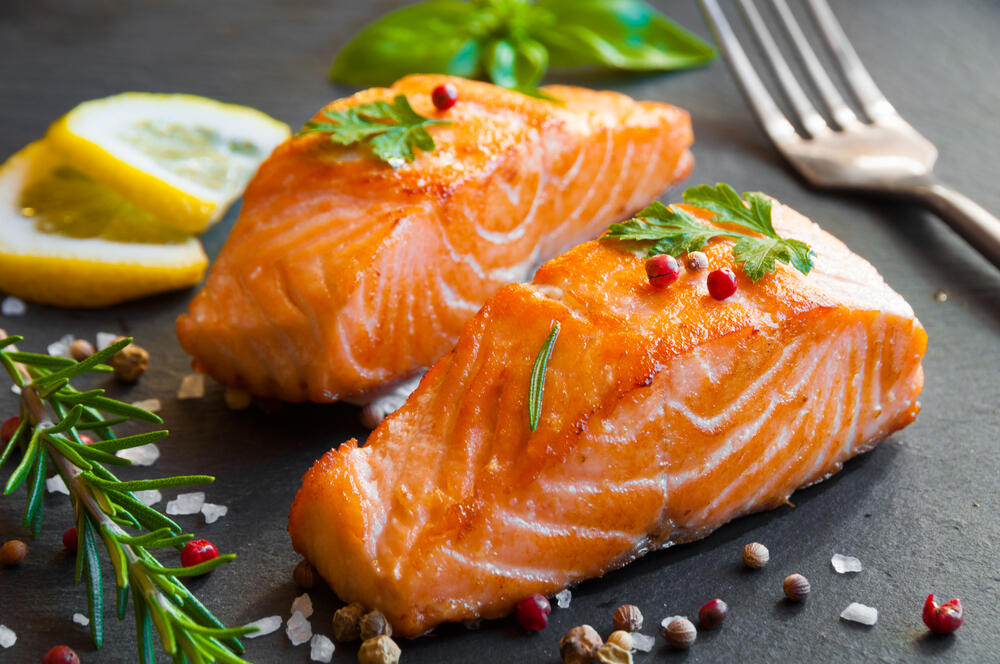
It's not a steak. Treat it accordingly
(Photo: shutterstock)
How do you identify truly fresh, high-quality salmon?
"First of all, I prefer genuinely fresh fish rather than previously frozen fish sold as 'fresh.' It should have a shine to it, the orange color should be vibrant and the surface should feel smooth and slightly slippery rather than velvety. Most importantly, the flesh should appear very firm, not soft or falling apart."
What is the most common mistake home cooks make?
"People shouldn't treat salmon like a beef steak and grill it like a muscle cut because it simply dries out. Salmon is built from layers of fibers, connective tissue and fat. The cooking shouldn't be overly aggressive, and there's really no reason to cook it to well-done. At that point it just becomes dry strands of fiber."
So how do you prevent salmon from drying out?
"Maintain a steady cooking temperature — neither too high nor too low — around 180–190 degrees Celsius in the pan. And it's very important not to flip it repeatedly but to rotate it. If you're cooking a cube-shaped piece, go side, side, side, side. This keeps the cooking process even and leaves a pink center, which is perfectly fine."
What surprising flavor pairing works perfectly with salmon?
"Nothing especially surprising. What's actually surprising is what doesn't work. Many people experience a clash between salmon's rich aromatic oils and lemon juice. It's not that acidity doesn't belong, but it should come from a different source. Whether it's yuzu, which is more delicate, or a mild vinegar or mustard, I wouldn't recommend lemon with fresh salmon — not in tartare and not when it's served raw."
What's your golden rule for cooking salmon?
"I take a whole fillet and score it deeply into cubes, similar to the way you cut a mango. I brush it with oil, season it and put it in the oven. Once the thinner edges reach well-done, I take it out.
"The beauty of this method is that you get different levels of doneness in the same piece of fish. People who like their salmon well-done can eat the edges, those who prefer medium can enjoy the middle and anyone who likes it juicy and nearly raw can take the center. That way, everyone around the table is happy."