

In the U.S. midterm elections on Tuesday, November 3, Jewish voters in Michigan will face a particularly complicated political dilemma. Should they vote for Abdul El-Sayed, the Muslim, progressive Democratic Senate candidate who promises to tackle the cost of living and advance universal health care but has drawn fierce criticism for his statements about Israel? Or should they support Mike Rogers, the Republican candidate aligned with President Donald Trump, whose policies many of them oppose?
The dilemma is exposing divisions within Michigan's Jewish community at a particularly sensitive time, amid rising antisemitism in the United States since the October 7 attacks. The choices made by Jewish voters in Michigan may reveal whether, and to what extent, candidates' positions on Israel still influence the American Jewish vote.
Gallery
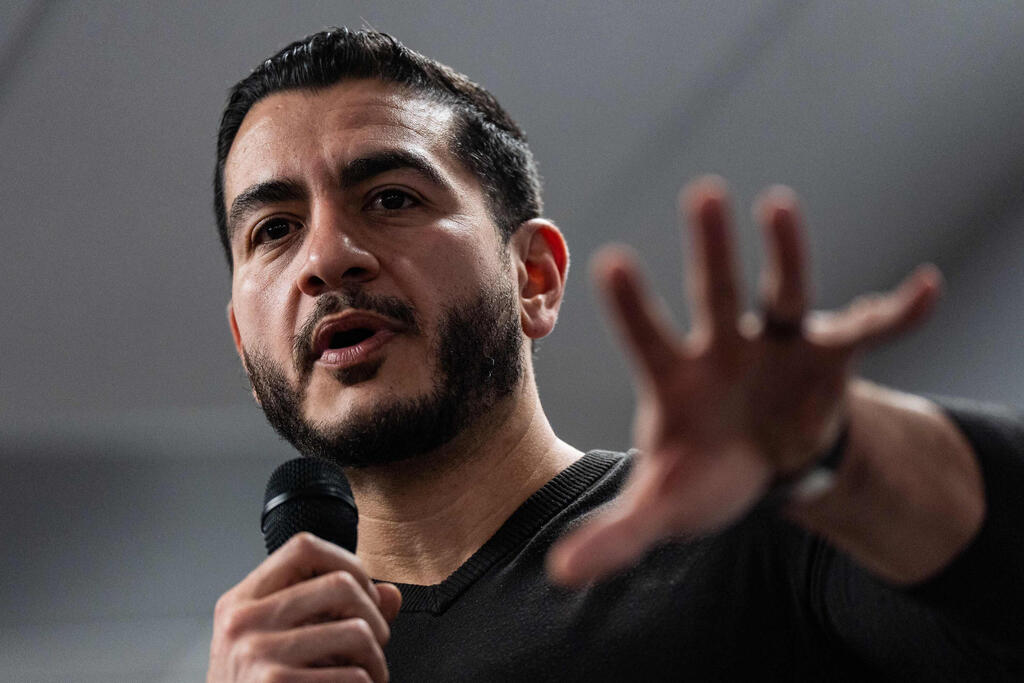
Abdul Al-Sayed. Will his positions on Israel have any impact on Jewish voters?
(Photo: Salwan Georges / Getty Images North America / AFP)
The election also raises the question of whether, as happened when Zohran Mamdani was elected mayor of New York City, some Jewish voters will support a candidate whose views on Israel are strongly opposed by segments of their own community.
Michigan, home to a sizable Jewish population and one of the largest Arab American communities in the United States, is an especially sensitive arena for disputes surrounding the Israeli-Palestinian conflict.
El-Sayed, who leads the state's Senate race according to the latest polls, has made no attempt to soften his positions on Israel. He opposes American military assistance to Israel, accuses it of committing "genocide" in Gaza and uses the term "apartheid" to describe its policies toward Palestinians.
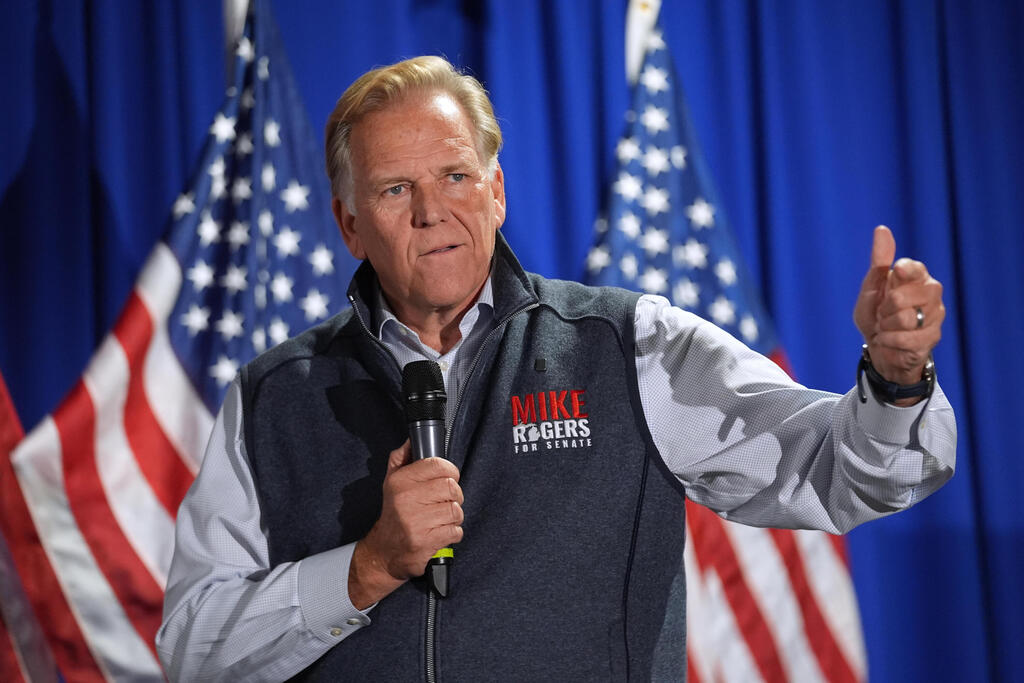
Mike Rogers is President Donald Trump's hand-picked Republican Senate candidate
(Photo: Paul Sancya/AP)
Yet those positions have not deterred all Jewish voters in the state. While some regard his anti-Israel rhetoric as a red line and a central reason not to vote for him, others are prepared to support him despite reservations about his views on Israel, citing his positions on domestic American issues and their identification with the Democratic Party.
More than 1,000 Jewish voters endorse El-Sayed
In fact, a substantial number of Jewish voters have publicly declared their support for El-Sayed.
More than 1,000 Michigan Jews who describe themselves as "proud Jewish Americans" and express a commitment to the safety and prosperity of the Jewish community and the future of American democracy have signed a public letter endorsing him.
The signatories include prominent figures in politics, academia and local Jewish leadership, among them former Democratic congressman Sander Levin and Alicia Chandler, a former president of the Detroit chapter of the American Jewish Committee (AJC).
In the letter, published by Michigan Jews for Democracy, the signatories acknowledge that some have significant disagreements with El-Sayed, including over his positions on Israel. Nevertheless, they say they believe he is the best choice for Michigan's Jewish community and the state's residents more broadly. They describe him as someone who understands what it means to live as a minority and who is willing to listen and learn.
For the signatories, the decisive consideration is the political future of the United States. "Our goal is to restore checks on Trump's power by returning control of the U.S. Senate to the Democrats," they write, emphasizing their desire to ensure that the Jewish community has a meaningful voice in shaping policies that affect its members' lives.
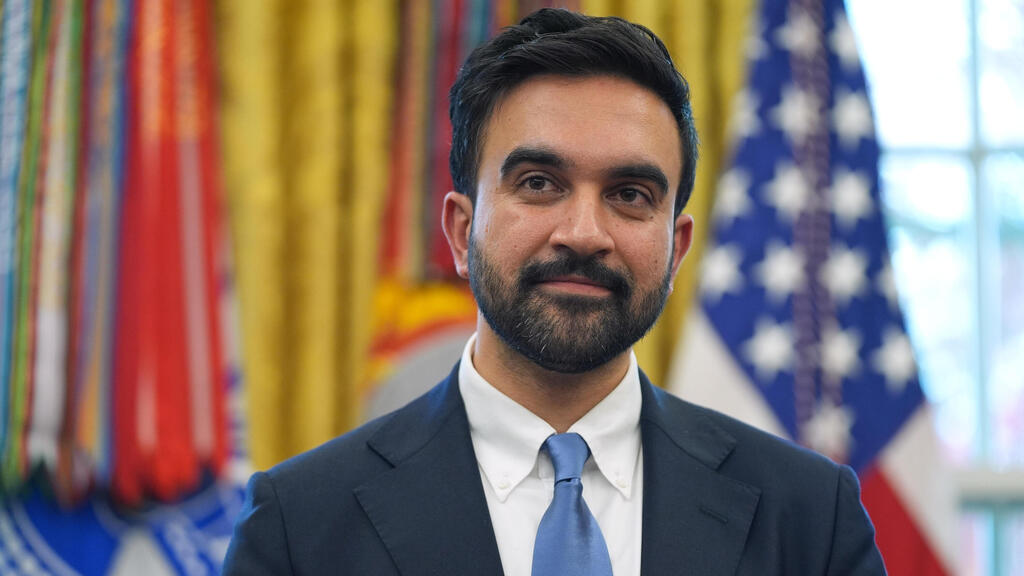
Many Jews also voted for Progressive Democratic mayor of New York City, Zohran Mamdani
(Photo: Evan Vucci / AP)
El-Sayed understands the importance of the Jewish vote in Michigan, particularly in the Detroit suburbs, home to a large Jewish community. To win that support, he has sought to emphasize shared interests, especially the future of American democracy, rather than focus on disagreements over the Israeli-Palestinian conflict.
As part of his outreach efforts, El-Sayed recruited Lenore Goldman, a veteran political adviser who has previously worked with Jewish organizations, to strengthen his connections with Jewish voters, particularly those who remain undecided.
The strategy is clear: Win the support of Michigan's Jewish voters without changing his positions on Israel.
The synagogue attack that deepened the divide
For some Michigan Jews, however, El-Sayed's positions on Israel cannot be separated from other political considerations. Some have also not forgotten his response to the March attack on Temple Israel synagogue in West Bloomfield, a Detroit suburb.
Although El-Sayed condemned the attack, he angered some members of the Jewish community when he said, "Hurt people hurt people," referring to the attacker, who reportedly sought revenge for the deaths of relatives in an Israeli strike in Lebanon. His critics interpreted the comment as an attempt to justify the antisemitic attack.
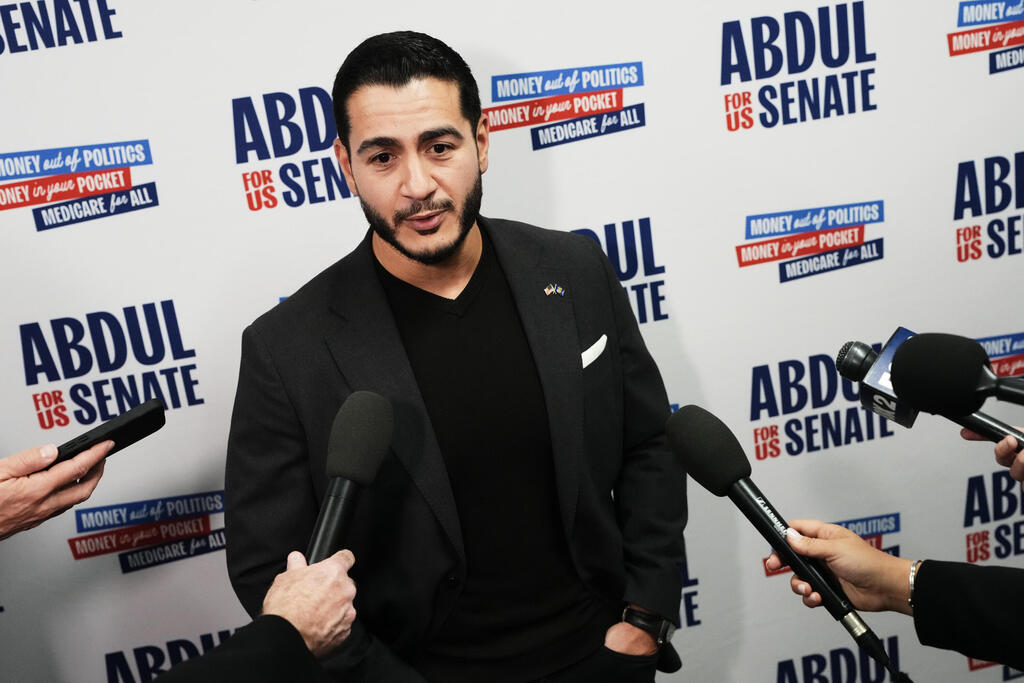
'Hurt people hurt people': El-Sayed seemed to justif y the attack on a Michigan synagogue
(Photo: Julia Demaree Nikhinson/AP)
El-Sayed later apologized and clarified that he had not intended to excuse the violence. Nevertheless, for some voters, his remarks only deepened their reservations and made supporting him more difficult. For them, the Senate election presents an uncomfortable choice: Remain loyal to the Democratic Party or vote for a Republican candidate closely associated with Trump?
Republicans are attempting to capitalize on that opening, mounting a fierce campaign against El-Sayed.
At an October 25 rally in Michigan, Trump called El-Sayed a "jihadist" and a "member of the Muslim Brotherhood", accusing him of being "on the side of the terrorists." El-Sayed's Republican opponent, Mike Rogers, questioned his loyalty to the United States and went further at an October 28 Republican Jewish Coalition event. "He's beyond antisemitic. He hates Jews," Rogers said.
A test of Israel's place in American Jewish politics
Michigan's Senate election could become a revealing test of how strongly candidates' positions toward Israel continue to shape the voting behavior of American Jews, and what place Israel occupies in their political identity.
Does support for El-Sayed among some Jewish voters signal a shift in political priorities, with domestic American concerns and traditional loyalty to the Democratic Party carrying greater weight, even when a candidate's positions on Israel provoke serious objections?
The depth of the political divide within Michigan's Jewish community is illustrated by the case of Jason Turkish, a Jewish attorney and longtime Democratic donor, and his fiancée, Democratic Rep. Haley Stevens, who lost to El-Sayed in the primary.
While Stevens initially announced that she would support El-Sayed, Turkish declared that he would instead vote for Republican Mike Rogers because of his objections to El-Sayed's positions and statements about Israel.
Ultimately, approximately a day before the election, Stevens also announced that she would support Rogers.
Their decisions reflect the broader dilemma facing Michigan's Jewish voters, caught between longstanding political loyalties, concerns over the direction of American democracy and deep disagreements about Israel. For some, El-Sayed's positions on Israel make him impossible to support. For others, opposing Trump and advancing their domestic political priorities take precedence.
The outcome may offer an indication of how American Jewish political identity is evolving at a time when Israel has become an increasingly divisive issue within the Democratic Party.
Dr. Galit Benzur is a lecturer in communication and political science at Bar-Ilan University and a visiting scholar at the University of Michigan in Ann Arbor