


Henry Kissinger's longstanding observation that Israel has no foreign policy, only domestic policy, is proving more accurate than ever. More precisely, it is becoming clear that Israel has only domestic politics, often petty and lacking in complexity, that dictate its strategic conduct.
This phenomenon has steadily intensified since October 7, recently driving Israel's international standing and legitimacy to unprecedented lows and reinforcing its image as a country that has lost its balance, is guided by extremist ideas and is turning its back on much of the world.
Gallery
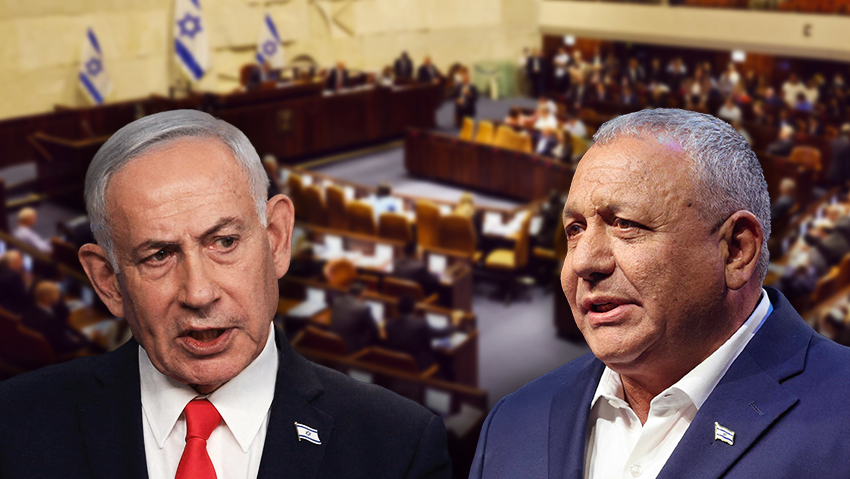
Netanyahu and Eisenkot: New government will have to act quickly to break damaging connection between negative domestic, international trends
(Photos: Shutterstock, Ronen Zvulun/Reuters, Ariel Schalit/AP)
Four arenas have emerged in recent months in which domestic politics are causing strategic damage. The most prominent is Iran. Fantasies and contempt for diplomatic engagement, combined with a desire to restore political power, led to Operation Roaring Lion, a military campaign that contributed to Trump's defeat in the midterm elections and has damaged Israel's image across the American political spectrum. Against this backdrop, reports have emerged of Netanyahu's efforts to promote another attack before the elections and even now, a move that, if carried out, could disrupt political developments, particularly efforts to form a government.
The second source of damage is the accelerated "settlement revolution" in the West Bank, accompanied by a surge in Jewish terrorism. Here, too, domestic politics, particularly the need to preserve coalition unity, play a decisive role in shaping strategy. Yet what is perceived in Israel as acceptable, even positive, is viewed internationally as an intolerable deterioration reflecting Israel's transformation into an extremist and violent entity. The result is isolation, boycotts and damage to relations with numerous countries, particularly in Europe.
A third source of damage is emerging in the aftermath of the elections, reflected in the fierce delegitimization of Israel's Arab citizens. Once again, what has come to be regarded as normal and reasonable by Israelis shocks the outside world and gradually entrenches Israel's image as a deeply dysfunctional state.
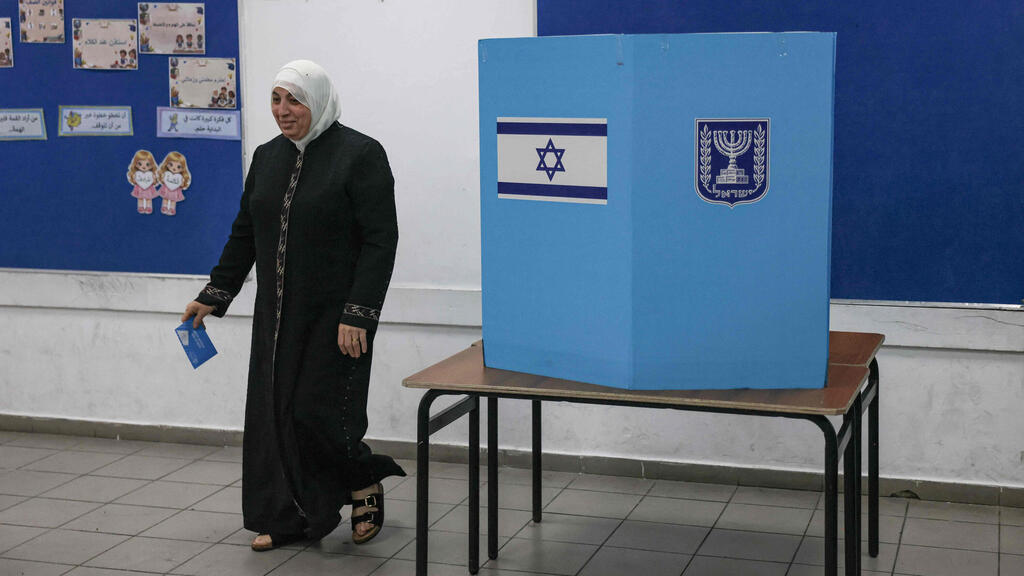
Arab parties reeived 19 mandates in the new government
(Photo: Ahmad Gharabli/AFP)
The fourth area in which domestic politics are causing damage concerns relations with the Arab world. As concepts such as "applying sovereignty," a euphemism for annexation, encouraging "voluntary migration," dismantling the Palestinian Authority and creating a single state with two classes of citizenship become normalized, there appears to be a growing willingness to accept the price of halting normalization and damaging relations with Arab countries, even to the point of risking confrontation. This is reflected in warnings about a possible war with Egypt and the dismissal of concerns about the deterioration of relations with Jordan.
As long as Israel was absorbed in the sensitive period leading up to the elections, the international community granted it a degree of latitude and did not press it to present coherent plans and strategies for the region's unresolved conflicts, particularly Gaza and Lebanon. With the elections now over, however, and despite continued uncertainty over the next government, the world, including the U.S. administration, appears to be growing less patient. This is evident in reports of Tony Blair's frustration over the lack of progress in implementing the Gaza agreement, potentially signaling more intense pressure in the near future.
Israel's enemies are taking satisfaction in both its deepening internal crisis and its deteriorating international standing. Against this backdrop, some are arguing that despite the severe blows Israel's adversaries have suffered during the war, Yahya Sinwar's prediction that October 7 would trigger Israel's gradual destabilization and eventual collapse may ultimately come true.
Those enemies have been dealt devastating blows since October 7, and it is doubtful that they are capable of carrying out attacks on the scale they could three years ago. Instead, a belief is taking hold among them that Israel's internal political arena is doing the work of weakening the country for them.
This helps explain the heightened anticipation surrounding the swearing-in of the Knesset on Tuesday. Israel's enemies appear to be hoping that the event will be accompanied by unprecedented displays of delegitimization, particularly concerning the election results and the role of Arab voters, and that disturbing scenes resembling those witnessed at the U.S. Capitol on January 6, 2021, might unfold.
Such hopes are fueled in part by what is perceived as an unprecedented and accelerating erosion of Israel's governing institutions, particularly the involvement of intelligence services in political affairs. This development is mockingly described as Israel's "admission into the regional jungle," undermining its longstanding image as "the only democracy in the Middle East."
Desperate appeals for politicians to recognize the gravity of the situation and the potentially disastrous consequences of their conduct, regain their composure and slow measures that could lead to catastrophe, particularly in their treatment of the judiciary and legislature, are unlikely to produce the necessary awakening. Even warnings that Israel's enemies are drawing encouragement and satisfaction from the current crisis will probably have little effect.
If Israel gets through Tuesday without extraordinary incidents and a new government moves toward formation, that government will have to act quickly to break the damaging connection between negative domestic and international trends. Three urgent issues will require particular attention.
The first is protecting the standing and rights of Arab citizens in Israel, which would also help counter accusations of apartheid directed at the country. The second is halting the "revolution" in the West Bank before it causes irreversible damage. The third is developing a coherent strategy that includes a diplomatic component and international and regional cooperation in every major arena, most urgently Iran, particularly its nuclear program.
Dr. Michael Milshtein is a senior researcher at Tel Aviv University.