

Propaganda broadcasts in Iran were disrupted two days ago. For 10 pointed minutes, state radio and television stopped glorifying the Supreme Leader. In their place came calls to revive protest, visuals of state repression, and appeals to security forces to side with the demonstrators — hijacking valuable airtime for a radically different message.
This was a calculated influence operation with three aims: to reignite public morale, to drive a wedge between the regime and its enforcement arms, and to deepen the perception that the regime is vulnerable. The execution was impressive, though the tactic itself is not new. Broadcasting stations have long been targets for such efforts. The logic is simple: media symbolizes sovereignty and power — and provides a fast, effective channel for shaping minds and emotions.

But such actions rely on an implicit assumption: that the audience is already receptive. The message doesn’t need to persuade — just to nudge. Otherwise, it’s like hijacking Italian television to declare pineapple belongs on pizza: doomed to failure and ridicule. We saw this in 2016 when Hamas briefly took over a Big Brother broadcast — a move largely dismissed by the public at the time.
The identity of the perpetrators remains unclear, but Iran’s current climate — weakening protest movements on one hand, a brittle regime on the other — makes such efforts tactically relevant. They won’t spark an uprising alone, but they can contribute to a broader dynamic. When paired with physical strikes and economic sanctions, they can help create a "perfect storm." But influence campaigns have limits — they can support, not lead. That’s why most experts agree: any regime change in Iran must come from within.
What’s striking is that influence operations don’t work the same everywhere. One adversary may be weaker militarily but more resistant psychologically. Gaza is a prime example. There, the public isn’t waiting for a gentle push to reject Hamas — far from it. What’s needed is something akin to de-Nazification. In Gaza’s Sheikh Radwan neighborhood, hijacking a broadcast won’t make a dent. Neither will leaflets or robocalls. All of these have been tried during the war. Yet not a single Gazan has returned a kidnapped Israeli, and internal revolt has been virtually nonexistent.
The reasons are clear: a climate of paralyzing fear, an antisemitic education system, and a deeply ingrained culture of incitement. In this context, cognitive warfare in Gaza isn’t just a supportive element — it must be the foundation. Unlike in Iran, it isn’t about amplifying dissent. It’s about rewriting a worldview from the ground up — a far greater challenge.
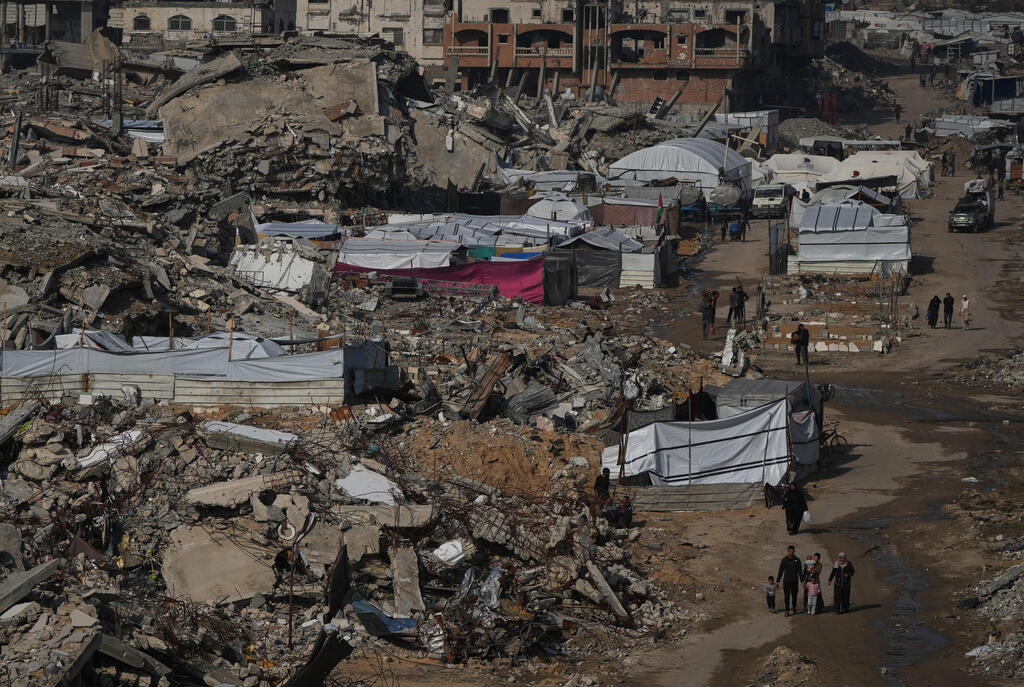
Gaza's Sheikh Radwan neigborhood
(Photo: Abdel Kareem Hana)
This isn’t just an academic distinction; it has real political and strategic implications. It should inform Israel’s opposition to Qatar and Turkey playing a role in managing Gaza. While the U.S. may see them as helpful allies elsewhere, Israel must make the case that not every coalition fits every battlefield. Qatar and Turkey might not stand in the way of an American strike on Tehran — but in Gaza, their involvement would undermine efforts in places like Sheikh Radwan.
The reason? The very different cognitive challenges each arena presents. Qatar and Turkey have actively shaped Gaza’s current ideological landscape — they are part of the problem. And Gaza is not Iran. There, limited influence ops and protest messaging won’t suffice. What’s needed is a total reformation of consciousness. And that is far more difficult.
First published: 15:49, 01.21.26