


The establishment of the National Committee for the Administration of Gaza was framed by the international community as a technocratic masterstroke intended to depoliticize the reconstruction of the decimated enclave.
Composed of 15 supposedly independent Palestinian professionals and headed by the Gaza-born engineer Dr. Ali Shaath, the committee is tasked with the restoration of core public services, the rebuilding of civil institutions and the stabilization of daily life. Under the supervision of President Donald Trump’s newly established Board of Peace, the committee is intended to oversee everything from sanitation and school curricula to the management of electricity and water infrastructure.
However, a closer examination of the committee’s mandate and its relationship with the existing power structures reveals a far more sinister reality. Rather than acting as a bridge to a post-Hamas future, the committee is functioning as a managerial shield that allows the terrorist organization to retain its military grip on Gaza while technocrats provide the administrative cover necessary to unlock international funding.
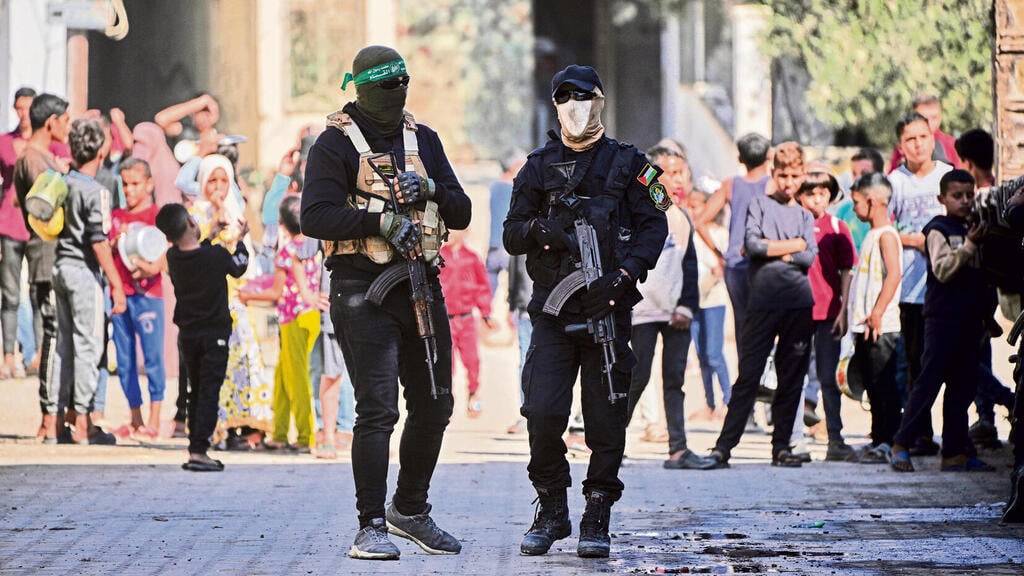
The fundamental flaw in this new governing architecture lies in its explicit exclusion from security matters. Following a high-level meeting between Ali Shaath and Board of Peace member Tony Blair, it was officially clarified that the committee would have no role in the disarmament of armed groups. This limitation is not a minor oversight; it is the cornerstone of a Hamas survival strategy. By limiting the committee’s authority to civilian affairs, the current arrangement allows Hamas to maintain de facto security control over its side of the so-called Yellow Line.
Hamas has recently moved to enhance its visible presence along this poorly demarcated boundary, conducting patrols and infiltration attempts to demonstrate that it alone possesses the coercive power to either support or sabotage the committee’s work.
The legitimacy of the committee is further compromised by the process of its creation. While the 15 members are presented as apolitical, they were selected from a shortlist of 40 individuals jointly agreed upon by Hamas and Fatah. The fact that a terrorist organization responsible for the October 7 atrocities was permitted to vet the very body tasked with replacing its administration should have been an immediate cause for alarm.
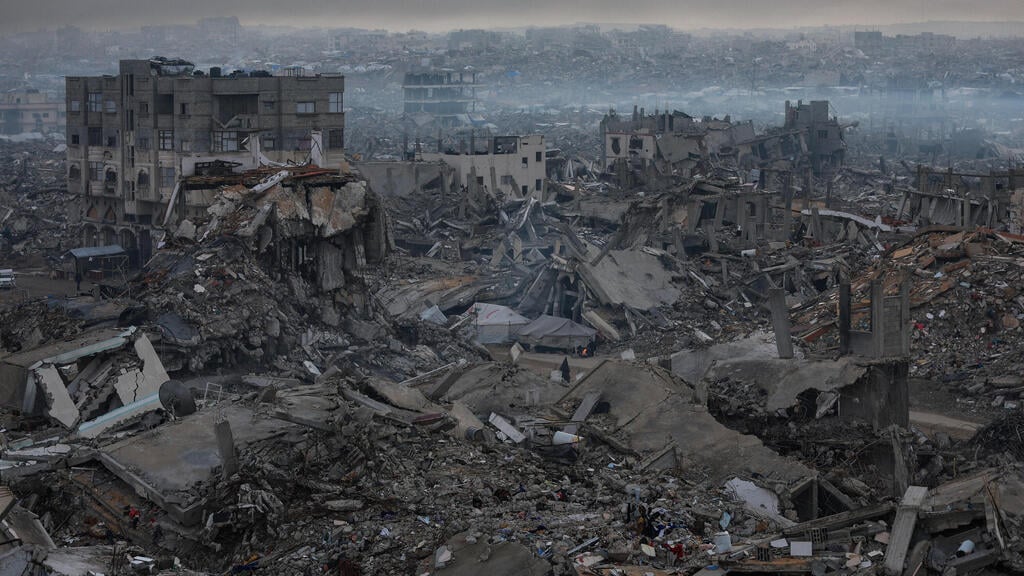
Ruins of Gaza City
(Photo: Dawoud Abu Alkas/Reuters)
Hamas’ public welcoming of the committee’s establishment is the ultimate red flag. The group has recognized that by stepping back from the "front office" of governance, it can evade the direct pressure of Israeli military strikes and the responsibility of public service failures while preserving its core military infrastructure. This "technocratic turn" effectively leaves Hamas armed and entrenched behind a "service provision" shield, which complicates any future efforts by the International Stabilization Force to achieve the comprehensive demilitarization demanded by the White House’s own 20-point peace plan.
This arrangement creates a moral and strategic hazard for the Board of Peace and its member states. The Board’s charter concentrates extraordinary authority in the hands of the permanent chairman, granting him a veto over all decision-making and control over the board’s succession. While this centralizes power in Washington, it also ties American prestige to the success of a governance model that is structurally incapable of neutralizing the radical threat. By focusing on "reconstruction" and "investment attraction" before achieving total disarmament, the Board is essentially treating Gaza as a capital-intensive business project rather than a security problem.
The invitation for regional states to secure permanent seats on the Board for a fee of $1 billion further commoditizes this stability, allowing actors who have historically shielded Hamas to buy influence over the endgame. If the technocratic committee is permitted to function while Hamas remains an armed bloc, the international community is not building peace; it is providing a subsidized lifeline to a genocidal insurgency.
Furthermore, the "Yellow Zone" strategy currently employed by the Israel Defense Forces illustrates the growing disconnect between military reality and technocratic aspirations. The IDF has continued to consolidate territorial control and expand its security frontier further into neighborhoods like al-Tuffah in Gaza City, razing over 2,500 buildings and destroying booby-trapped homes to prevent a Hamas resurgence. Yet, as long as the technocratic committee operates independently of these security imperatives, it risks inadvertently providing the logistical infrastructure that Hamas can re-appropriate once Israeli forces eventually withdraw.
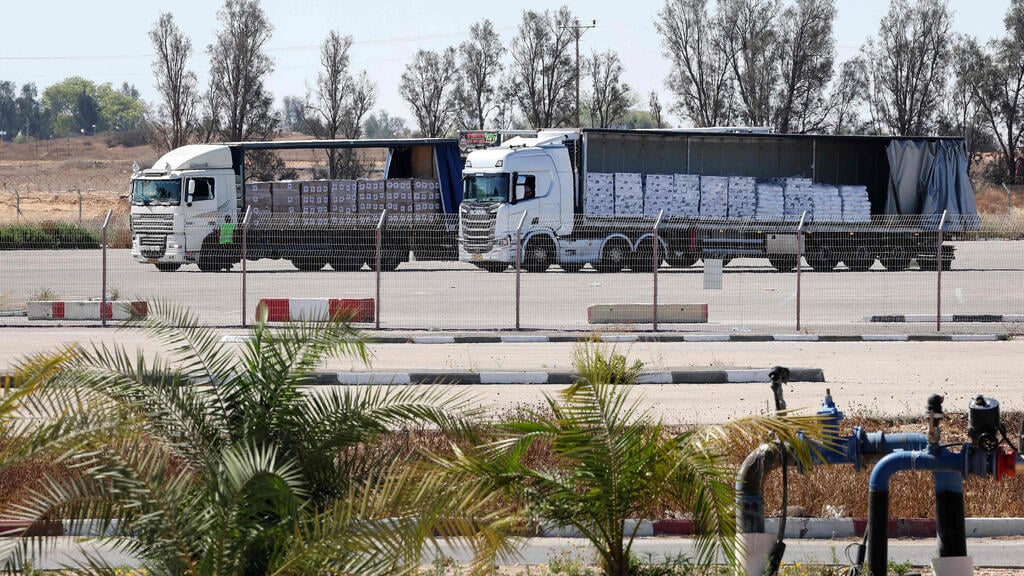
Aid waiting to enter Gaza
(Photo: Jack Guez / AFP)
The committee’s focus on restoring "security control" in its mission statement is a semantic deception; without the power to disarm, "security" in the committee’s vocabulary refers merely to municipal policing, which operates at the pleasure of the prevailing militia.
The committee is explicitly subordinated to a military authority mandated to achieve the full disarmament of all Palestinian factions, every dollar of reconstruction aid is a potential investment in the next conflict. The technocratic shield must be dismantled, and the administrative transition must be made conditional on the verified destruction of every tunnel and the surrender of every weapon. To do otherwise is to accept a Bosnian-style semi-protectorate where the terrorists remain the masters of the house while the world pays for the repairs.
- Amine Ayoub, a fellow at the Middle East Forum, is a policy analyst and writer based in Morocco.
First published: 13:35, 02.02.26