



If you wanna shoot, shoot. Don’t talk. Prime Minister Benjamin Netanyahu, the cabinet and the IDF applied that old rule two weeks ago when they decided to seize Gaza City. Netanyahu created a credible threat by enlisting U.S. President Donald Trump and presenting the cabinet with a proposal the IDF and its chief of staff, Eyal Zamir, were both willing and motivated to execute.
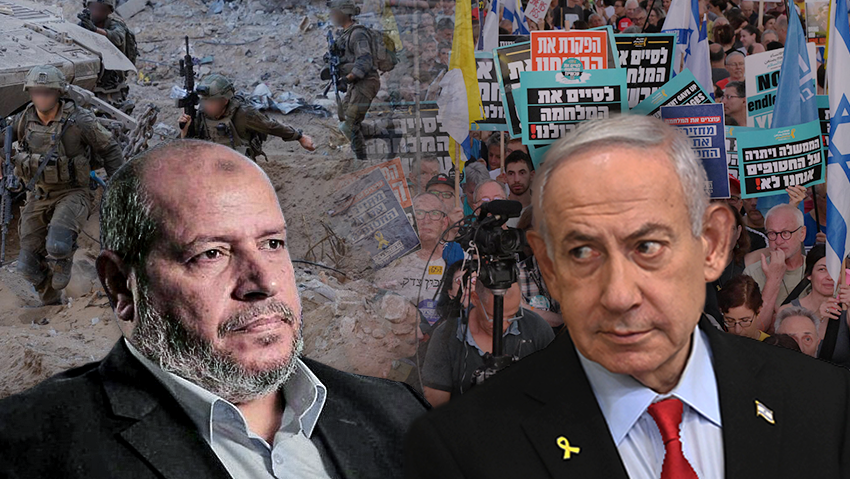
In fact, IDF troops were already moving before the cabinet’s vote, with the 99th Division units creeping into Gaza City’s southern Zeitoun neighborhood. At the same time, the IDF spokesperson issued evacuation instructions in Arabic, prompting thousands to flee central and western Gaza.
Hamas’ Gaza commander, Izz al-Din Haddad, likely hiding in a tunnel, and his adviser, Raed Saad, understood, like Hamas’ delegation in Doha, that Netanyahu was using the threat to force them back to negotiations and into a comprehensive deal: release of all hostages and a permanent ceasefire. But they also realized this “gun,” backed by Trump, was real and ready to fire.
It wasn’t just military pressure that changed Hamas’ position. In July, the group rejected the Witkoff plan, broke contact with mediators, and believed global momentum favored them. Gaza was starving, hostage families were in uproar after Hamas released footage of emaciated captives, and French President Emmanuel Macron was leading a push for recognition of a Palestinian state. Hamas concluded then that it was Israel’s turn to bend.
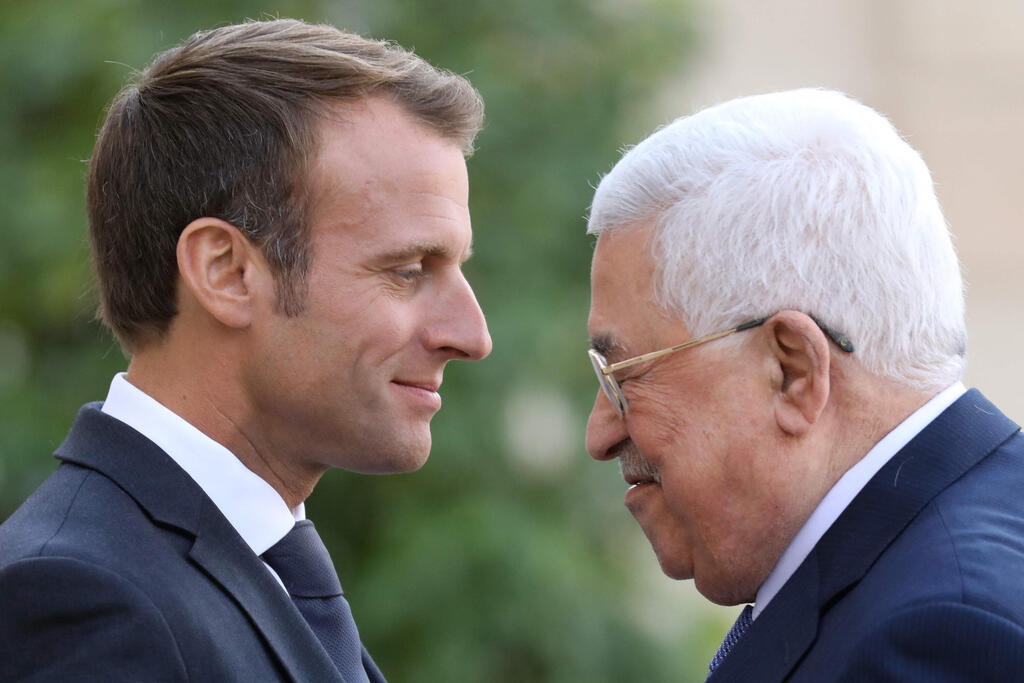
President Macron and President Abbas
(Photo: LUDOVIC MARIN / AFP)
But the cabinet’s decision to move on Gaza City, and the IDF’s readiness to act, flipped the equation. Israel also blunted the “starvation campaign” by easing aid restrictions, while Trump—unexpectedly—stuck to the hard line he set with Netanyahu. Hamas, under pressure, came back to the table and agreed to the very plan it had rejected.
Now Hamas offers a partial deal: 10 living hostages and 18 bodies in exchange for a 60-day ceasefire and a partial Israeli pullback. But the cabinet resolution, reiterated by Netanyahu, insists on nothing less than a comprehensive deal: release of all hostages, demilitarization of Gaza, disarmament of Hamas, expulsion of its leaders and a non-Hamas, non-PA civilian administration.
Accepting a partial deal means 10 hostages would come home and 18 families would receive closure—but 22 remain in danger, and Hamas could stall or sabotage future talks. Worse, as IDF operations continue, the remaining hostages risk being harmed.
Netanyahu argues Hamas is under “atomic pressure”—his phrase for the group’s fear of losing Gaza City, its last stronghold and Haddad’s base. The smarter course, this analysis contends, is to insist on a comprehensive deal before any ceasefire, with phased implementation: first 10 hostages and 18 bodies, then the rest in stages, under a framework agreed in advance.
Unlike the December/January deal, Israel cannot start without knowing the endgame. Negotiations will take time—terms like “disarming Hamas” are open to interpretation—but the destination must be defined. If Israel accepts Abbas’s Palestinian Authority as part of Gaza’s postwar administration, it may secure backing from Arab states, the U.S., and Europe. That contradicts Netanyahu’s rhetoric, but it would deliver all hostages, halt the war, restore Israel’s legitimacy, block Macron’s recognition drive, and unlock Arab and Western aid, including Emirati funding for reconstruction.
Why would Hamas agree? Because the pressure works—for now. But if Israel settles for a temporary 60-day ceasefire, momentum could shift: September’s UN debate may bring mass recognition of a Palestinian state, Trump could abruptly demand an immediate end to the war, or the Gaza campaign could bog down and drain Israel.
Better to close now on a comprehensive deal: phased release of all hostages and a clear plan for Gaza’s future. Mediators are already discussing it with Hamas. A little more patience, combined with steady military pressure, could bring success.