


With Ali Khamenei dead and his son Mojtaba hastily installed under Islamic Revolutionary Guard Corps pressure, Iran has entered the most dangerous phase of its 47-year history. Today’s news cycle — from CNN to Al Jazeera to The Washington Post — is filled with warnings of leadership fragmentation, IRGC power grabs, and the very real risk that the Islamic Republic could collapse into a failed Islamist state far more chaotic and dangerous than the one it replaces.
Explosions continue in Tehran. The Assembly of Experts building in Qom was struck during deliberations. Iranian proxies have hit U.S. and Gulf targets, killing American soldiers. The Strait of Hormuz is effectively closed, sending oil prices soaring. Hezbollah strongholds in Beirut and southern Lebanon are under renewed Israeli assault. This is not orderly transition. It is disintegration.
Gallery
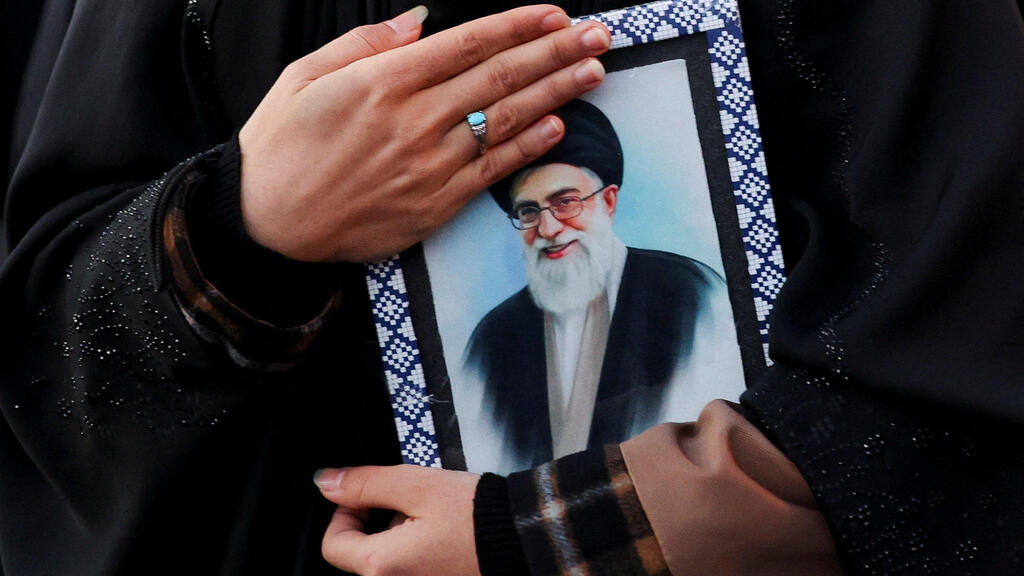
A woman in Tehran mourns the death of Ayatollah Ali Khamenei
(Photo: Majid Asgaripour/WANA (West Asia News Agency) via REUTERS)
The power vacuum is already visible. A temporary leadership council is nominally in charge, but real authority is fracturing among IRGC factions, surviving clerics and regional commanders. Mojtaba Khamenei’s elevation — widely reported as an IRGC-orchestrated move — does nothing to fill that vacuum. It merely adds a thin veneer of clerical legitimacy over what is rapidly becoming a military dictatorship in all but name.
The nightmare scenario is clear: an Iran that collapses not into democracy but into warlordism, with IRGC units controlling nuclear sites, missile arsenals and oil infrastructure while rival factions fight for scraps. A failed Islamist state would export chaos on a scale that makes today’s proxy wars look tame. Hezbollah, the Houthis and Iraqi militias would fracture or radicalize further. Nuclear material could go missing. Refugee waves would overwhelm neighbors already strained by years of conflict.
Announcement on Iranian television of the death of Ali Khamenei


The United States and Israel have the leverage to prevent this outcome — but only if they act with strategic clarity rather than reflexive caution.
First, maintain unrelenting military pressure on regime power centers. The joint campaign that decapitated the old leadership must continue targeting IRGC command nodes, ballistic missile infrastructure, and nuclear enrichment facilities. Weakening the center prevents any single faction from consolidating control.
Second, secure the energy chokepoints immediately. U.S. President Donald Trump’s pledge of naval escorts through the Strait of Hormuz is the right first step. Insurance guarantees and freedom-of-navigation operations will blunt Iran’s only remaining economic weapon and protect global markets from the 1970s-style shock now threatening.
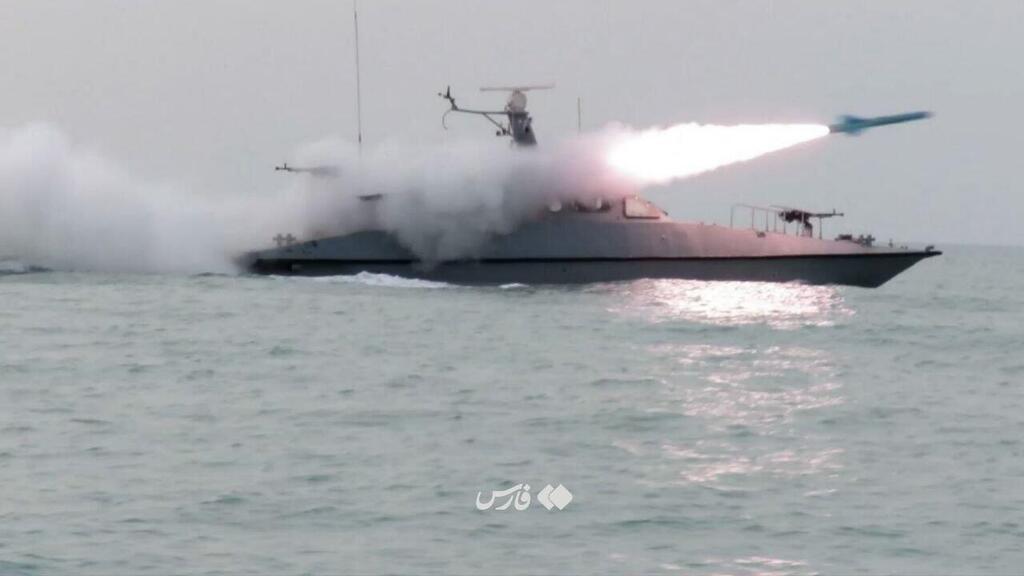
A Revolutionary Guards drill in the Strait of Hormuz last month
Third — and most critically — prepare for the day after. The West must identify and quietly support credible Iranian opposition forces that reject both the mullahs and the IRGC. This means engaging diaspora networks, funding independent media inside Iran, and signaling clearly that the goal is not endless war but the emergence of a non-theocratic, non-expansionist successor state.
Avoid the mistakes of 2003 Iraq. No large-scale occupation. No attempt to micromanage internal politics from Washington. Instead, offer clear red lines: no nuclear weapons, no terrorism sponsorship, secure borders for neighbors. Back those red lines with sustained air and naval power until a new order stabilizes.
 Amine Ayoub
The alternative — a hands-off approach that lets the IRGC fill the vacuum — risks a nuclear-armed failed state or a partitioned Iran that becomes a permanent battlefield. Neither serves American or Israeli security.
Today’s events prove the regime was always fragile. Khamenei’s death and the rushed succession have removed the last fig leaf of unity. The power vacuum is real, but it is also an opportunity. With decisive action now — military pressure, economic isolation of the IRGC and strategic outreach to the Iranian people — the United States and its allies can ensure that what replaces the Islamic Republic is better, not worse.
The window is narrow. Hesitation will hand victory to the hardest-line factions. Bold, coordinated policy can turn this crisis into the end of the world’s leading state sponsor of terrorism. The choice is ours — but the clock is ticking.
Amine Ayoub, a fellow at the Middle East Forum, is a policy analyst and writer based in Morocco