

The elections for the 26th Knesset are over, but the final stretch of a closely contested race that ended in political deadlock was overshadowed by two serious scandals whose full details remain unclear.
The first involves the arrest of three activists from the Arab Ra'am party in the southern Negev region, who were found with envelopes containing cash allegedly intended to bribe voters into supporting the party. The second concerns suspicions that Qatar and Turkey spent money in an attempt to improperly influence Israeli public opinion ahead of the election.
Gallery
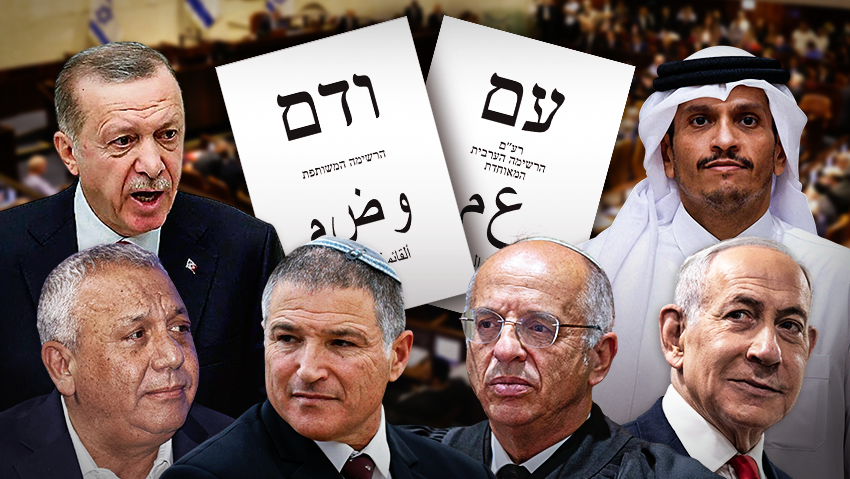
(Photo: Olivier Fitoussi, Alex Kolomoisky, Knesset, Gadi Kabalo, Jewel Samad/Pool Photo via AP, AFP, Shutterstock)
Prime Minister Benjamin Netanyahu's Likud party has linked the two cases, dubbing them "Ra'am-gate," a reference to the American Watergate scandal and Israel's separate "Qatargate" affair, which implicated members of Netanyahu's inner circle.
But the two cases are being investigated separately, and authorities have so far identified no suspected connection between them. Police are investigating the alleged vote-buying, while the Shin Bet domestic security agency is leading the foreign interference investigation with assistance from the Mossad intelligence agency.
Here is what is known about the allegations, those involved and their potential implications for Israel's political future.
The cash envelope investigation
Who are the arrested Ra'am activists, and what do they say?
On the night before polling stations opened, police arrested three Ra'am activists: Ibrahim al-Gharibi, 42, from the Al-Azazmeh community; Hussein Masoudin, 63, from Segev Shalom; and Saif Abu Riash, 38, a physician from the Al-Sana tribe.
The men were found with envelopes containing cash and ballot slips for Ra'am, an Islamist Arab party led by Mansour Abbas. Their arrests were made public the following morning, as Israelis headed to the polls.
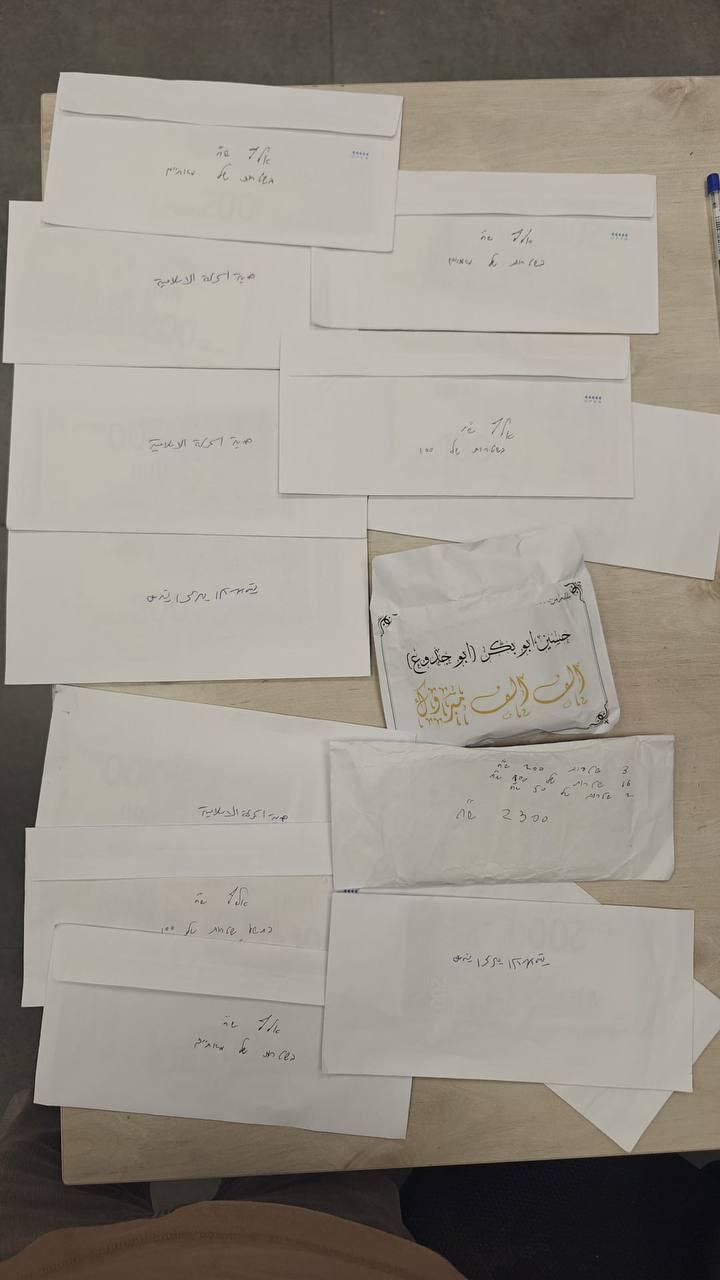
Cash envelopes seized at the suspects' homes
Four additional suspects were subsequently arrested, including three school principals from the Bedouin communities of Tel Sheva and Segev Shalom. They were later released to house arrest.
The original three suspects appeared in court Sunday for hearings on whether their detention should be extended. Abu Riash, the physician, was ordered released.
The judge criticized police, who had sought to prohibit Abu Riash from using the internet, describing him as a law-abiding citizen leading an ordinary life.
According to the judge, investigators had provided no explanation for why Abu Riash should be denied internet access, while officers from Lahav 433, Israel's national police investigative unit, could not explain why he should remain under house arrest.
"The state of the investigation file is exactly where it was," the judge said.
Police subsequently requested a stay of the release order until 6 p.m. to allow them to file an appeal.
Investigators also sought to extend the detention of the two other original suspects, reversing an earlier plan to release them Saturday night.
Al-Gharibi is suspected of violating election laws after police searching his home discovered cash, while a search of his vehicle uncovered envelopes bearing Arabic writing, green shirts, green flags and Ra'am ballot slips.
He was released to house arrest under restrictive conditions.
Masoudin, meanwhile, alleged that he was the victim of political persecution.
His attorney said envelopes discovered at his home bore the name of the Islamic Movement, with each containing 1,000 shekels ($320) intended as charitable assistance for low-income families.
Police also seized another envelope containing 12,000 shekels ($3,840), which Masoudin said belonged to his son.
His detention was extended until Tuesday.
During the raids, police also seized mobile phones and computers. Cyber specialists from Lahav 433 are examining the devices for evidence that could substantiate the allegations.
Attorney Samir Abu Abed, who represents two of the three original suspects, said his clients deny any wrongdoing.
"The money seized was intended for distribution by the nonprofit organization to poor families and has no connection whatsoever to party activity," he said.
However, a Bedouin source from the Negev familiar with local political activity described what he said was a vote-buying system used by Arab parties, particularly Ra'am, in the days preceding elections.
According to the source, party activists visit the homes of financially disadvantaged residents and offer payments of 200 to 300 shekels ($64 to $96), including to families affected by home demolitions and residents of unrecognized Bedouin villages.
The money is presented as assistance for people in need, the source claimed, but recipients are asked in return to vote for the party.
In other cases, the source alleged, fuel vouchers worth 100 shekels ($32) are distributed to people who transport residents to polling stations.
The amounts can vary depending on family size, with payments allegedly distributed a day or two before an election or even on Election Day itself.
"We learned it from Shas," the source said, referring to the ultra-Orthodox Jewish political party.
What do police say, and why has their conduct come under scrutiny?
The investigation was transferred to the National Fraud Investigations Unit, part of Lahav 433.
During a court hearing on Election Day, police acknowledged that officers did not have search warrants for the activists' homes when the arrests were made, but searched them anyway.
Despite issuing a strongly worded statement on Election Day morning, police officials later acknowledged that investigators had not yet assembled substantial evidence in the case.
The investigation remains ongoing.
The admissions raised questions about the decision to arrest the suspects before polling stations opened, without first establishing sufficient evidence of the alleged offenses.
In proceedings involving Abu Riash at the Be'er Sheva Magistrate's Court, a judge initially ordered him released to house arrest. The district court subsequently overturned that decision.
Neither court, however, found that police had engaged in improper conduct.
At one hearing, a Lahav 433 representative offered an unusual explanation of why investigators considered the physician's activities suspicious.
"He holds gatherings at people's homes to get them to vote for Ra'am even though he is a doctor, and that's problematic," the investigator said.
Following the arrests, police said the investigation concerned suspected "involvement in attempted election bribery through funds allegedly intended for distribution to citizens in exchange for their votes for the Ra'am party."
The suspects were investigated on suspicion of conspiracy to commit a felony, giving or offering election bribes, unlawfully introducing or distributing ballot slips and interfering with the proper conduct of an election.
Regarding the cash envelopes allegedly intended for vote-buying, Dean Livne, acting director-general of the Central Elections Committee, said the suspects had been arrested before reaching polling stations.
He described the case as an isolated incident.
What is Likud's connection, and how has Mansour Abbas responded?
Likud quickly attacked Ra'am and accused it, along with the Joint List alliance of Arab parties, of "stealing the election."
The allegations formed part of Likud's broader campaign challenging the legitimacy of Arab political parties.
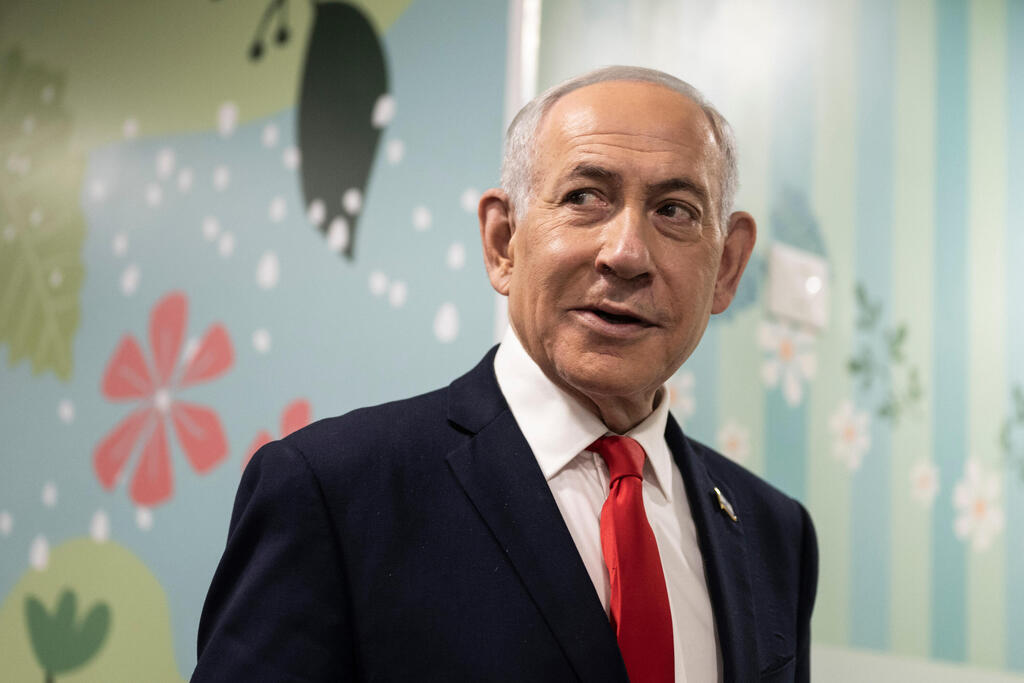
Prime Minister Benjamin Netanyahu
(Photo: Jewel Samad/Pool Photo via AP)
According to a Channel 12 report, the intelligence that prompted police to investigate the arrested Ra'am activists was provided by Ido Norden, acting chief of staff to Netanyahu.
After the arrests became public, Ra'am filed a formal complaint with the Central Elections Committee, alleging a deliberate attempt to disrupt voting for the party.
"We were singled out as a target," party officials said.
On Election Day morning, Ra'am claimed police had arrested several of its prominent activists in the Negev before dawn without a clear reason.
The party also alleged that its ballot slips had been vandalized in the northern cities of Nazareth and Shefa-Amr.
Abbas subsequently denied any involvement in either the vote-buying investigation or the separate foreign interference affair.
"We will cooperate fully with all law enforcement authorities to establish the truth," he said.
The suspected foreign interference investigation
What are the allegations?
On Thursday, several hours before the final election results were published, Central Elections Committee Chairman Noam Sohlberg, deputy chief justice of the Supreme Court, sent an unusual letter to Shin Bet Director David Zini instructing him to open an investigation into suspicions that foreign actors had attempted to interfere improperly in Israel's election.
The allegations concern suspected efforts by Qatar and Turkey to spend money influencing Israeli public opinion.
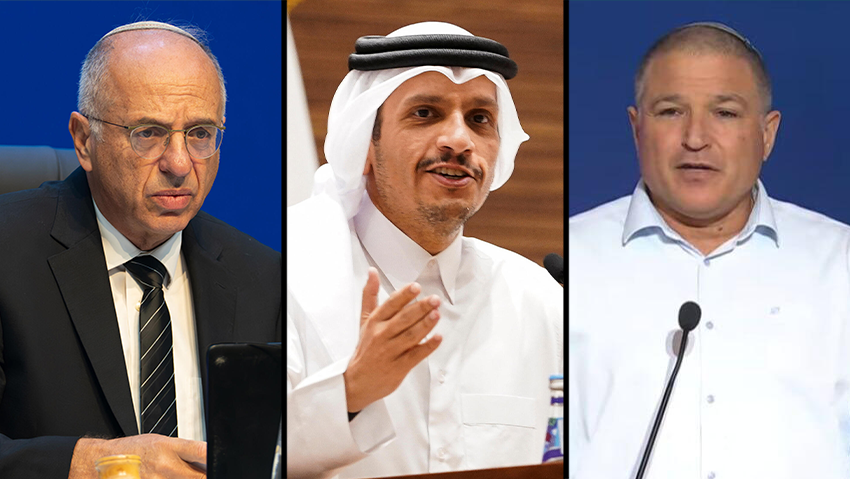
Central Elections Committee Chairman Noam Sohlberg, Qatari Prime Minister Mohammed Al-Thani, Shin Bet chief David Zini
(Photo: Central Elections Committee, Nathan Howard/Pool Photo via AP, Roy Yadovsky)
Sohlberg, however, qualified his instructions in the letter.
"I am not in a position to attest to the nature of the suspicions," he wrote.
The information underlying the allegations had, in fact, been provided to Sohlberg by Zini himself, after which the elections committee chairman ordered the investigation.
Two official sources confirmed to ynet that the Shin Bet, whose responsibilities include preventing threats to national security, had possessed intelligence about suspected unlawful money transfers even before the election.
The Central Elections Committee said it had not been informed of the allegations.
On Election Day, Zini publicly described the voting process as "secure and supervised."
The suspected effort allegedly involved tens of millions of shekels intended to influence the election outcome. Zini characterized the intelligence as "solid information."
Zini met Netanyahu the day before polling stations opened and Gadi Eisenkot, chairman of the Yashar! party and a former IDF chief, on Election Day morning. He briefed both leaders on the affair.
Eisenkot also met Sohlberg in connection with the allegations.
Zini met opposition leader Yair Lapid as well. Lapid subsequently said there was "no obstacle whatsoever to swearing in the Knesset."
Far-right politicians Bezalel Smotrich and Itamar Ben-Gvir called for the arrest of Arab party leaders if sufficient grounds existed.
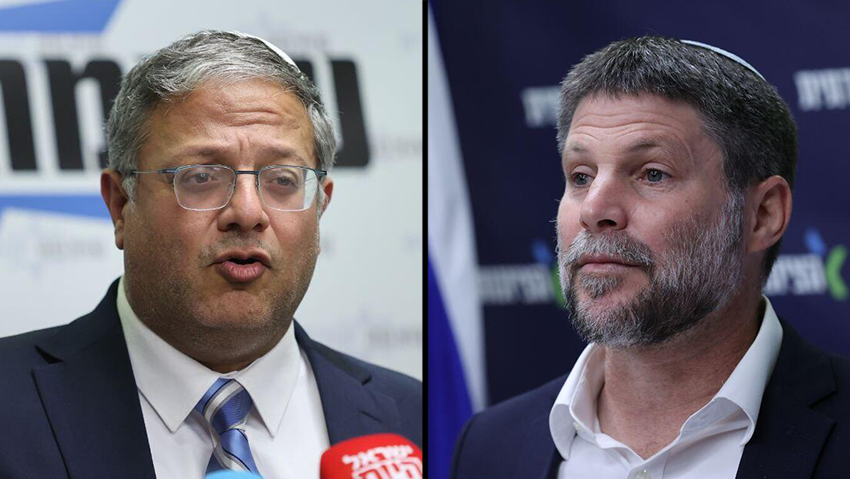
Itamar Ben-Gvir, Bezalel Smotrich
(Photo: Alex Kolomoisky)
Despite their accusations, no lawmakers or candidates from Arab parties have been questioned on suspicion of involvement in the foreign interference case.
Eisenkot, for his part, accused Netanyahu and his political allies of conducting an influence operation and insisted that the new Knesset must be sworn in on schedule.
Likud linked the allegations to the possibility that Eisenkot's bloc could replace Knesset Speaker Amir Ohana, a Likud member.
"He must not be replaced through votes bought with cash," the party said.
President Isaac Herzog urged political leaders to "refrain from tarnishing an entire community."
Who is investigating the allegations?
The Shin Bet is leading the investigation.
On Friday, it was reported that the Mossad would join the inquiry, providing targeted assistance on matters falling within the foreign intelligence agency's responsibilities.
The Mossad's involvement followed a request from the Shin Bet.
At this stage, there is no suspicion that Ra'am officials were involved in the alleged foreign interference.
Abbas welcomed the investigation and directed a pointed response at Netanyahu.
"To Abu Yair," he said, using an Arabic nickname for Netanyahu, "who employs Qatari agents in his office, we have one message in response to the campaign of incitement and delegitimization he is waging against Arab citizens: 'There will be nothing, because there is nothing.'"
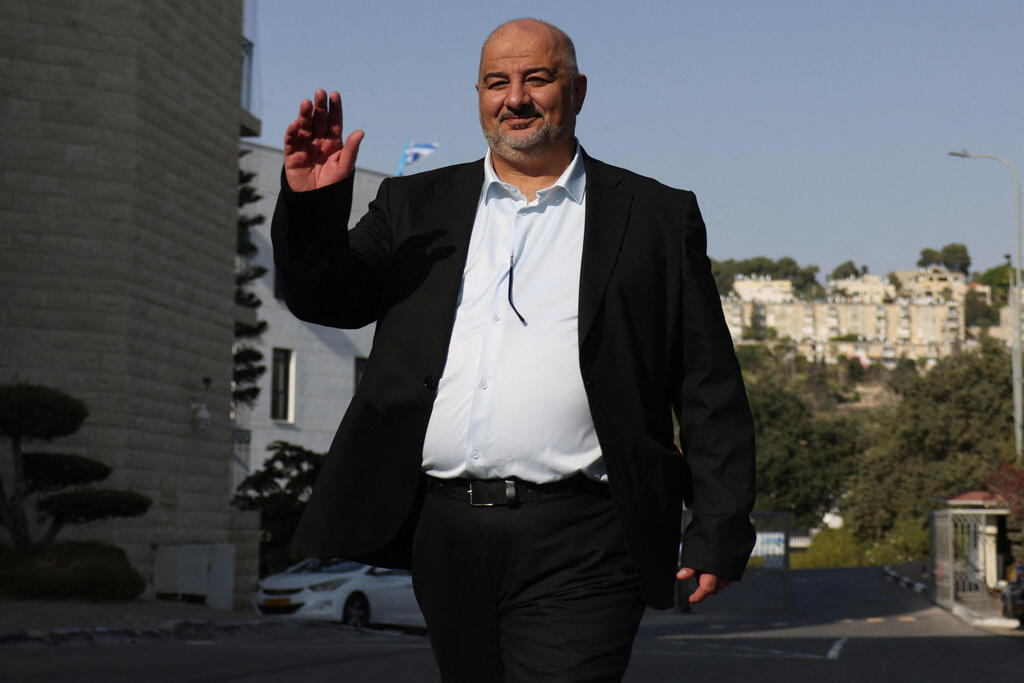
Ra'am leader Mansour Abbas
(Photo: AHMAD GHARABLI / AFP)
The final phrase echoed a slogan Netanyahu has repeatedly used to dismiss corruption allegations against himself.
Even before the foreign interference allegations emerged, Likud had accused Arab parties of election fraud.
The party said it had submitted "hundreds of testimonies and pieces of evidence of election theft at numerous Arab polling stations."
Its allegations included threats and violence against polling station officials, multiple voters entering voting booths together, people voting under more than one identity, discrepancies between the number of ballot envelopes and registered voters and the use of prohibited software to encourage voter turnout.
Police rejected the claims.
"There is no investigative or intelligence support for the allegations," police said.
They added that Election Day had passed with relatively few incidents affecting election integrity, including compared with previous elections.
How have Qatar and Turkey responded?
Majed al-Ansari, spokesperson for the Qatari Foreign Ministry, responded sarcastically several hours after the investigation became public.
"In Israel, they accuse us of buying Netanyahu, buying the left, and now buying the Arab vote," he said. "If all these claims were to be believed, Qatar would probably own all of Israel."
Turkey also denied any involvement in attempts to interfere with the election.
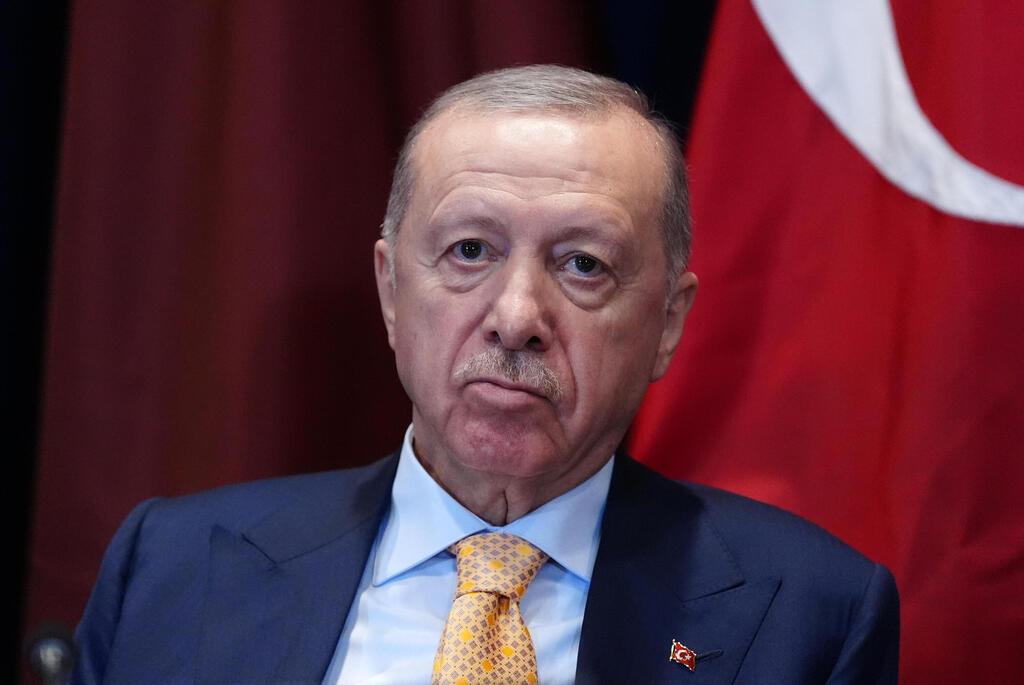
Turkish President Recep Tayyip Erdogan
(Photo: AP Photo/Julia Demaree Nikhinson)
"The allegations circulated in certain media outlets and on social media are completely baseless," Ankara said. "These accusations are part of a deliberate and blatant disinformation campaign aimed at manipulating the public."
How serious are the allegations?
In its first official statement following the disclosure of the foreign interference investigation, the Shin Bet emphasized that the inquiry was narrowly focused and should not cast suspicion on an entire community.
"Only those who acted unlawfully will be dealt with," the agency said.
It added that Sohlberg would receive the investigation's findings and make the relevant decisions.
Senior legal sources told ynet Thursday that the information did not, at this stage, constitute a dramatic development.
Rather, they described it as potentially significant intelligence that authorities could not disregard.
A senior official familiar with the investigation offered an even more restrained assessment.
"This is a much smaller affair than people are making it out to be," the official said.
Could the Knesset's swearing-in be delayed or canceled?
The newly elected Knesset is scheduled to be sworn in on Nov. 10.
For now, there is no indication that the ceremony will be postponed or canceled.
Sohlberg has requested findings from the investigation within a week because of the tight legal timetable.
Under Israeli law, challenges to election results can be filed within two weeks of the election at the Jerusalem District Court, which may extend the deadline.
Political parties and the attorney general are entitled to file such appeals, even in the absence of criminal proceedings.
ynet learned Thursday that Likud was preparing to petition the Central Elections Committee, although no subsequent filing has been reported.
An Israeli election has never been annulled in its entirety, and such an outcome is considered unlikely in this case as well.
If investigators establish violations of election law, such as vote-buying, and the violations can be traced to specific polling stations or geographic areas, the district court could invalidate the results only in those locations and order repeat voting there.
Such a decision would not necessarily require a nationwide election.
Crucially, Israeli law expressly provides that an election appeal does not suspend the work of the newly elected Knesset.
It also states that the outcome of an appeal does not undermine the legality of decisions already made by parliament.
That means the new Knesset can begin its work on schedule, regardless of the continuing investigations or any subsequent legal challenges to the election results.