

U.S. Central Command said Sunday that American forces had completed an eighth consecutive night of strikes against Iran, targeting coastal surveillance and air defense facilities, maritime capabilities and missile and drone storage sites.
The strikes, carried out at President Donald Trump’s direction and completed at 11:30 p.m. ET on July 18, were intended to further degrade Iran’s military capabilities, CENTCOM said.
US launches a wave of strikes on Iran, July 17, 2026
(Video: CENTCOM)


American forces also targeted Iran’s Revolutionary Guard Corps units that CENTCOM said had launched attacks against U.S. service members in Jordan on July 17.
More than 50,000 U.S. service members are operating across the Middle East, the command said, describing them as highly vigilant and prepared for further action.
Iranian media reported overnight strikes in Bandar Abbas, Qeshm Island, Sirik and Hajiabad, while Iran’s military said it launched suicide drones at U.S. targets in Kuwait, including an ammunition depot at Camp Arifjan and radar systems at Ali Al Salem Air Base. Separately, security officials told Reuters that an explosive drone was intercepted near the U.S. Consulate in Erbil, Iraq.
Israel is closely monitoring the escalating conflict between the United States and Iran as American forces enter a ninth day of operations following eight consecutive nights of strikes. Israeli officials assess that Tehran is seeking to avoid attacking Israel because of the consequences of drawing it directly into the fighting.
For now, U.S. officials have made clear they want Israel to remain on the sidelines. Israel has offered to join the strikes, but Washington has rejected the proposal, according to Israeli officials.
Any Israeli involvement would likely depend on whether Iran attacks Israeli territory. Even so, Israel is preparing for scenarios in which the confrontation expands quickly, and officials say the military has prepared what they described as “surprises” for Tehran.
The preparations intensified after U.S. Central Command announced that two American service members were killed in Jordan while U.S. and partner forces defended against Iranian ballistic missile and drone attacks. Another service member remains missing.
The Wall Street Journal reported that the United States is reinforcing its fighter presence in the Middle East, sending F-16s from Spangdahlem Air Base in Germany and deploying F-35 stealth fighters from Britain. The aircraft could be used to strike Iranian radar systems linked to surface-to-air missile batteries, the report said.
The United States is also sending additional aerial refueling aircraft to Israel. The IDF confirmed Saturday that the planes would be stationed at Israeli Air Force bases.
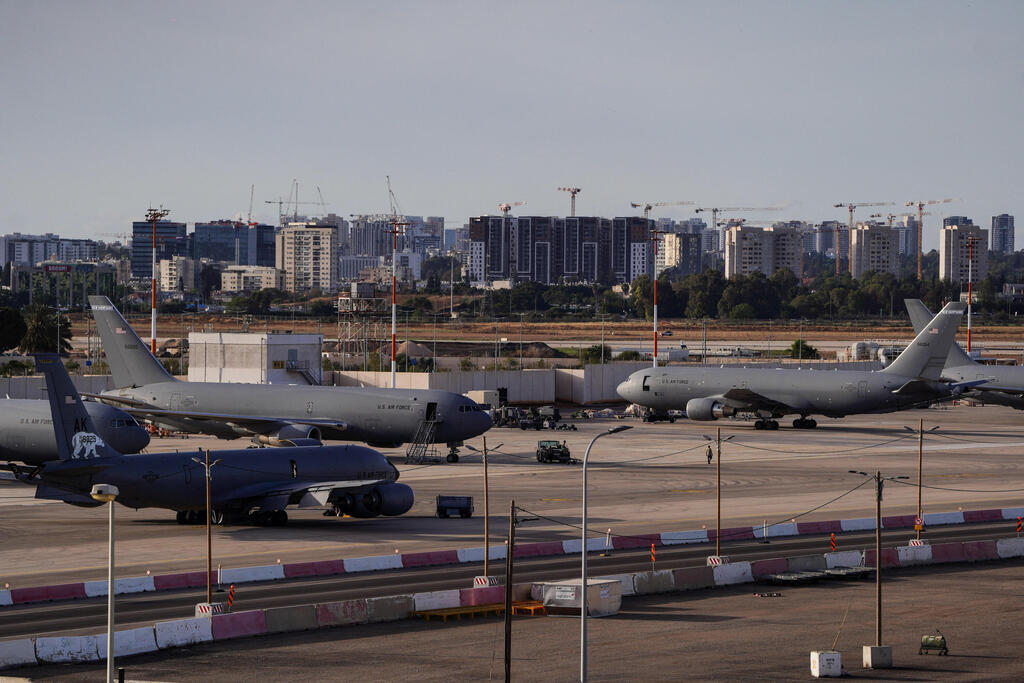
“The American partner decided to adjust its force posture in the region, and as part of that move, in coordination with the Israel Defense Forces, it was decided to add more refueling aircraft to the existing force in Israel,” the military said.
The IDF said the tankers would use military bases rather than Ben Gurion International Airport to minimize disruption to civilian transportation and for operational reasons.
Israeli officials said U.S. crews had preferred to stay near Ben Gurion Airport because of its proximity to Tel Aviv, but transportation is being arranged from bases in southern Israel to the city during off-duty hours.
Israel prepares target list
As U.S. strikes increasingly target Iranian bridges, railway infrastructure and energy facilities, Israel has prepared its own list of potential infrastructure targets.
Israeli officials say that if Washington approves Israeli participation, or if Iran attacks Israel, the military could resume operations it did not complete before the previous ceasefire. The focus would include infrastructure, with the stated aim of accelerating pressure on Iran’s government.
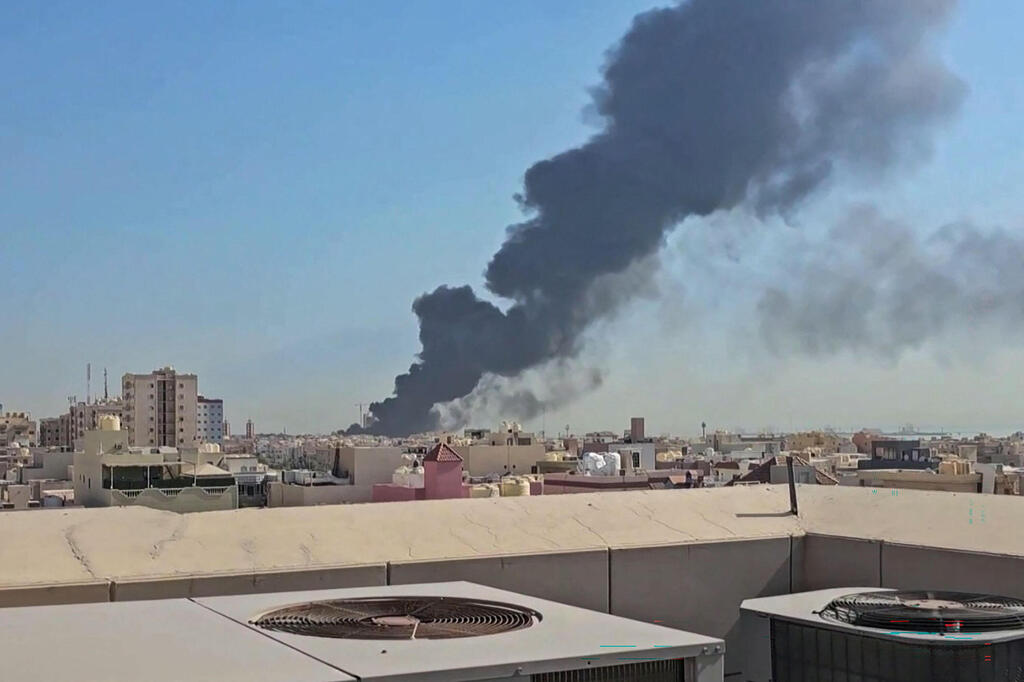
Iranian strikes on Kuwait
(Photo: various sources / AFP)
Israel is also preparing for the possibility that Iran could respond through regional allies, including Hezbollah in Lebanon and the Houthi rebels in Yemen, or through attacks against Israeli and Jewish targets abroad.
“It is possible,” a senior Israeli official said when asked whether Israel could enter the fighting. “The memorandum of understanding is dead, and they are attacking neighboring countries, including Qatar, Jordan and Kuwait.”
“Israel must prepare for the possibility that they will try to attack us,” the official said. “But if they do, they will pay a very heavy price. We will not stop as we did last time.”
Maj. Gen. Majid Mousavi, commander of the Revolutionary Guard’s aerospace force, issued a warning Saturday to Arab governments.
“Rulers of Arab countries, take Iran’s final warning seriously,” he said.
Worldwide U.S. travel alert
The U.S. State Department issued a worldwide security alert after earlier warnings focused on the Middle East, urging American citizens to exercise increased caution around the globe.
The department cited rising tensions in the Middle East and concern that Iran-aligned groups could target U.S. interests and American citizens overseas.
“Due to heightened tensions in the Middle East, the security environment remains complex with the potential for unforeseen escalation,” the department said. It noted that U.S. diplomatic facilities had already been targeted and warned that travelers could face flight cancellations and periodic airspace closures.
One of the principal threats under review is the use of drones. Israel is considering tougher regulations and a broad ban on civilian drone operations in an effort to make hostile aircraft easier to detect and intercept.
Iran accuses US of breaking agreement
Iranian Supreme Leader Mojtaba Khamenei accused Washington of violating the ceasefire agreement between the two countries.
“The violation of the memorandum of understanding once again proved the worthlessness of the U.S. president’s signature,” he said in a written statement.
Calling the United States “the Great Satan,” he added: “Now that the American enemy seeks to incite war, it should know that the Iranian nation and the resistance front have unforgettable lessons in store for it.”
Fighting between Iran and the United States resumed over the past week. American forces have struck Revolutionary Guard military targets as well as civilian infrastructure, while Iran has fired missiles and drones across much of the Middle East but has so far avoided attacking Israel.
Since the fighting resumed, Iran has attacked targets in Jordan, Iraq, Kuwait, Bahrain, Qatar, Saudi Arabia, the United Arab Emirates and Oman.
In addition to strikes on U.S. bases, Iran on Saturday attacked a power generation and water desalination facility in Kuwait and a site operated by Kuwait Petroleum Corp.
The deaths in Jordan were the first U.S. military fatalities reported since the latest round of fighting began. CENTCOM said the two service members were killed while American and partner forces defended against Iranian missiles and drones. One additional service member was listed as missing.
The Wall Street Journal reported that the troops were killed at Muwaffaq Salti Air Base, where a U.S. THAAD missile defense system had previously been damaged in March.
According to the report, 16 U.S. service members have been killed since the conflict began Feb. 28.
First published: 23:32, 07.18.26