


Unlike the IDF's incursion into Gaza in the early days of the war following the Hamas massacre on October 7, the current offensive is meant to partition the Strip, to allow forces to slowly advance into Hamas strongholds in a relatively safer manner. The military has suffered fewer injuries but at the cost of a months-long operation.
Israel's legitimacy eroding
There are multiple reasons for the slow pace of advance, including allowing for negotiations for a ceasefire and hostage exchange agreement to yield results. The military has also been fighting with a limited and exhausted force after 20 months of war on multiple fronts.
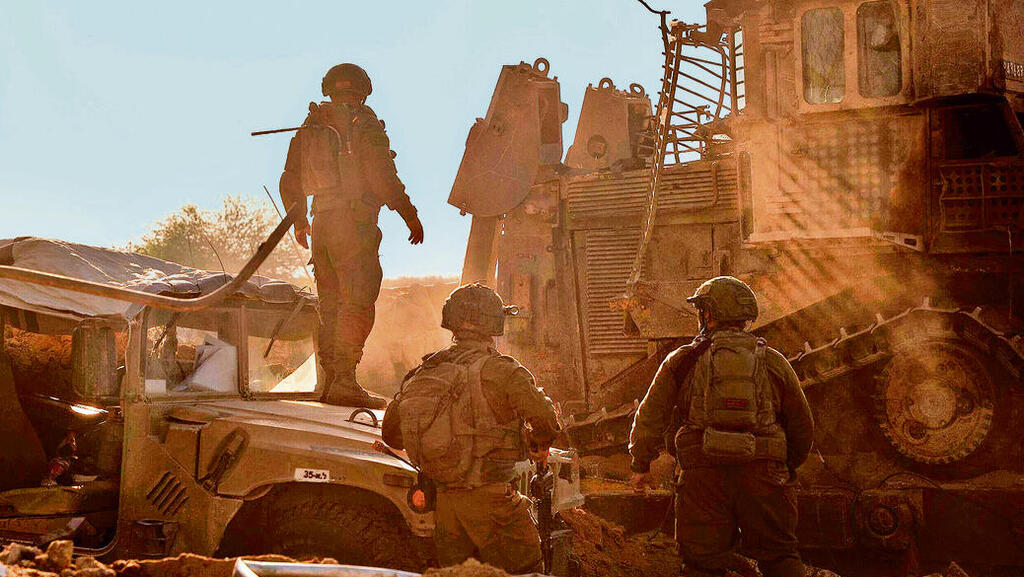
In official statements, the IDF says it is deploying five divisions to the war in Gaza, but on the ground, there are fewer troops compared to the size of the force that was deployed when the war began.
The IDF's aim is to reach the remaining Hamas armaments, including thousands of rockets, dozens of which have the ability to reach Tel Aviv. The military also intends to kill the remaining commanders of the terror group, specifically the commander of northern Gaza, Izz ad-Din al-Haddad, who survived multiple assassination attempts.
Although the IDF has entered areas that had been fought over seven or eight times in the past, the government has yet to advance any option for an alternative to Hamas as the political leadership in Gaza and its over two million residents remain in the enclave.
Gazans storm food distribution center


A senior IDF officer said this week that the operation currently underway would be completed within two months, but previous estimates have been proven unrealistic. Meanwhile, the aerial bombardments of the Strip have increased and the civilian casualties are mounting, including children being killed.
Images emerging from Gaza are horrific and damaging to Israel and are threatening to end any legitimacy the country had to wage the war.
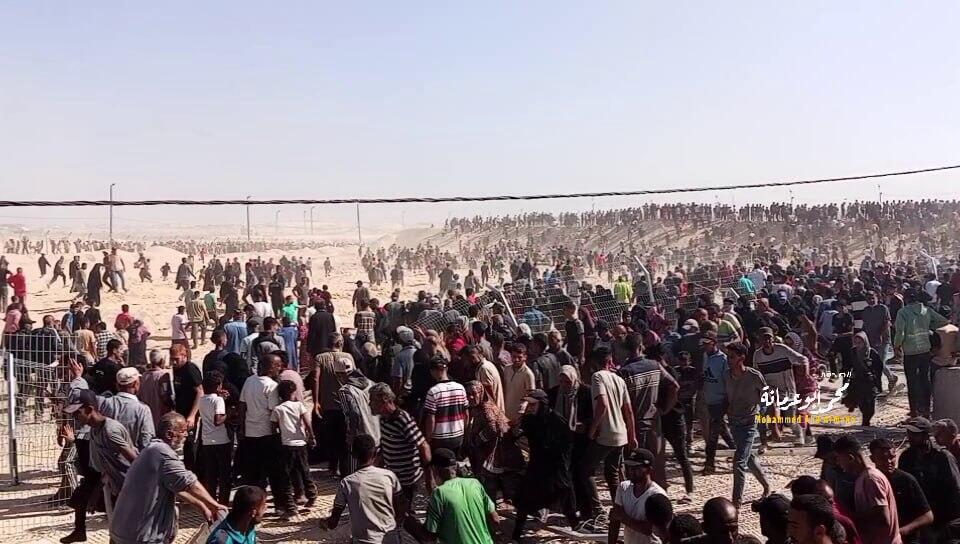
Gazans storm food distribution center
Among Israelis, the consensus that the war remains just, after the massacre, is also eroding. There is public debate over the humanitarian crisis in the Strip and the resumption of aid deliveries after Israel suspended aid deliveries.
Between 100 and 200 trucks carrying food, fuel and medicines enter the Strip daily. Half are intended for the distribution centers operated by an American NGO and the rest are sent to the same aid storage facilities, especially in northern Gaza, which have been used in the past and had been a source of income for Hamas.
The riots that broke out on Tuesday, when a mass of Gaza residents stormed the distribution center that had just opened in Gaza, did not surprise officials in the military. "Similar attempts to control the movement of civilians at the Netzarim Corridor also failed," said one. "This is not the fault of the American company hired to do the job. It is the fault of the government that defined the mission under the existing conditions."
The declared goal of ministers like Finance Minister Bezalel Smotrich is for Israel to occupy Gaza and establish a military government, 20 years after Israel pulled out of the Strip.
IDF targets Hezbollah
Israeli troops are also deployed across Israel's northern borders in Lebanon and Syria.
The IDF operates nearly daily against Hezbollah targets, mostly in South Lebanon, and thus far the Iranian proxy has not responded militarily. Over 400 Hezbollah operatives have been killed since the ceasefire last November. If and when the terror group retaliates, it will likely target the five outposts held by the military inside Lebanon in strategic points to protect the communities along the border.
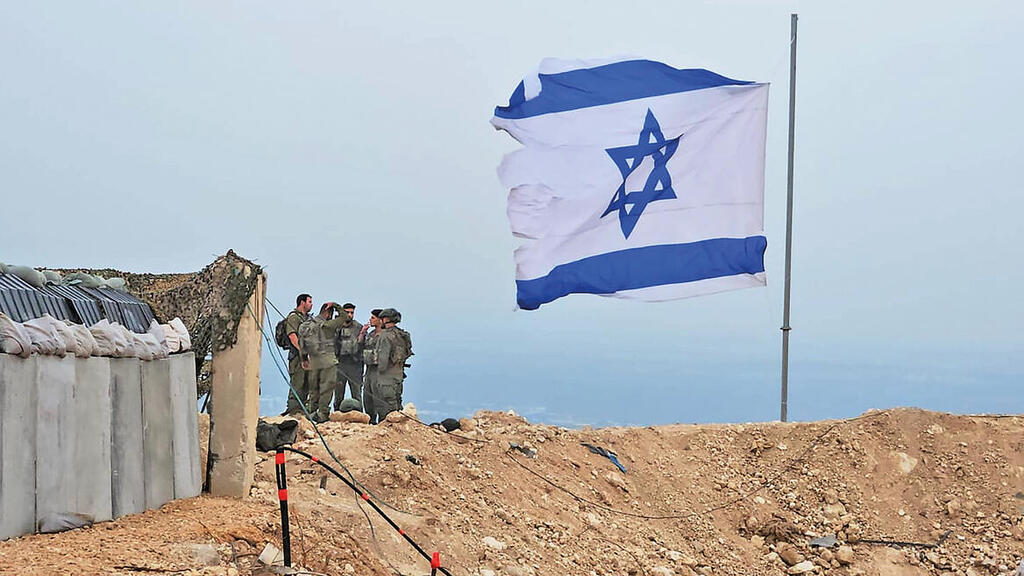
Israeli troops in Lebanon
(Photo: Yoav Zitun)
Hezbollah has been using the time to regroup and rebuild its capabilities after suffering the consequences of the war, through the smuggling of arms and cash. The IDF has been partially successful in combating these efforts.
Although the Galilee has been calm since the ceasefire agreement was reached, many of the residents evacuated at the start of the war have not yet returned.
Officials in the military were encouraged by the apparent success of the international mechanism put in place to ensure Hezbollah does not return to the border. The IDF provides intelligence on where weapons are stored and the soldiers of the Lebanese army arrive and destroy them under the watchful eye of the IDF and the supervision of the U.S.. But Hezbollah is still present south of the Litani River.
Syria is deceptively calm
There are nine outposts held by the IDF in Syria, after the military moved across the border during the fall of the Assad regime last July.
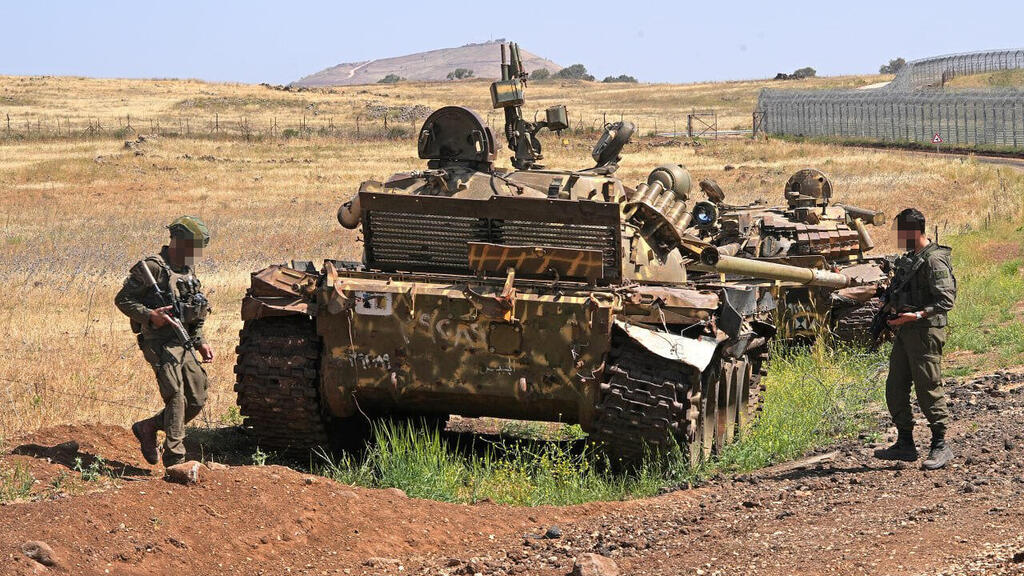
Brigade 474 fighters on the Syrian border
(Photo: Effie Sharir)
Although there appears to be calm near the Israeli border, there are still villages where weapons are being held by Islamist supporters of ISIS, especially near the convergence of Israel, Syria and Jordan borders. Attempts to enter these villages were met with gunfire that thankfully did not cause injury.
Meanwhile, there are reports of discussions between representatives of Israel and the new Damascus regime on agreements that would ensure the border between the two countries remains peaceful.
Yemen: A dead end
Since the start of the war, Israel has come under attack from the Iran-backed Houthi rebels in Yemen. Once the fighting in Gaza resumed, the attacks increased with missile fire, sending millions of Israelis into shelters nearly every other day.
On Wednesday, the IDF carried out a strike on the airport in Sanaa, Yemen in response to missile fire targeting Israel. The airport just resumed operations after an earlier strike this month.

The destruction at Sana'a airport after an Israeli attack
(Photo: Osamah Abdulrahman/AP)
After U.S. President Donald Trump announced he was ending his attacks on the rebel army and had reached a deal ensuring safe passage for American vessels in the Red Sea, Israel has been the only country that continued to attack rebel targets, but to little avail.
Get the Ynetnews app on your smartphone: Google Play: https://bit.ly/4eJ37pE | Apple App Store: https://bit.ly/3ZL7iNv
Although most of the Houthi missile and drone fire had been intercepted, it took just one missile to breach aerial defenses, which are not 100% impenetrable, to fall in the Ben-Gurion International Airport outside Tel Aviv, for international airlines to suspend operations in Israel.
West Bank: Here to stay
On the West Bank, the IDF's counter-terrorism operations and like in other arenas, have held on to positions to prevent terrorists from returning to refugee camps and strongholds.

IDF troops operate in the West Bank
(Photo: IDF Spokesperson's Unit)
The Jenin and Tulkarm camps have been under IDF control and the military succeeded in chasing the terrorists out and creating a buffer between the troops and the civilian population that is able to continue normal lives, while some of the restrictions that had been imposed on them earlier in the year have been lifted.
According to the military, despite the fatal terror attack last week, killing Tzeela Gez, who was on the way to the hospital to deliver her baby, there were fewer attempts to carry out terror attacks than in previous months. The test will be when the IDF hands responsibility for security in the refugee camps to the Palestinian Authority.