

U.S. President Donald Trump’s return to the White House in November sparked renewed hopes among leaders of Israel’s religious Zionist parties and many settlers that Washington would finally back the annexation of the West Bank. But that vision may have been dashed — at least for now — after Trump said Thursday he would not allow Israel to proceed with annexation.
“I will not allow Israel to annex the West Bank. I will not allow it. It’s not going to happen,” Trump told reporters at the White House following a phone call with Prime Minister Benjamin Netanyahu. “Whether I spoke with Bibi or not — and I did — I will not allow Israel to annex the West Bank. That’s enough. It’s time to stop now.”
US President Donald Trump: 'I will not allow Israel to annex the West Bank'
(Video: Reuters)


The comments marked a sharp setback for far-right ministers who had hailed Trump’s election victory as a turning point. “2025 will be the year of sovereignty in Judea and Samaria,” declared Finance Minister Bezalel Smotrich at the time, referring to the West Bank by its biblical names. National Security Minister Itamar Ben-Gvir, speaking from the Knesset podium, recited the Shehecheyanu blessing in celebration and proclaimed: “The time has come for sovereignty!”
In the immediate aftermath of Trump’s win, settler leaders also expressed euphoria. Israel Gantz, head of the Binyamin Regional Council and chair of the Yesha Council settler lobby, posted on X: “One strong Trump – One Jewish state.”
Over the past decade, settler leadership has cultivated strong ties with members of the U.S. Republican Party — relationships that deepened during Trump’s first term — and many saw his return as a chance to fulfill long-held ambitions: legalizing outposts, expanding existing settlements, fast-tracking construction permits, removing sanctions on settlers and even laying groundwork for a return to northern Gaza.
Gallery
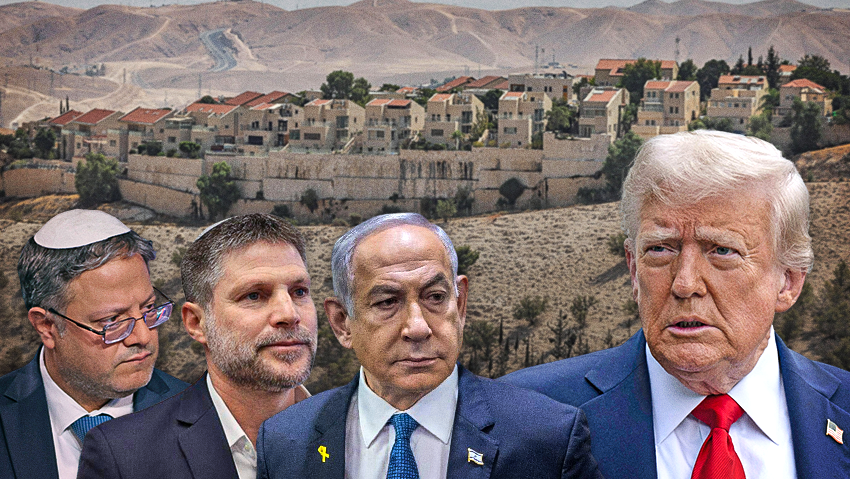
(Photo: Alex Kolomoisky, Yariv Katz, Chaim Goldberg/Flash90, Brendan Smialowski/AFP, REUTERS/Ronen Zvulun)
Smotrich, who holds a dual role in the Defense Ministry, declared in November: “I instructed the Settlement Administration and the Civil Administration to begin professional and comprehensive groundwork to prepare the necessary infrastructure for applying sovereignty.”
In contrast to previous U.S. administrations, members of Trump’s current team had openly supported annexation. Before his appointment as ambassador to Israel, Mike Huckabee said, “I regularly visited Judea and Samaria, and I believe Israeli citizens deserve a secure state. Helping achieve that would be a tremendous honor.” Still, he qualified his comments, saying Trump “sets the policy, and I will follow accordingly.” Last month, Huckabee told The Washington Post that “October 7 changed everything” and that annexation “is up to Israel.”
Calls to apply sovereignty grew louder as the Gaza war intensified and Israel faced mounting diplomatic isolation, including a wave of recognitions of a Palestinian state. In August, Smotrich’s plan to promote construction in the E1 corridor near Maale Adumim was approved. The plan, condemned by the Israeli left as a “death blow” to a future Palestinian state, includes around 3,400 housing units in a critical zone that would sever territorial contiguity between Ramallah and Bethlehem.

Netanyahu and the inauguration ceremony of the E1 construction project in Maale Adumim
(Photo: GPO)
That same month, the government approved a new settlement in Asa’el, south of Hebron, including 342 housing units, public buildings and infrastructure. Earlier this month, authorities recognized 445 dunams (110 acres) in the Samaria region as state land — a portion of which includes the longtime unauthorized outpost of Havat Gilad, paving the way to triple its size and transform it into an officially recognized settlement.
Smotrich reiterated his demand for annexation earlier this month, calling on Netanyahu to implement a plan previously leaked to Ynet, under which Israeli law would be applied to 82% of the West Bank, leaving 18% for Palestinian administration. “Maximum land, minimum Arabs,” he declared.
Annexation push threatens Abraham Accords
Israel’s push to advance West Bank annexation has drawn sharp condemnation from Arab and Western governments, raising fears it could unravel the Abraham Accords and further deepen Israel’s international isolation.

French President Emmanuel Macron
(Photo: Kena Betancur / AFP)
The proposed annexation plans, long championed by Smotrich and Ben-Gvir, were already facing resistance. In June, the UK, alongside Canada, Australia, New Zealand and Norway, imposed sanctions on both ministers and warned Israel against retaliatory annexation. French President Emmanuel Macron also voiced opposition in his address to the UN General Assembly, warning that “the worst is yet to come.”
Palestinian Authority Chairman Mahmoud Abbas condemned the annexation efforts in a pre-recorded speech to the UN this week — after being denied a U.S. visa — calling for an end to settlement activity, settler violence, and attacks on Muslim and Christian holy sites. He also denounced the expansion in E1 and Israel’s claims over a “Greater Israel.”
Particularly concerning for Israel is the reaction from the United Arab Emirates, considered the flagship of the Abraham Accords. Strategic Affairs Minister Ron Dermer, a close Netanyahu ally, claimed he could diplomatically manage annexation of the Jordan Valley with Washington and Abu Dhabi — despite warnings from the UAE that annexation is a “red line” and would damage ties.
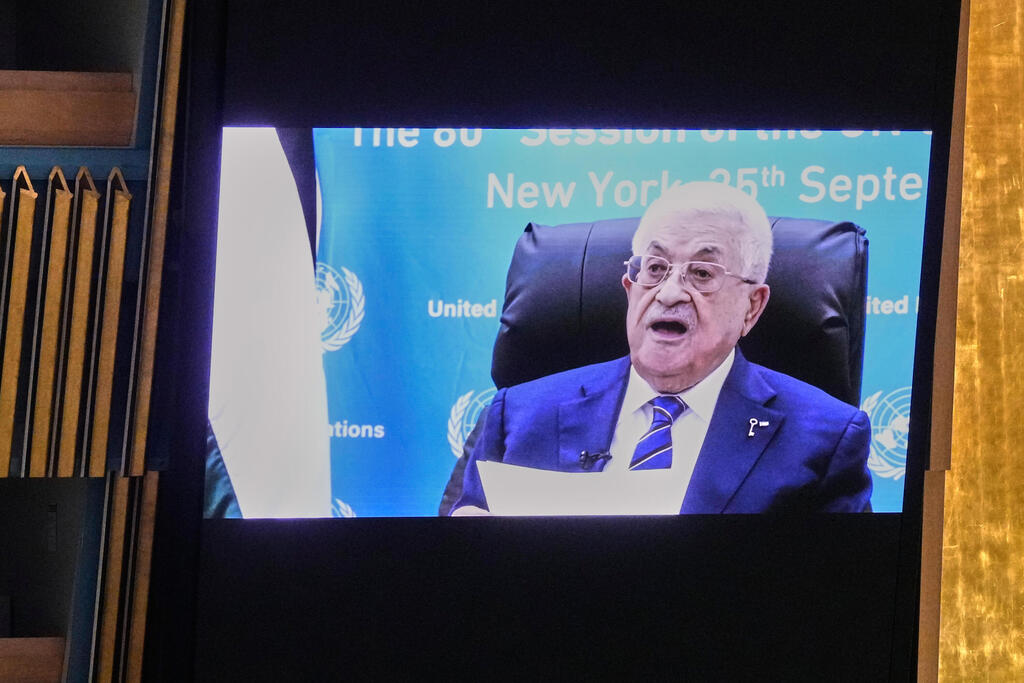
Palestinian Authority Chairman Mahmoud Abbas
(Photo: AP Photo/Richard Drew)
Reuters reported that while the UAE is not planning a full diplomatic rupture, any Israeli annexation could downgrade relations and prompt the recall of the Emirati ambassador. Gulf officials reportedly warned that all options, including the most severe, remain on the table if annexation proceeds.
That international pressure may have influenced Trump’s recent stance. U.S. media reported this week that the U.S. president privately assured Arab leaders on the sidelines of the UN General Assembly that he would not permit Israeli annexation of the West Bank. Macron echoed the warning in an interview with France24, stating: “Any annexation would spell the end of the Abraham Accords. The UAE has been very clear about that — and I believe it’s also a red line for the U.S.” He added that European and American positions on the E1 construction are aligned.
Despite occasional signals from Netanyahu about a partial annexation, Israel’s current diplomatic isolation leaves him with few options. Any move could trigger retaliation from allies. For instance, following speculation that Israel might close the French consulate in Jerusalem in response to France’s recognition of a Palestinian state, Paris threatened to open an embassy in Ramallah and reduce Mossad operations on French soil.
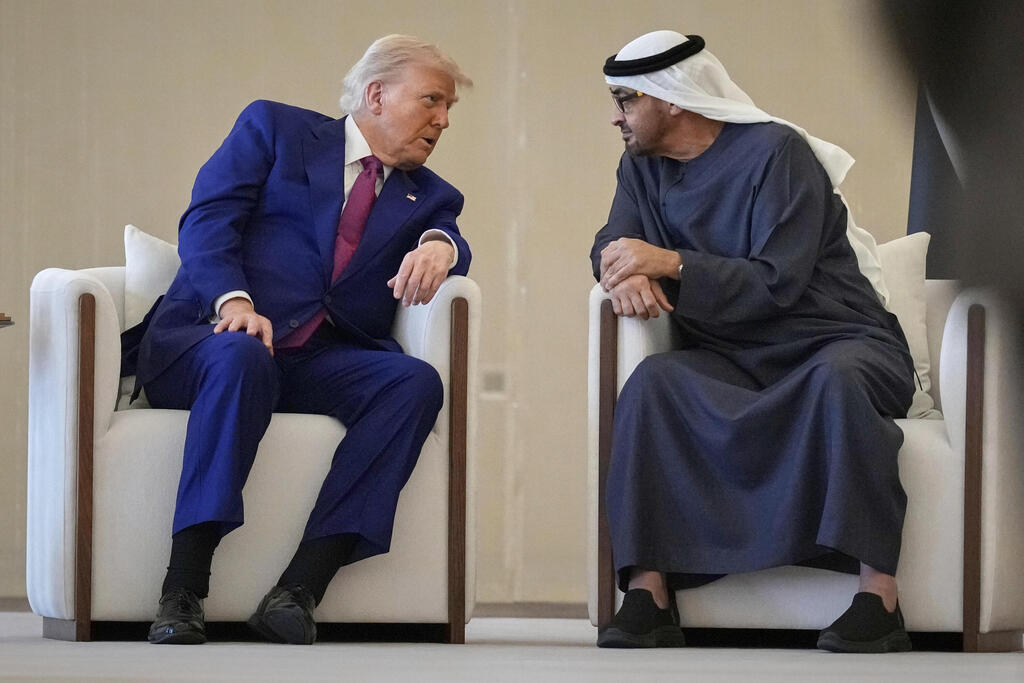
Trump and UAE leader Mohamed bin Zayed
(Photo: AP Photo/Altaf Qadri)
Some in Israel now believe Netanyahu coordinated with Trump to allow the president to “take the heat” on the annexation issue, giving the Israeli leader cover to quietly shelve the matter. Netanyahu said earlier this week that Israel’s official response to the recognitions by France, Britain, Canada, Australia and others would come only after his return from the U.S., where he arrived Thursday ahead of his UN speech and a planned meeting with Trump on Monday.
Meanwhile, Germany welcomed the U.S. position, with a spokesperson for Foreign Minister Johann Wadephul stating that annexation and continued settlement activity in the West Bank and East Jerusalem “pose a major obstacle to the two-state solution.”
'Sovereignty now!'
Settler leaders said Friday they would send an emergency delegation to New York to press Netanyahu to impose full Israeli sovereignty on the West Bank before he meets with Trump.

Netanyahu and Trump
(Photo:SAUL LOEB / AFP)
The Yesha Council said the delegation would fly Saturday to meet Netanyahu before his scheduled talks with Trump. “A Palestinian state is closer than ever and international pressure on Netanyahu to create one is growing,” the council said. “The coming days in the United States will decide Israel’s security for years to come. Applying sovereignty is the only way to do that, and the decision is in the hands of the prime minister.”
Expected participants include Yesha Council chairman and Binyamin Regional Council head Israel Gantz; Samaria Regional Council head Yossi Dagan; Ariel Mayor Yair Shtebon; Oranit council head Or Peron Zomer; Mount Hebron Regional Council head Eliram Azulai; Karnei Shomron Council head Yehonatan Koznitz; Kedumim Council head Uzziel Vatik; Efrat Council head Dovi Shefler; and Yesha Council CEO Omer Rahamim, an associate of minister Smotrich.
Despite Trump’s public opposition to annexation, settler leaders urged Netanyahu on Friday to press ahead. “The ball is always in Netanyahu’s court, and especially this morning he should say to Trump: We will not allow another Oct. 7, I am applying sovereignty,” Dagan said. “A friendly U.S. administration is not one that applies sovereignty or builds in our stead. It is an administration with which agreements can be reached and disputes can be managed.”
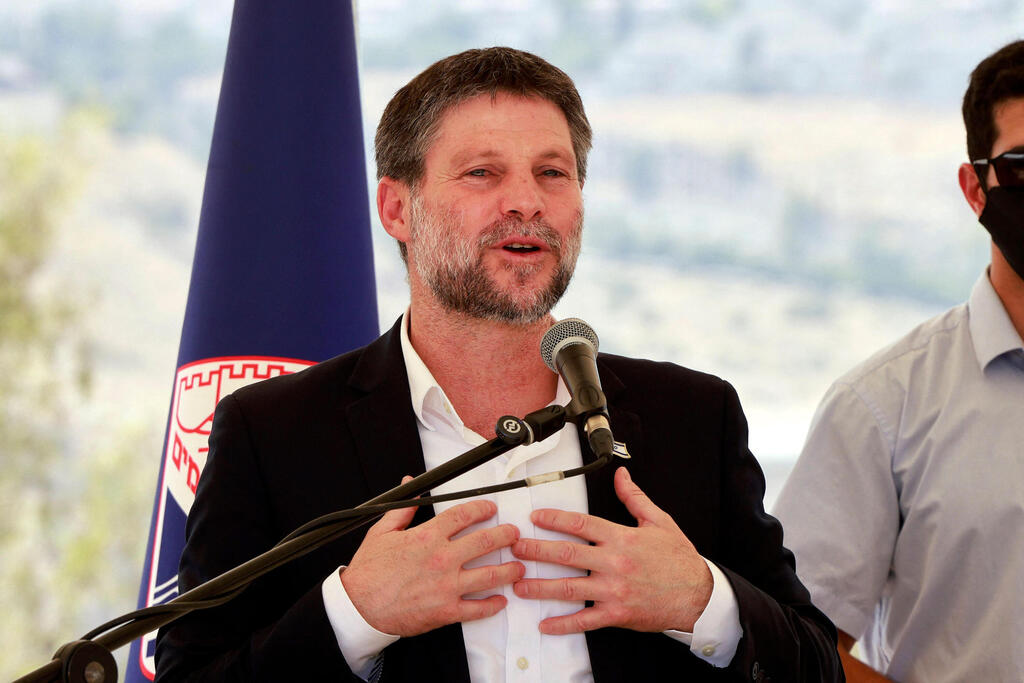
Finance Minister Bezalel Smotrich
(Photo: Menahem KAHANA / AFP)
Dagan said Israelis will not forfeit their security after Oct. 7. “Only sovereignty over all open areas and communities will prevent a terror state in the heart of the country. The responsibility is Netanyahu’s. He is the prime minister we chose. He must declare at the UN — this is our land. Most of the nation expects this.”
Gush Etzion Council head Yaron Rosenthal told Ynet that sovereignty over all West Bank settlements is “Israel’s security belt and of course represents moral and historical justice. We will continue to build the cradle of the nation and strengthen our hold on the homeland. We will create practical sovereignty while fighting for political sovereignty.”
Kedumim Council head Uzziel Vatik said Israeli sovereignty would end the “delusional idea” of establishing a Palestinian terror state in the country’s center. “The only answer to rockets from Tul Karm and Ramallah is full Israeli control. Whoever wants Sdeh Hafar, Nitzanei Oz, Beeri and Nahal Oz not to exist, and for Netanya and Herzliya not to be shelled like Sderot and Ashkelon, understands that Israeli sovereignty and effective control are the solution. As history has taught us, that depends on us.”
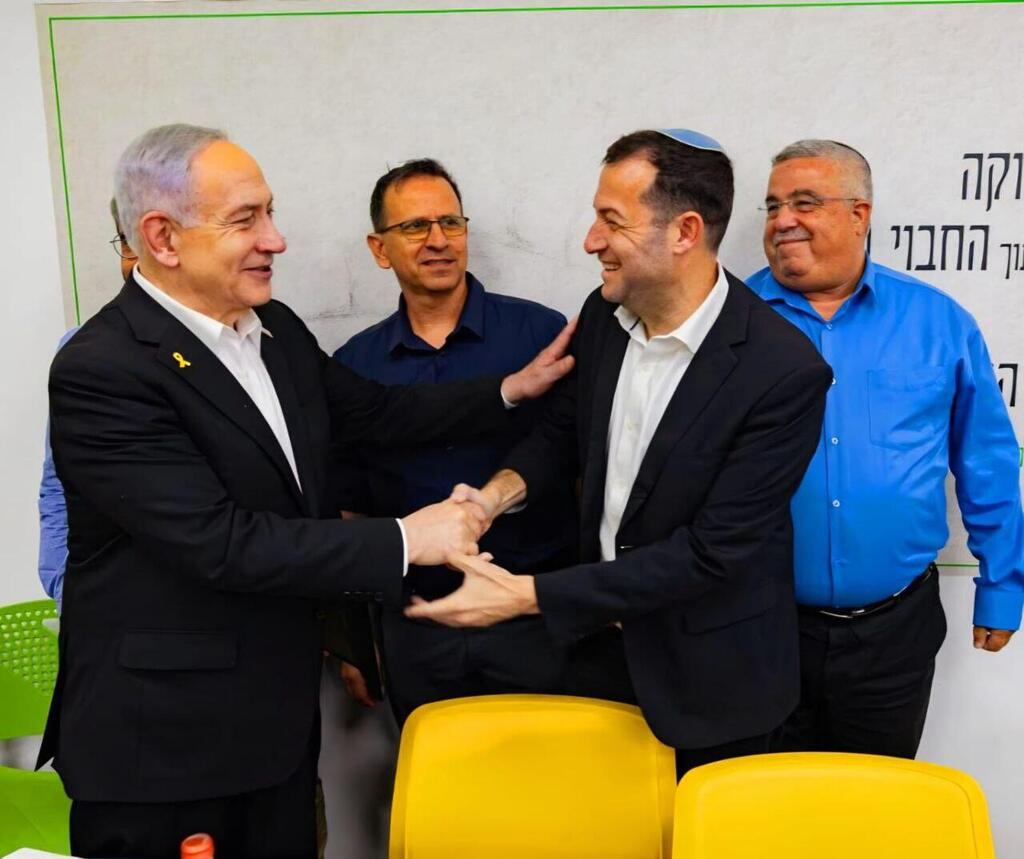
Netanyahu and Samaria Regional Council head Yossi Dagan
(Photo: Samaria Regional Council)
Beit El Council head Shay Alon said the government’s priorities should remain fighting in Gaza, defeating Hamas and returning hostages. “If possible to do both, that should be done — but we are not afraid of a long road,” he said. “Settlement life is growing hectare by hectare and we will not stop. We must use the U.S. administration and the right-wing government here to push forward sovereignty — it may take a month or two more. Sovereignty will come.”
Settler leaders last month asked Netanyahu to declare sovereignty over areas where Palestinians do not live, including parts of areas A, B and C under varying degrees of Palestinian and Israeli control. The government has already taken steps that settlers requested, including tripling the number of housing units approved in the West Bank, increasing the amount of state land certified for settlement use, regularizing outposts and boosting budgets for settlements.
Dozens of agricultural farms have been established in Area C as part of a broader strategy to seize ground in the West Bank, the council said, even as they await any green light from Trump.