


U.S. President Donald Trump announced on Friday night that he intends to soon scale back the scope of fighting in Iran. More significantly, he outlined in detail the list of strategic objectives he expects to achieve by the end of the war — and how they are to be implemented on the ground.
Trump often confuses reporters with multiple, sometimes contradictory statements throughout the day. But on Friday he presented a relatively clear, measured and documented position, including in writing in a post on his Truth Social platform. The likely reason is growing opposition in Congress to the steps he is seeking to take.
Iranians celebrate ballistic missile launch


Gallery
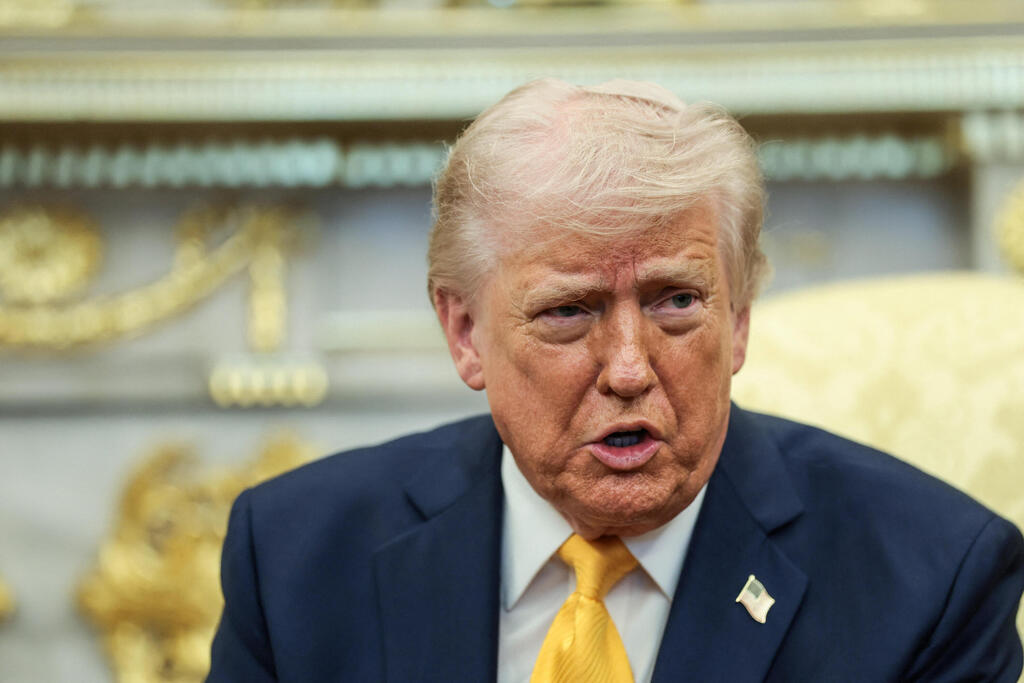
U.S. President Donald Trump announced that he intends to soon scale back the scope of fighting in Iran
(Photo: Evelyn Hockstein/Reuters)
One such step is doubling the number of U.S. Marines joining the fighting in Iran. A force of about 2,200 Marines is currently sailing from Japan to the Persian Gulf aboard ships led by the USS Tripoli — an amphibious assault ship capable of operating helicopters and F-35 jets — along with two large landing ships, each able to deploy hundreds of troops and armored vehicles.
The Pentagon on Thursday ordered an additional force of similar size, stationed in San Diego, to prepare for deployment to the Gulf. If these plans materialize, the United States will have about 5,000 Marines in the region within three weeks — a presence that suggests preparations for a significant ground operation, often referred to as “boots on the ground.” Critics in Congress argue that deploying U.S. ground forces at that scale on foreign soil effectively amounts to a declaration of war, which would require congressional approval.
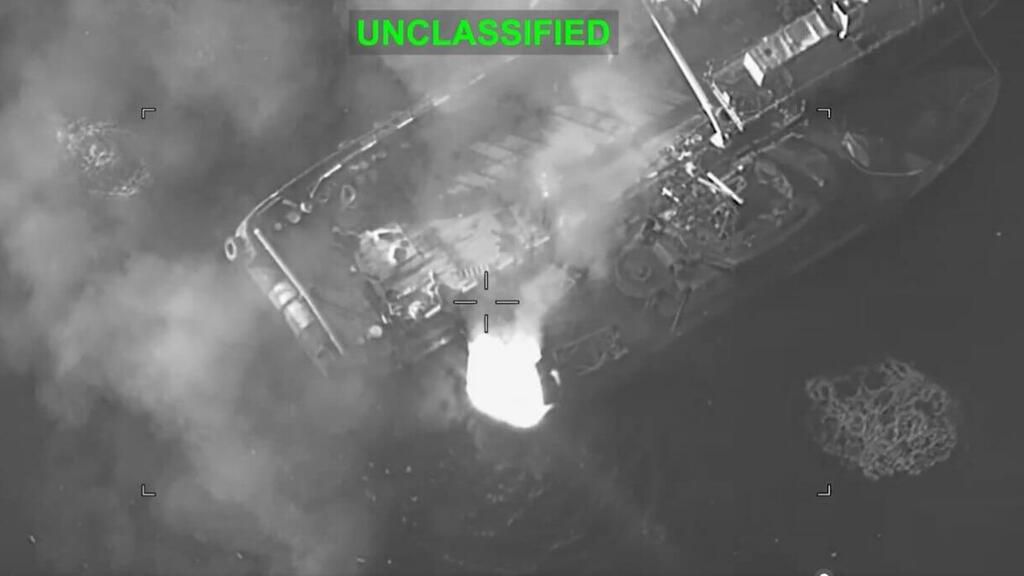
American attacks on Iranian naval targets near the Strait of Hormuz
(Photo: CENTCOM)
Trump maintains that deploying the Marines falls within his authority as part of a “limited campaign” being waged by the United States and Israel in Iran. However, he also needs congressional approval for an additional $200 billion increase to the Pentagon’s war budget. Opposition to both moves exists not only among Democrats but also within parts of the Republican Party. Trump therefore sought to clarify his intentions publicly in order to rally support.
This is what the Trump 'exit plan' — expected to last about a month — would look like:
Speaking to reporters, Trump said the United States has effectively already won, but that he does not yet want to enter negotiations with Iran or strike a deal while “wiping out” the other side. He suggested there is currently no clear governing authority in Iran: several factions are competing, but hardliners within the Islamic Revolutionary Guard Corps appear to be in control and have declared Mojtaba Khamenei as leader — despite uncertainty over his physical ability to function. Ali Larijani, whom Khamenei had reportedly intended as a successor and who could have unified leadership, has been killed.
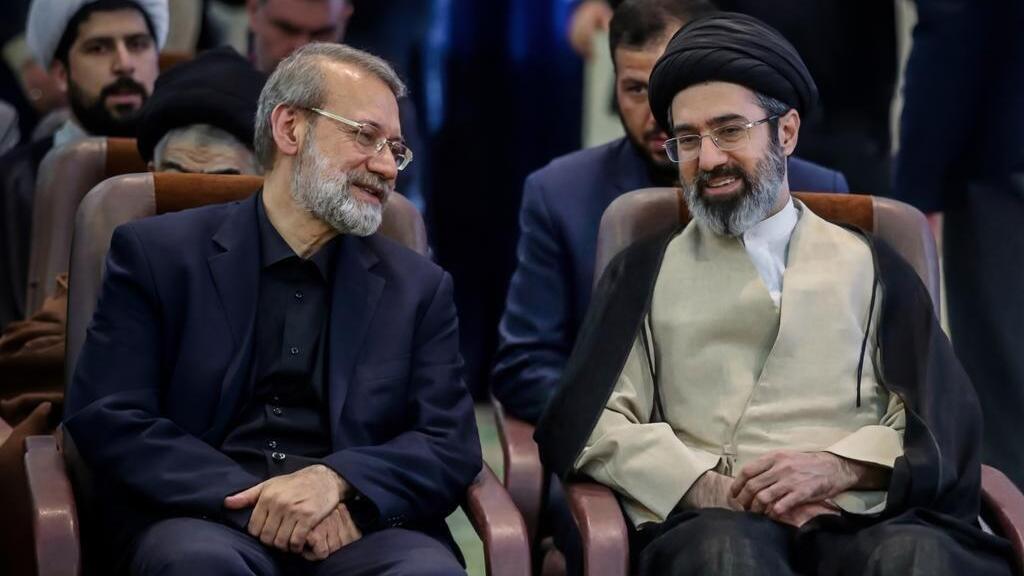
Mojtaba Khamenei and Ali Larijani
Trump does not want to negotiate with what he views as extremist elements amid the current chaos and power vacuum in Tehran. He is waiting for a more stable governing structure to emerge — not necessarily democratic or fundamentally different from the current regime. He indicated he would even accept continued clerical rule, provided it aligns with U.S. interests, as in the case of Venezuela. In essence, Trump signaled he sees no reason to compromise when he believes he can achieve his goals through the enemy’s defeat, including shaping a regime that meets his demands.
After asserting that victory has already been achieved or is within reach, Trump detailed in his post an updated and formal list of strategic objectives: “complete destruction of Iran’s missile capabilities, launchers, and all related infrastructure; elimination of Iran’s defense industry; destruction of its navy and air force, including air defense systems; preventing any possibility of Iran approaching nuclear capability, while maintaining the United States’ ability to respond quickly and forcefully to any such attempt; and ensuring the highest level of protection for our allies in the Middle East, including Israel, Saudi Arabia, Qatar, the United Arab Emirates, Bahrain, Kuwait and others.”
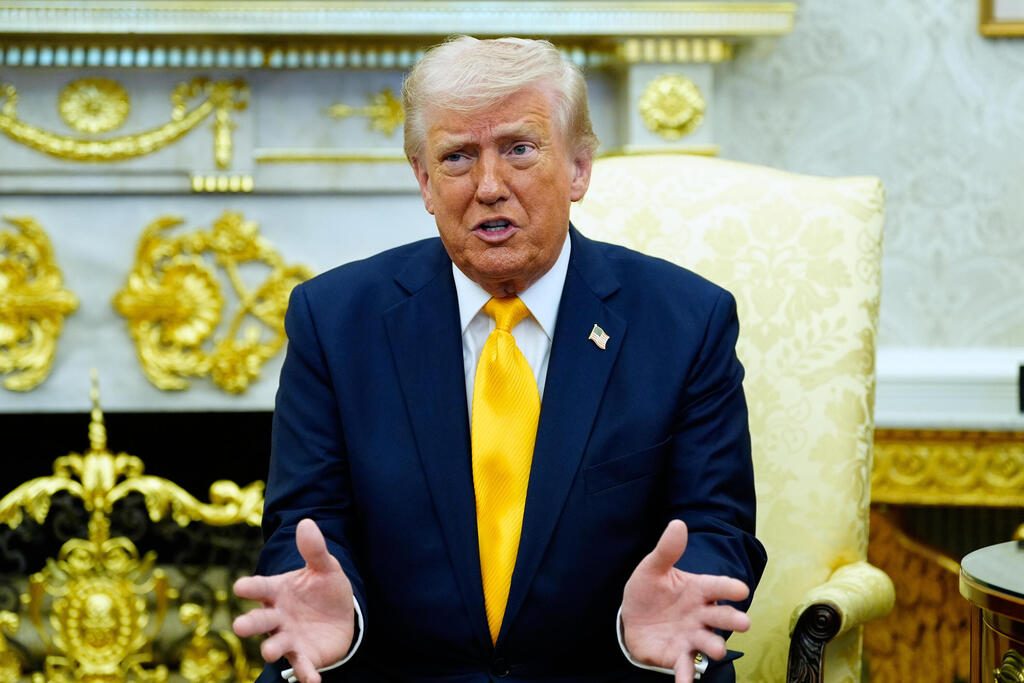
President Donald Trump does not want negotiations, and is waiting for the regime in Iran to stabilize
(Photo: Alex Brandon/AP)
To this list, Trump added two goals with long-term regional implications: preserving U.S. capabilities after the war to prevent Iran from rebuilding its nuclear and ballistic programs, and directly protecting regional allies “at a high level” — explicitly naming Gulf states and Israel. This objective was added after Iran targeted those countries and their energy infrastructure.
Trump also outlined key operational goals:
- Removing enriched uranium from Iran or completely denying Iranian access to it.
- Reopening the Strait of Hormuz to oil and gas shipping to prevent price spikes and a global economic crisis.
- Seizing Kharg Island — through which about 90% of Iran’s oil exports pass — as leverage in future negotiations with a potential post-war Iranian government aligned with U.S. interests.
Achieving these objectives would require substantial U.S. ground forces to secure islands in the Strait of Hormuz, possibly parts of the Iranian coastline and Kharg Island itself. There are also indications Trump is considering seizing highly enriched uranium stored underground in Isfahan using special forces, likely from the 82nd Airborne Division, currently on standby at Fort Bragg in North Carolina.
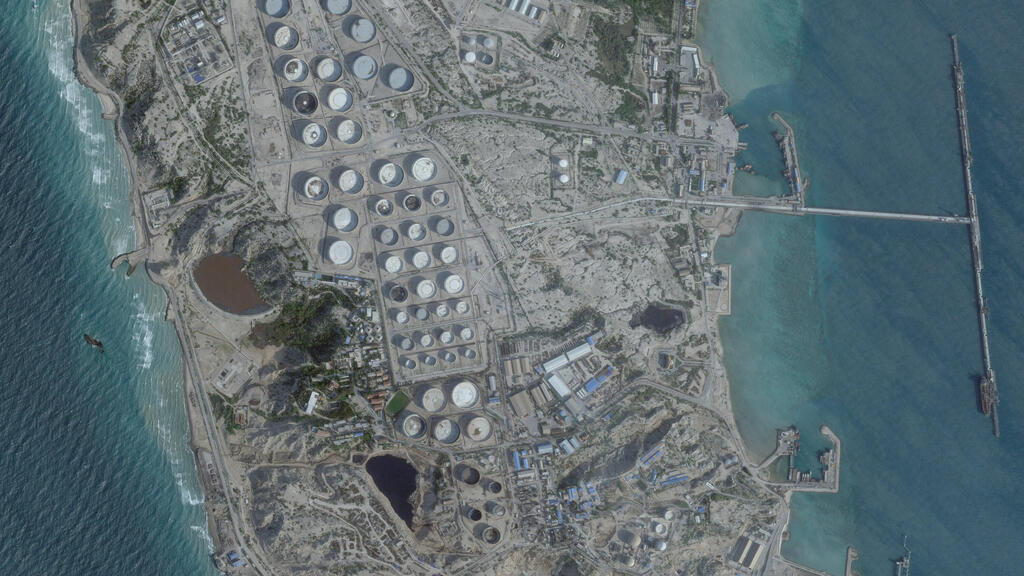
Oil rig on Kharg Island
(צילום: Photo: 2026 Planet Labs PBC/Handout via Reuters)
Asked whether Israel would halt its campaign once the United States decides to do so, Trump replied briefly: “The relationship is very good. I think so.”
Israeli security officials say they expect no difficulty coordinating with Washington. “If nothing unexpected happens, we will need no more than two to two-and-a-half weeks to complete the operational plan, then stop and allow the Iranian people to have their say — or let the internal fractures already visible within the regime take their course,” a senior Israeli official said.
The United States, however, will likely need more time — possibly up to five weeks — to assemble the naval, air and ground forces required to meet Trump’s end-state objectives, chief among them reopening the Strait of Hormuz. While U.S. forces are currently striking Iran’s coastline, ensuring safe passage for tanker convoys carrying millions of barrels of oil will require clearing naval mines and other threats. Successful tanker transit would represent the “victory image” the White House is seeking.
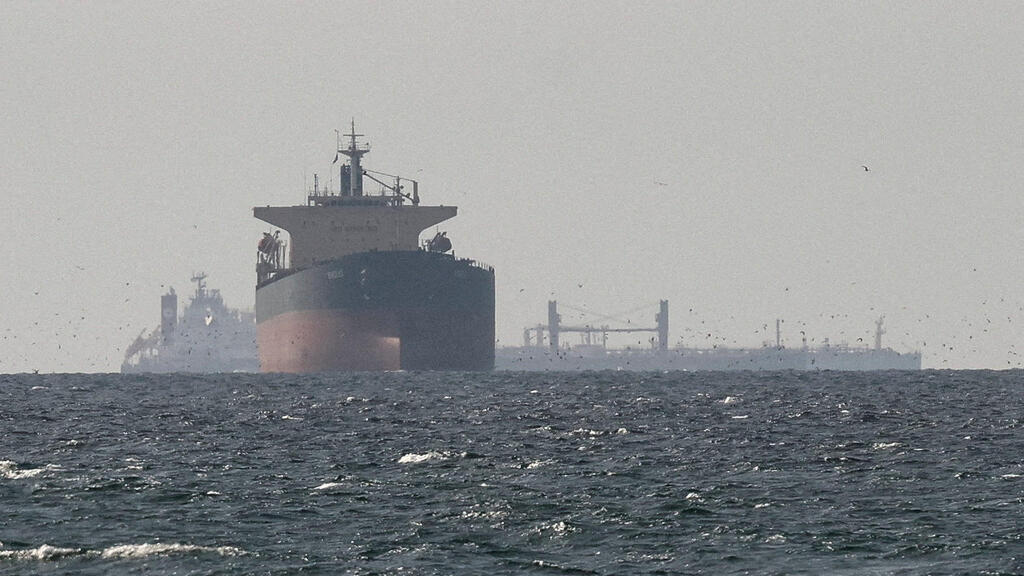
Oil tanker near the Strait of Hormuz
(Photo: Reuters/Stringer)
As a result, the war could continue for another month or slightly longer. During that time, missile launches from central Iran toward Israel may decrease, potentially easing the current pattern of air raid alerts — provided there is no military escalation or civilian disaster, and assuming Congress does not block the administration’s plans.
Israeli security officials, however, assess that Iranian attacks on Israel may intensify in the coming week in an effort to wear down the civilian population and pressure the government to shorten the war. IDF Chief of Staff Lt. Gen. Eyal Zamir has said the campaign is expected to continue through Passover.
Strikes on Natanz — and the link to Dimona
Two major developments occurred over the weekend. First, U.S. forces bombed the Natanz nuclear facility, where part of Iran’s stockpile of highly enriched uranium — up to 60% — is believed to be stored. U.S. strategic bombers dropped specialized heavy bunker-busting bombs capable of penetrating dozens of meters through rock and reinforced concrete, similar to those used at Fordo in June 2025.
Experts assess the strike aimed to bury the enriched uranium under thick layers of debris, making it inaccessible for years and allowing time for detection and further disruption if Iran attempts recovery. Iran’s statement that there is no radioactive contamination risk near Natanz suggests this was indeed the objective.
Later, after a direct strike on Dimona, Iran’s Tasnim news agency reported the attack was retaliation for the Natanz strike. The launches toward Dimona may have been intended to target Israel’s nuclear reactor — and, as Iranian officials stated, were framed as “revenge” for the U.S. attack.
Second, Iran launched missiles with a reported range of 4,400 kilometers toward Diego Garcia. This appears to have been largely a propaganda move rather than evidence of a new, unknown capability. The missiles are likely known systems such as the Khorramshahr-4, which can reach such distances if fitted with lighter warheads. Similar configurations are used in Iran’s satellite launch vehicles.
While the destructive capacity of such payloads is limited, the launches serve a psychological purpose — demonstrating strength to the Iranian public while signaling to European countries the risks of aligning too closely with the United States.