



17 hostages still in Gaza to be released under Phase I of hostage agreement and Israel’s toughens position
Three Israeli hostages—Ohad Ben Ami, Or Levy and Eli Sharabi—were freed on Saturday in the latest phase of the cease-fire and hostage release deal with Hamas, returning home after 491 days in captivity in Gaza.
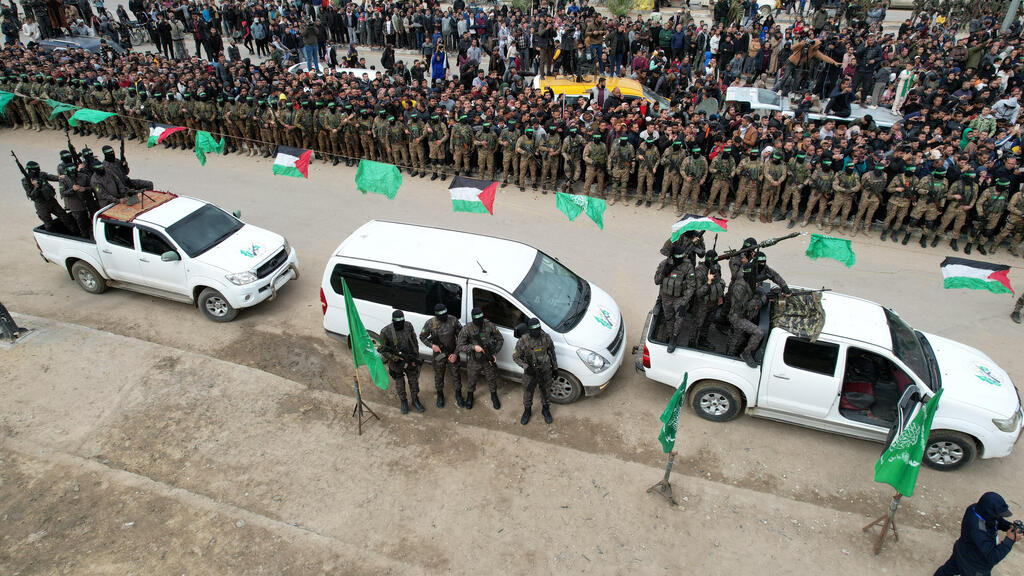
However, their release was marred by disturbing images, as the three appeared severely emaciated and weak, forced to participate in a Hamas-led display in central Gaza before being handed over to the Red Cross.
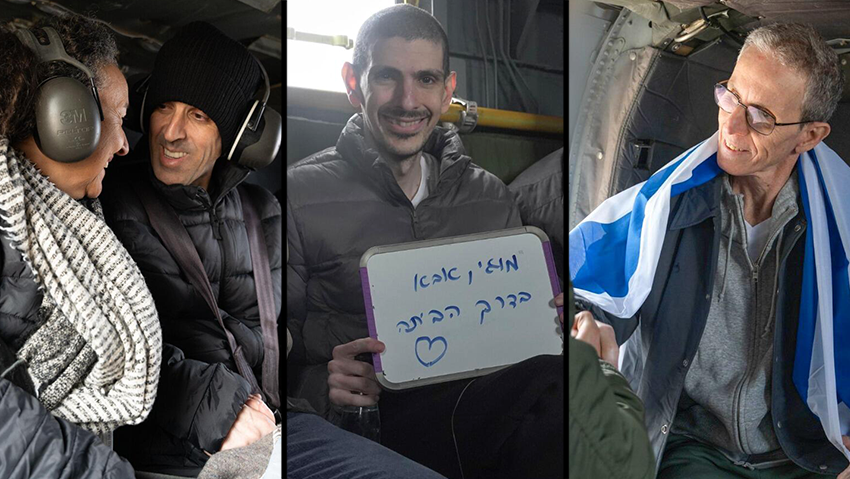
While their reunions with families in Israel were emotional, they were also accompanied by heartbreaking revelations. Eli Sharabi was informed that his wife Lianne and daughters Noiya and Yahel were murdered in the October 7 attack, along with his brother Yossi, who was also taken hostage but later killed in captivity. Or Levy, who reunited with his three-year-old son Almog, learned that his wife Einav was also murdered that day.
Remaining hostages and next phases of the deal
With the completion of this round, 76 hostages remain in Gaza. Under Phase I of the agreement, a total of 33 hostages were set to be released, of whom 16 have now returned, alongside five Thai nationals freed separately.

Remaining 17 hostages set to be released as part of Phase I of hostage deal
(באדיבות המשפחות)
The final three rounds of releases in Phase I are expected to free 17 more hostages, including eight who are deceased. The next two rounds will see three hostages freed in each, followed by a final release of 11 hostages, including Avera Mengistu and Hisham al-Sayed, who have been held by Hamas for a decade.
Among those still unaccounted for are Shiri Bibas and her two children, Ariel and Kfir, with growing concerns over their fate. Other hostages expected to be released include five older male captives and nine who are sick or wounded.
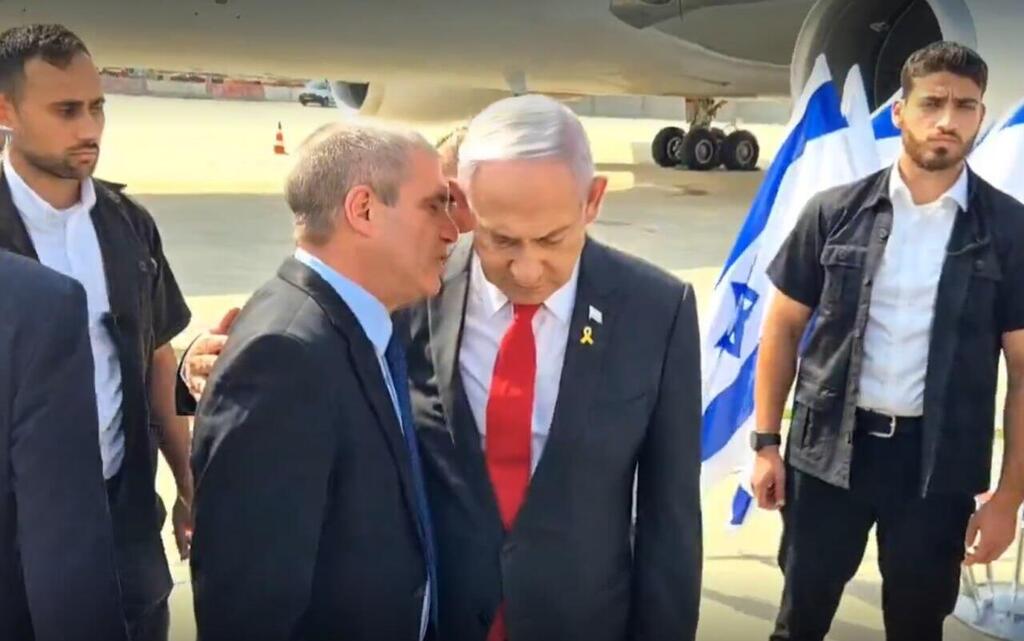
Hostage and Missing Persons Coordinator Gal Hirsch and Prime Minister Benjamin Netanyahu
(Photo: Itamar Eichner)
Meanwhile, Prime Minister Benjamin Netanyahu dispatched an Israeli delegation to Qatar on Saturday night to continue negotiations on Phase I, but without authorization to discuss Phase II, which would involve the release of all remaining living hostages. Hamas has demanded an end to the war and a full Israeli withdrawal from Gaza as part of that phase.
Although formal talks on Phase II were originally expected to begin Monday, discussions have so far been limited to behind-the-scenes contacts, with U.S. Middle East envoy Steve Witkoff playing a key role. The Israeli delegation to Doha is officially tasked with handling technical aspects of Phase I, amid Israeli accusations that Hamas has already violated parts of the agreement.
Ohad Ben Ami, Or Levy and Eli Sharabi airlifted to the hospital
(Video: IDF)


Netanyahu upgraded the delegation’s status, adding Hostage and Missing Persons Coordinator Gal Hirsch to the team. However, sources familiar with the negotiations questioned the move, noting that Hirsch had not been directly involved in talks until now and was primarily responsible for liaison with hostage families. The delegation also includes a former deputy head of Israel’s Shin Bet security agency, though it remains focused on technical negotiations rather than broader hostage-release terms.
Delegation to Qatar with no mandate
The delegation was dispatched to Doha to continue negotiations on the remaining hostage releases under Phase I of the cease-fire agreement with Hamas. However, diplomatic sources indicate the mission is largely symbolic, as formal talks on Phase II—intended to secure the release of all remaining hostages—were supposed to begin last Monday.
Ohad Ben Ami and his wife Raz greeted by their family after arriving in the hospital
(Video: GPO)
Witkoff urged Netanyahu to send negotiators to advance discussions on the next stage of the deal. From the perspective of the U.S. and mediating nations, this marks the beginning of Phase II. However, Israeli officials insist that talks on Phase II will not take place until after a Security Cabinet meeting, which is yet to be scheduled. It remains unclear whether the Cabinet will convene on Monday or Tuesday, but until then, Israeli negotiators will limit discussions to Phase I.
Eli Sharabi reunites with his family after release from Hamas captivity
(Video: GPO)
"With the completion of the latest hostage release, Prime Minister Netanyahu has instructed the delegation to focus on technical aspects of the agreement," a senior Israeli official. "Upon his return to Israel, he will convene the security cabinet to determine Israel’s stance on Phase II."
The delegation arrives in Doha amid Israeli outrage over Hamas' treatment of the three freed hostages, who appeared severely emaciated and were forced to participate in a Hamas-led public display before their release.
Netanyahu, who remains in Washington, condemned the hostage release as a "horrific spectacle," vowing to eliminate Hamas while ensuring the safe return of all hostages.
"We will do everything to bring our hostages home, but Hamas will not be there," Netanyahu said. "Trump fully agrees with me on this. We will destroy Hamas and bring our people back."
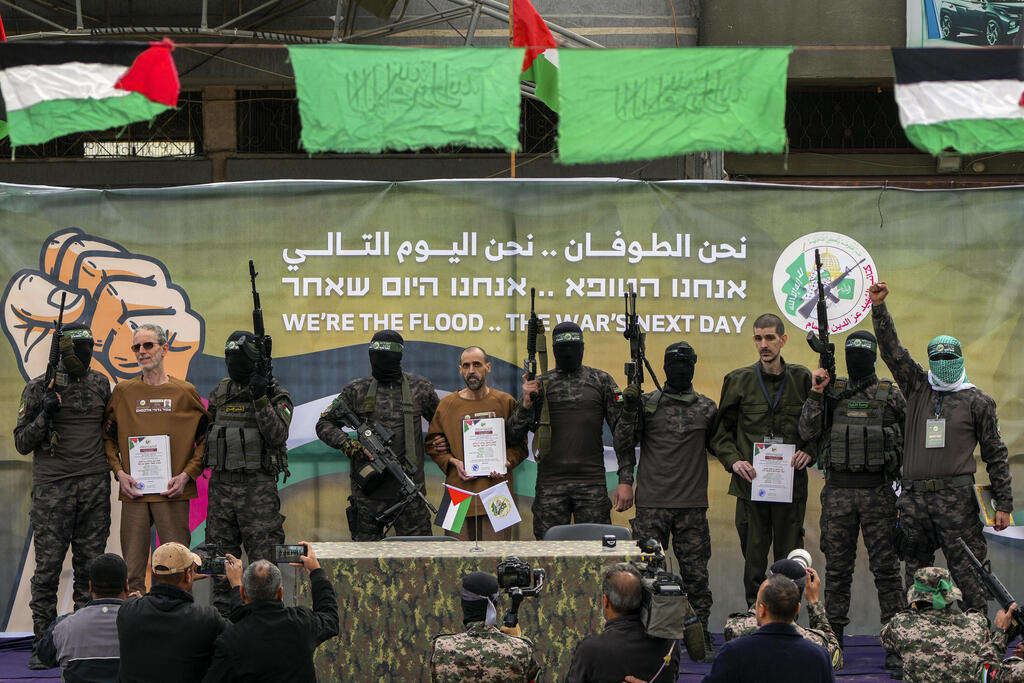
Hostages paraded by Hamas before release
(Photo: AP Photo/Abdel Kareem Hana)
He added: "Sara and I embrace Ohad, Eli and Or, along with their families. We have once again witnessed the barbarity of Hamas—the same monsters who massacred our people and tormented our hostages. Their blood is on their own hands. Our delegation has clear instructions to convey this to mediators and demand action."
While the public was deeply shaken by images of the hostages—reminiscent of Holocaust survivors—senior Israeli officials said the government was fully aware of their deteriorating state long before their release.
Get the Ynetnews app on your smartphone: Google Play: https://bit.ly/4eJ37pE | Apple App Store: https://bit.ly/3ZL7iNv
"The shocking impact of these images is on the public," one official said. "The political leadership was well-informed about the hostages' condition, including those released today. Anyone familiar with the facts was not surprised."
Or Levy and his family reuniting in the hospital
(Video: GPO)
Israel faces limited options in responding to Hamas' violations of the cease-fire agreement, as any action could be interpreted as a breach of the deal. While Israel is unlikely to derail the agreement before all 33 hostages under Phase I are freed, officials are considering interim measures, such as:
Delaying humanitarian aid deliveries to Gaza, though this could be seen as a clear violation of the agreement.
Reducing the number of wounded Gazans allowed to exit via the Rafah crossing for medical treatment.
Delaying IDF withdrawals within Gaza, including the planned overnight retreat from Netzarim Corridor, a key corridor established by Israeli forces during the ground operation.
Clock is ticking
Israel's anger over Hamas' treatment of freed hostages has so far remained within the framework of ongoing negotiations on Phase I of the cease-fire and hostage release deal. However, officials suggest that the shocking images of emaciated hostages may strengthen Israel’s demands for Phase II, making an agreement even less likely.
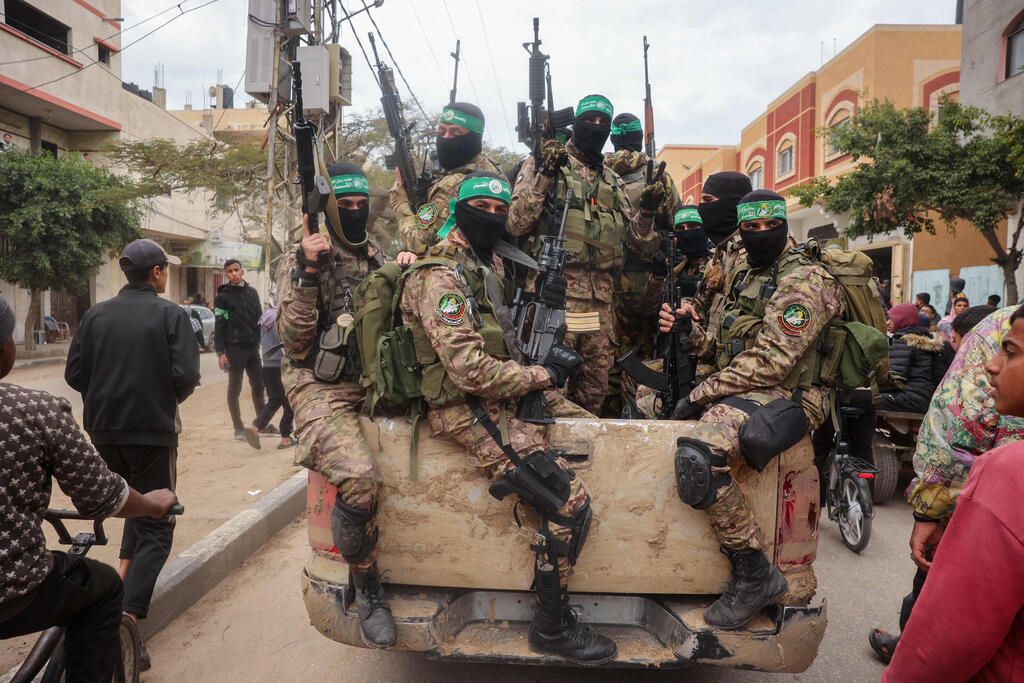
שחרור חטופים - פעימה חמישית
(צילום: Eyad BABA / AFP)
Israeli officials are expected to insist on strict conditions for a second-phase deal, including the exile of Hamas leaders, the dismantling of its military wing, the disarmament of Gaza and the release of all remaining hostages. However, there is little chance Hamas will accept these terms, raising doubts about whether Phase II will ever materialize.
While a full-fledged agreement seems unlikely, some officials do not rule out an extension of Phase I, which could involve the incremental release of additional hostages and a prolonged cease-fire.
Israel is also expected to complete its withdrawal from the Philadelphi Corridor—the buffer zone along Gaza’s border with Egypt—by the 50th day of the cease-fire. However, following global outrage over Hamas' treatment of the hostages, there is widespread skepticism that Prime Minister Benjamin Netanyahu would authorize such a withdrawal.
Faced with the dilemma of resuming military operations or proceeding with hostage negotiations, momentum appears to be shifting toward renewed fighting. This sentiment is echoed by Netanyahu’s inner circle, with his spokesperson, Omer Dostri, posting on social media: "Reminder: Hamas' neo-Nazi regime will not remain in Gaza. The clock is ticking."
(Photo: REUTERS/Stringer)
Senior Israeli officials warned late Saturday: "Phase II of the deal will depend entirely on the conditions Israel sets. If Israel insists on the exile of Hamas leadership and the dismantling of its military wing, there will be no Phase II."
Sources familiar with the discussions do not believe Netanyahu is preparing for Phase II at all, pointing to his recent appointment of Gal Hirsch to the negotiating team—despite his lack of prior involvement in the talks—as evidence that there is no real infrastructure being built for continued negotiations.
One senior source described the public outrage over the hostage release images as a serious political blow to Netanyahu, saying: "Two weeks ago, after the third hostage release, Netanyahu’s approval ratings collapsed in the polls. We all knew the hostages were severely malnourished—doctors warned they could die in captivity. What was the point of this public display? Is there anyone who didn’t know they were starving?"
Netanyahu, who remained in Washington while the fifth hostage release took place, is expected to return to Israel overnight Sunday. He has faced sharp criticism for choosing to stay at the luxury Willard Hotel rather than returning before the Sabbath, as some of his advisers—including National Security Advisor Tzachi Hanegbi, Strategic Affairs Minister Ron Dermer and Hostage Coordinator Gal Hirsch—did.
Netanyahu justified his extended stay by citing "an overwhelming number of meeting requests" from U.S. officials. His office stated that he watched the hostage release footage from what was described as "the control center of the Israeli delegation in the U.S." and was "continuously updated by the hostages and missing persons coordinator, who returned to Israel ahead of him."
What’s next? With diplomatic tensions rising and no clear path forward for Phase II, Israel is likely to increase pressure on Hamas while weighing its military options. The next few days will be critical in determining whether negotiations continue or if hostilities resume in Gaza.