

As a ceasefire between Israel and Hamas took effect Friday after two years of war, residents along Israel’s Gaza border reacted with a mix of relief, disbelief, and grief that has yet to fade.
A few hundred meters past the turnoff to Moshav Netiv Ha'Asara, a narrow road winds through orchards and farmland before ending at the yellow gate of Kibbutz Erez. At a small crossroads nearby, four Givati Brigade soldiers sat around a plastic table. One slouched in a chair while the others rested in silence.
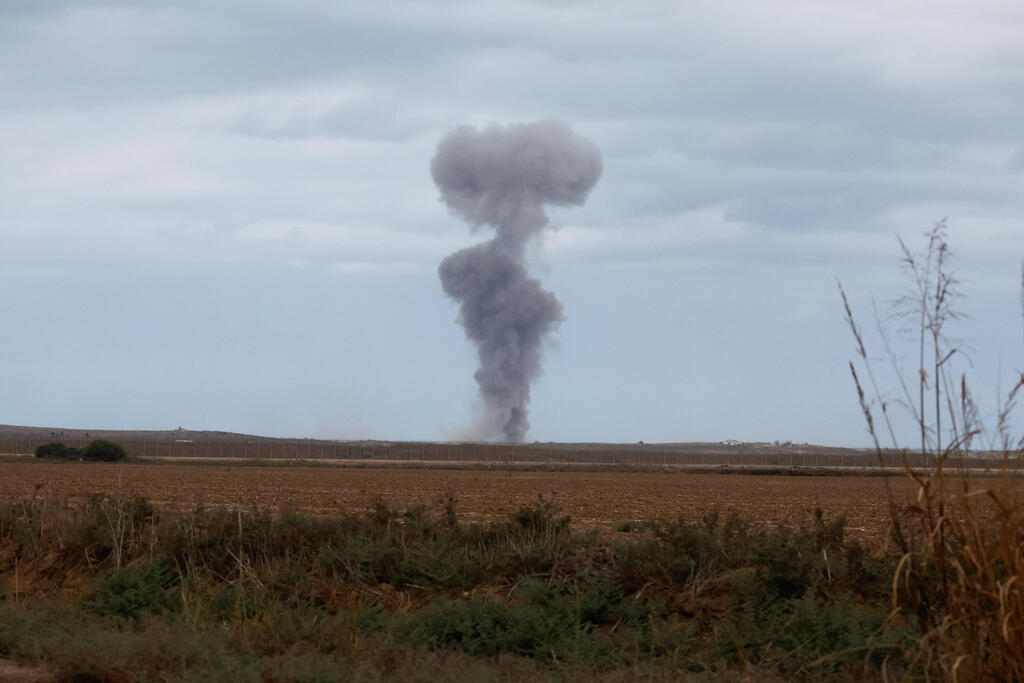
A heavy black cloud had followed the drive south from central Israel, pouring rain until after Ashkelon. The skies remained gray, the autumn wind cool, and a dark plume of smoke rose above northern Gaza — a sign that even with the ceasefire, calm had not yet fully returned.
“Is it really over this time?” one soldier asked. Told that people hoped so, he smiled faintly. “Satisfied? I’m delighted,” he said, his voice tired. “It’s about time to wrap this up. We could’ve done that long ago.”
When asked if they had fought inside the Gaza Strip, the soldier replied: “Too many times. Way too many.”
Living with the memory
Every turn along the roads near Gaza — every junction, shelter, and dirt path — feels like a memorial to that October morning two years ago, when Hamas terrorists broke across the border and massacred civilians in nearby Israeli communities. It is impossible to drive through the area or enter a kibbutz without feeling the weight of that day.
Photos of the murdered and kidnapped line fences and walls. The memorials erected by grieving families stretch from Yad Mordechai Junction southward, turning the region into what residents describe as one vast site of remembrance.
For two years, life here has been suspended. Even as communities try to rebuild, the war has made routine nearly impossible. Residents describe windows rattling from distant explosions and the ground trembling under airstrikes on Gaza City, less than a mile away.
Beyond the sound of war, however, recovery has hinged on the fate of the hostages — friends, neighbors, parents, and children taken from their homes and held in tunnels beneath Gaza. Throughout the region, their faces still hang from bridges and walls, beside the question that has haunted Israel’s south: “Why are they still in Gaza?”
'We’re still afraid to believe it'
The ceasefire, announced hours earlier by President Donald Trump, was received cautiously in the Gaza border communities. After two years of relentless fighting and loss, many residents said they were too wary to celebrate.
In Netiv Ha'Asara, one of the closest communities to Gaza, founding resident Lily Yahav stood in her garden trimming shrubs when reporters approached. “I’m very upset this morning and can’t talk,” she said, apologizing as she worked. “This garden, the pruning — it’s my therapy. Amit, my daughter’s husband, was murdered here on October 7, along with his brother Yigal. I have no words. And this week we marked two years.”
She pointed toward a narrow path near her home. “A terrorist ran here and murdered my neighbors, the Akuni family — Aryeh, Ruti, and their daughter Or. How could I not be distraught this morning?”
Twenty residents of Netiv Ha'Asara were murdered that day. Two years later, fewer than half have returned. Many say they could not bear to live under the sound of shelling just beyond the fence.
'The hatred will follow us for years'
Roni Keidar, another founder of Netiv Ha'Asara, said she hopes the ceasefire will bring people home, though she doubts peace will last. “It’s quiet now,” she said, “but half an hour before you arrived, there were explosions again. Until it’s really over, it’s not over.”
“I assume people will wait to see what happens next,” she said. “We destroyed Gaza, leveled it to dust, but if we don’t reach an agreement with Hamas, they’ll rebuild the tunnels and their forces. I believe in dialogue. We have no choice but to talk to those who live on the other side of the fence. The hatred this war has sown will follow us for years. It will be very difficult to dissolve it.”
Keidar gestured toward the border fence. “What we did there,” she said, “was revenge for what they did to us on October 7. And with the ruins we’ve left behind, we’ve given them reason to hate us and to want revenge for years to come.”
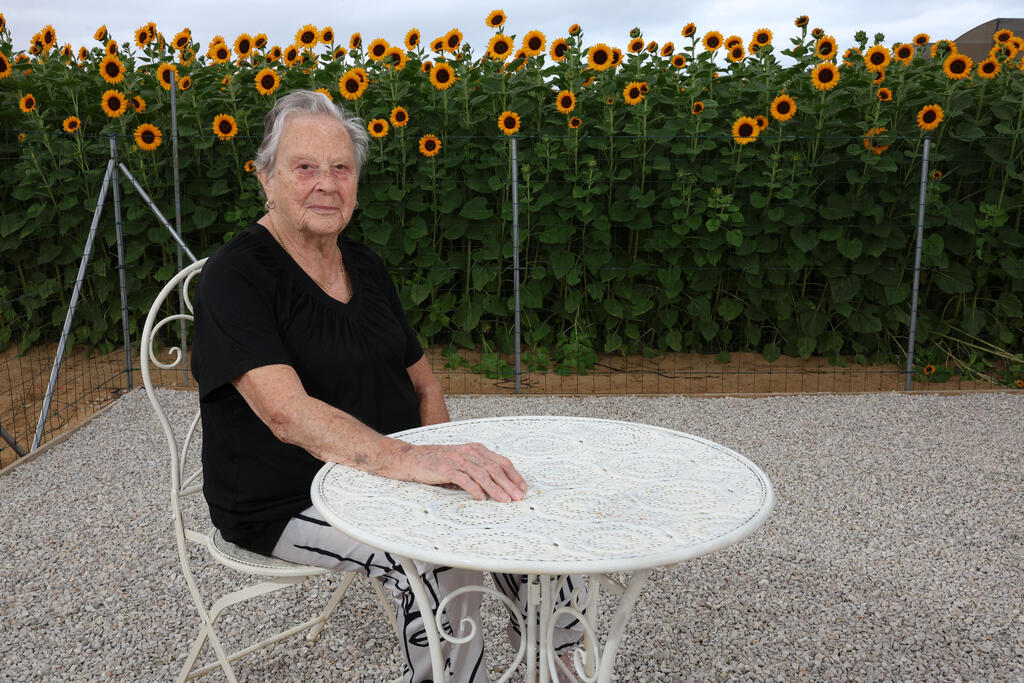
Roni Keidar
(Photo: Shaul Golan)
She paused. “It’s a vicious cycle we have to break. I say that as someone who lives right on the fence with Gaza. On October 7, terrorists entered my daughter’s house. She hid with two of her children under the stairs. Her husband was abroad, and her other kids were elsewhere. She was lucky. But the horror — the inferno around her — was unimaginable. Our neighbors were murdered in their homes.”
The week had been especially hard, she said, with ceremonies marking two years since the attack. “Every corner and path here holds a terrible memory of that morning,” she said. “And yet, these are our neighbors. They’re not going anywhere. And those Israelis who’ve left know deep down that this is their home, that Israel is their refuge. In the end, they come back.”
Keidar recalled being filmed years ago for a foreign documentary titled Other Voices. “I told my daughter then that one day we’d have to talk to Hamas, that we’d have no choice. She said, ‘How can you talk to them? They’re terrible people.’ And this morning, I saw on TV the Israeli delegation sitting in Sharm el-Sheikh across from Hamas. I told my husband, ‘Look — after everything we’ve been through, they’re sitting face to face.’”
Uncertainty ahead
Keidar’s son, Yoel, has not returned to live in Netiv Ha'Asara. Each morning he helps his father in the greenhouses, then returns to a rented house in Kibbutz Bror Hayil. “Wait a second,” he said when asked when he might come home. “Who knows what will happen now in Gaza? Who will rule there? For now, we’ll just watch and see.”
He said the ceasefire had not brought complete quiet. “This morning a helicopter hovered above our greenhouses and fired into Gaza. The talk in the news studios is one thing, but hearing it yourself — that’s something else entirely.”
From a hill overlooking the Strip, the destruction was visible in every direction. The houses that once stood a few hundred meters away were gone. “From Beit Hanoun to Beit Lahia, not a single house is still standing,” he said. “The destruction is so total it’s hard to believe human beings did it.”
On the road toward Kibbutz Kfar Aza, signs read “Gaza is ours forever” and “It’s either settlement or withdrawal.” Residents said there was no military reason for such devastation, only political ambitions among far-right activists seeking to establish new settlements in the ruins.
'You see only death'
At Kfar Aza, where Hamas terrorists killed 64 of the kibbutz’s 950 residents and kidnapped 19 on October 7, signs of the massacre remain everywhere. Nearly every home bears bullet holes or worse.
Two hostages — brothers Gali and Ziv — are still missing. Their smiling faces appear on homes, cars, fences, and refrigerator magnets throughout the kibbutz.
Shahar Shnourman, who returned soon after the attack, now guides visiting groups through the ruins. “This morning is very complicated for me,” he said. “The anniversary was hard, and the day after was just as bad. You want to rejoice at the news, but then you remember who we’re dealing with — Hamas and Bibi. Until the hostages return, there’s nothing to celebrate.”
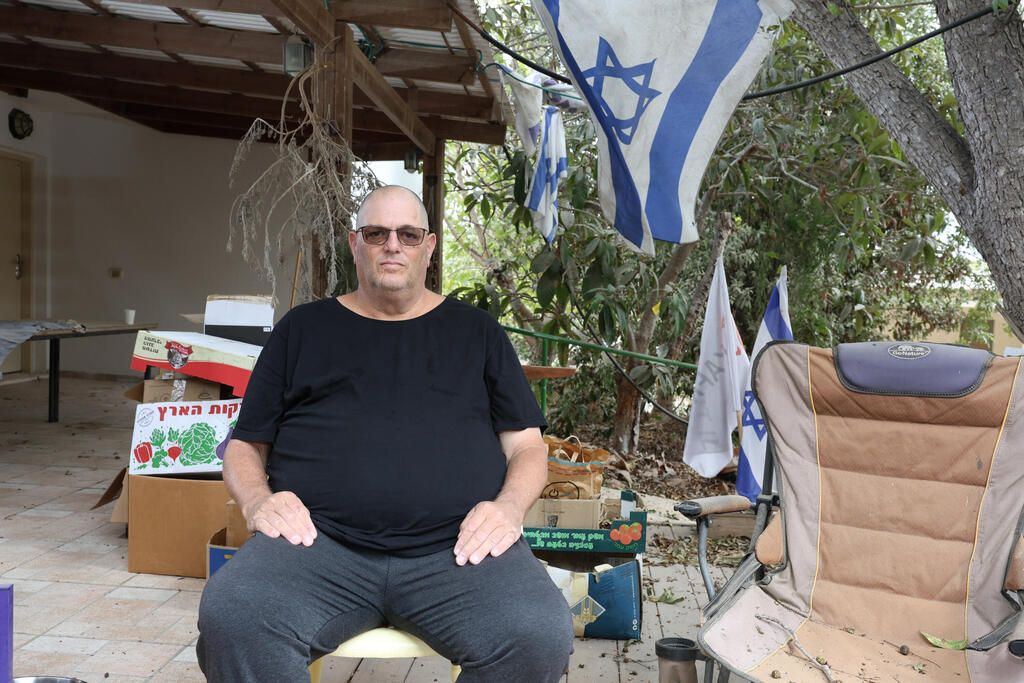
Shahar Shnourman
(Photo: Shaul Golan)
He said the brothers’ return would mark “the beginning of healing — first for them and their families, but also for all of us.”
As he drove through the young adults’ neighborhood where several bartenders were killed or kidnapped, Shnourman pointed to each home. “Some people from the kibbutz still can’t bring themselves to walk here,” he said. “They haven’t gone house to house to see what happened. They’ve lived with trauma for two years, and it hasn’t ended. Maybe when Gali and Ziv come home — God willing — they’ll find the strength to do it.”
From a lookout on the kibbutz’s western edge, Shnourman gestured toward Gaza. “Once, when you looked west from here, you saw houses, buildings — life,” he said. “Now you see only death. Only ruins. Total destruction.”
Two years after Hamas’s assault plunged Israel and Gaza into war, the people of the Gaza border region remain caught between exhaustion and hope. They want peace, but many doubt it will hold.
“It’s a horrible cycle we have to break,” said Roni Keidar. “Otherwise, we’ll be standing here again, years from now, asking the same questions.”