

October 7 was not a miracle, as some insensitively claim, because no miracle is worth the loss of life and the psychological trauma it inflicted. Yet alongside the disaster, it was also an extraordinary opportunity for renewal. In that sense, the thousand days that have passed since then testify to a missed opportunity of historic proportions.
The first missed opportunity was on the domestic front. Immediately after October 7, Israel experienced an atmosphere that will be difficult to recreate. Alongside the grief and anger, there was a powerful spirit of volunteerism, dedication, willingness to sacrifice and mutual responsibility.
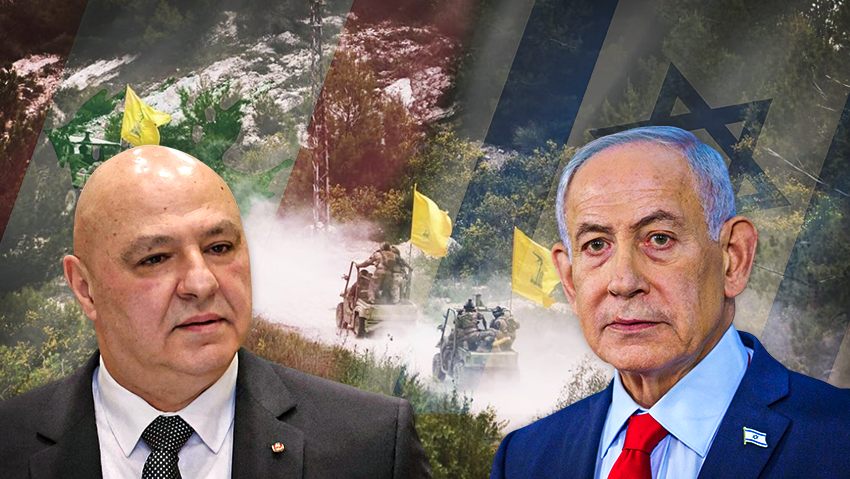
Israel was ultimately forced under pressure to do what it should have done much earlier: reach an arrangement with Lebanon
(Photo: ANWAR AMRO/AFP, shutterstock, Shalom Shalev, Aziz Taher/Reuters)
Imagine for a moment, without political bias, what might have happened had the prime minister seized that unique moment and declared that he was not to blame, since he too had relied on the intelligence services and the military that failed, but that as the head of the system he unquestionably bore responsibility. He could then have pledged that once the war he was leading ended, he would step down and pass on his experience to his successor.
Such an acceptance of responsibility, in the spirit of Menachem Begin, would have revitalized the political system and allowed new people, parties and ideological movements to emerge. But that did not happen. It is rather sad to see that even a thousand days after the greatest disaster in the history of the modern State of Israel, we have returned to the same political system, with nearly the same parties and many of the same politicians, most of whom have been in politics for decades. That was the first missed opportunity.
On the security front, there is no doubt that Hamas has been defeated, Hezbollah has been significantly weakened and Syria's hostile Assad regime has been replaced by al-Julani's government, thanks in no small part to Turkey. These developments can be counted as military successes. At the same time, however, new fronts have emerged that did not exist before October: the Houthis in Yemen and Iran itself, which before the war, like Israel, did not dare launch direct attacks. We must wait for an agreement with Iran to determine whether the most critical issue of all — its nuclear program — will in fact be resolved. So while there have been military successes, the underlying problems have not been solved and may yet worsen.
Above all, however, loom the two greatest missed opportunities, both on the diplomatic front, that could cast a shadow over Israel's future. Israel was ultimately forced under pressure to do what it should have done much earlier: reach an arrangement with Lebanon. But by then, it had already missed the momentum for full peace, which alone could have enabled the Lebanese public to push Hezbollah into a corner.
On the Syrian front, Israel rejected al-Julani's calls for peace and instead prefers to maintain control over the Syrian Golan Heights, something that had never previously been regarded as an objective.
In Gaza, too, Israel is not acting in accordance with its long-term interests. Rather than advancing President Donald Trump's plan to rebuild Gaza and establish a new governing authority, it argues that Hamas has not yet been fully disarmed. The result is that Gaza remains devastated and bleeding, while Hamas' rule, though weakened, is effectively entrenched. More broadly, no major Israeli leader dares to say that the conflict with the Palestinians must still be resolved, even though there has rarely been a better moment than now, when they have been decisively weakened and no one would agree to a state that is not demilitarized. This refusal also prevents an agreement with Saudi Arabia.
Another failure concerns the United States. The government's policies have eroded Israel's relationship with the Democratic Party, whose members have become increasingly hostile, while among Republicans a growing faction is questioning continued investment in Israel. As a result, under Netanyahu, Israel has become dependent on Trump, who fortunately has been willing to save Israel from itself. But what happens after him?
The bottom line is this: What is truly sad is that Israel needs a commission of inquiry into what has been done during the thousand days since October 7 no less than it needs an investigation into the failures of that terrible day itself.