


In June 2023, Eyal Zamir stood at the height of his civilian career. As director general of the Ministry of Defense, he attended a ceremony marking the signing of a long-awaited agreement—the multi-year defense plan that would chart the course for the IDF and the entire security establishment. It was polished, formal, optimistic. The buzzwords flowed: budgetary stability, technological leapfrogging, intelligence expansion, operational readiness. This was supposed to be the compass guiding former IDF Chief of Staff Herzi Halevi’s tenure. October 7 changed all of that.
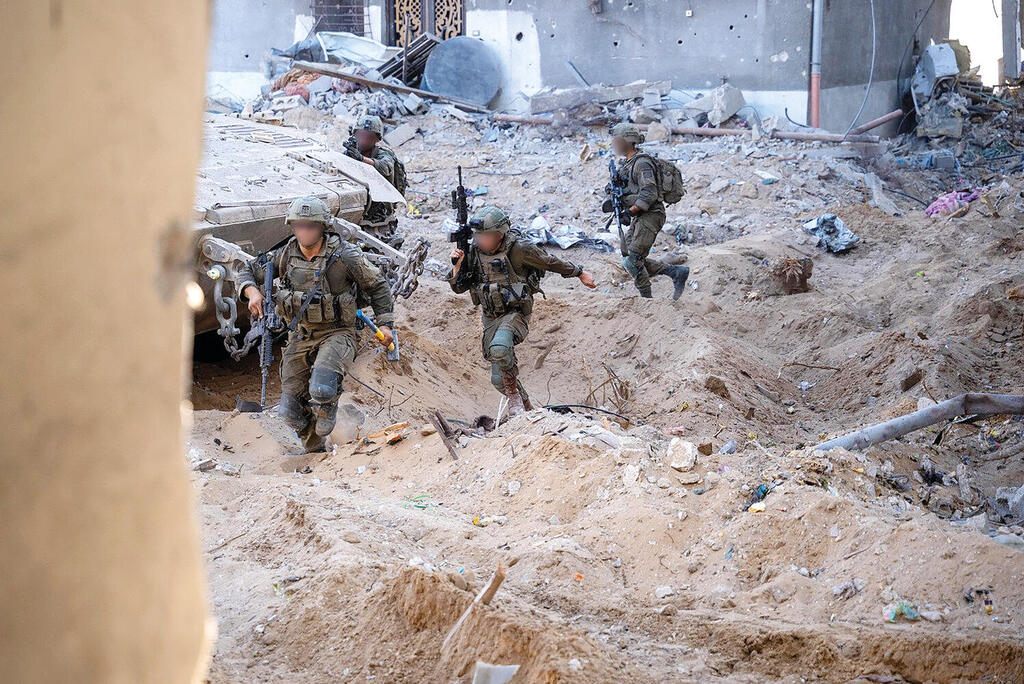
(Photo: IDF Spokesperson's Unit)
Fast forward to today. Zamir is now the man at the helm—Chief of Staff himself—and he convenes his first strategic assessment in two years. Gone is the bravado. No grand declarations. Just quiet realism. How could there be anything else? With fighting in Gaza still raging, missiles flying from Yemen, northern clashes with Hezbollah escalating by the day, Syria heating up, the West Bank teetering on explosion, and Iran forever lurking in the background—what is there to predict? Where do you even begin?
Zamir didn’t pretend to know. Instead, he shifted the conversation. This wasn’t about when the war ends. This was about managing chaos. Multiple fronts. Changing dynamics. Uncertain timelines. He urged the army’s top brass to stay skeptical. To be humble. To think like survivors, not prophets.
And then came the pivot. The IDF, he told them, must undergo a conceptual shift.
First, offense is the best defense. This means security buffers, perimeter deployments, boots on the ground outside northern and southern communities—no more “hope for the best” thinking. Also, forget the old strategic divide between what the enemy wants and what it can do. From now on, intention and capability are treated as one. Third: no two fronts are alike. Each requires its own tempo, goals and endgame. Obvious? Maybe. But not to everyone in the cabinet, apparently.
IDF attacks in Beit Hanoun
(Video: IDF Spokesperson's Unit)


Naturally, Gaza dominated the discussion. But everyone in that room understood what Zamir was really saying: this isn’t a single-war army anymore. It’s going to be juggling multiple flashpoints for years to come. That’s why the IDF is elevating the Depth Command under Maj. Gen. Dan Goldfus—who led some of the toughest ground combat in Gaza—to a full General Staff unit. That’s why a dedicated lessons-learned division is being established. The goal isn’t just to survive this war. It’s to be ready for the next one—whenever and wherever it ignites.
But the Gaza front isn't going away. It continues to bleed lives and demand decisions. Operation Gideon’s Chariots—never designed to topple Hamas, only pressure it into a ceasefire—is nearing its operational conclusion. Israeli forces have already reached the pre-designated lines around Gaza City and the central camps. And yet the diplomatic front in Doha is stuck. Meanwhile, the world watches Gaza’s humanitarian collapse, and criticism grows. Loud enough to reach even President Trump’s ear. According to his spokeswoman, he’s not thrilled with what he’s seeing.
Israeli sources say major concessions have been offered. Hamas refuses to budge. Instead, it exploits the moment, weaponizing starvation as propaganda. And here’s the crossroads: the government may soon instruct the military to launch a final, decisive assault against Hamas’ remaining brigades—regardless of how it may affect the hostages still there.
 Yossi Yehoshua
Zamir, for his part, has repeatedly emphasized the need to bring hostages home. His preference? Encirclement. Exhaustion through firepower. Not a reckless ground push. But senior officers know it won’t be enough to “win” in any traditional sense.
And then there’s Netanyahu
Already neck-deep in political turmoil over the draft exemption bill, Prime Minister Benjamin Netanyahu may feel compelled to break with Zamir’s cautious line and authorize a full invasion. That choice would mark the most critical divergence yet between the prime minister and the IDF chief. And it would carry enormous risk.
This campaign has dragged on too long. Its initial achievements are dissolving. Public patience is thinning. Strategic clarity is fading. And Zamir—no magician, just a soldier in a storm—knows it better than anyone: this war needs an endgame. Soon.