

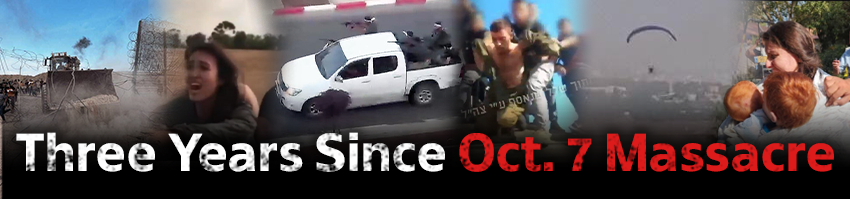

Three years after October 7, the IDF is presenting a long list of changes in its security doctrine, operational preparedness and force buildup. More troops, more reserves, greater depth, more intelligence, greater firepower and more exercises designed to test the military in scenarios in which the enemy succeeds in achieving surprise.
But before being impressed by the list, one simple fact must be remembered: Three years ago, the IDF was one of the strongest militaries in the world, with some of the world’s most advanced intelligence capabilities, a powerful air force, special units, a sophisticated border barrier, surveillance systems and no shortage of technology. And yet, on October 7, everything collapsed.
Gallery
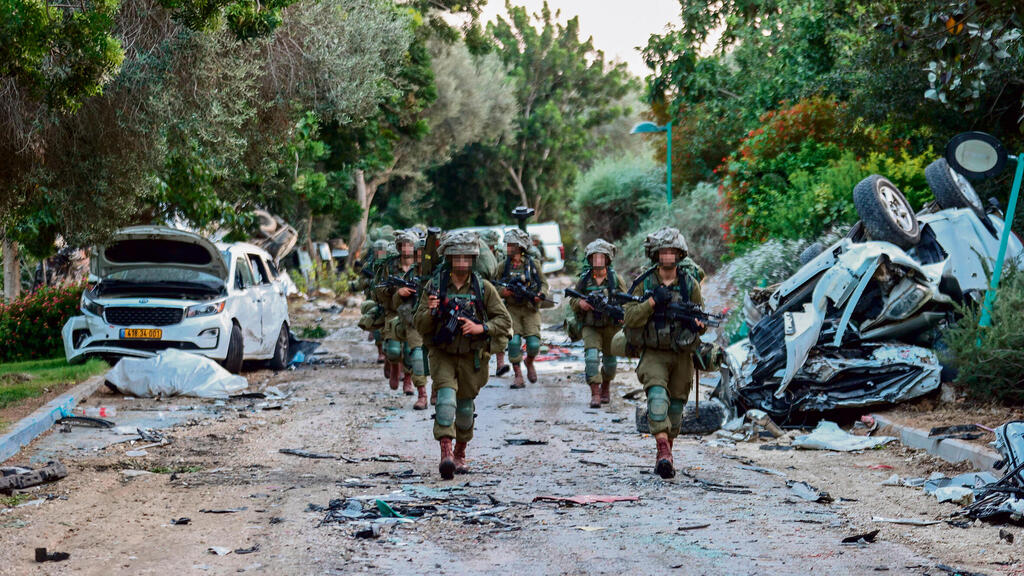
IDF soldiers search the ruins of Kibbutz Be'eri, just days after October 7
(Photo: Gadi Kabelo)
That is why the test of the changes the IDF is presenting today is not the number of new units established or the number of new outposts built. The real test will come the next time an enemy tries to surprise Israel. Will the military identify the threat in time? Will forces arrive faster? Will commanders understand the situation quickly enough? Will decisions be made before events spiral out of control?
That is also the logic behind one of the central lessons being advanced by IDF Chief of Staff Lt. Gen. Eyal Zamir: not only trying to prevent surprise, but being able to fight effectively even when surprise occurs.
That may sound obvious, but in practice it represents a significant shift. For years, Israel’s defensive doctrine was built around a combination of intelligence warning, physical barriers, intelligence collection and technological superiority. October 7 exposed the limits of that approach.
The problem was not only that there was no warning. There was also a deeper problem: The military was not structured properly for the possibility that the scenario on which it had based its preparations would not be the scenario that actually unfolded.
The IDF is now trying to correct that by increasing readiness and reserves, holding surprise drills, practicing extreme scenarios, shortening response times and preparing fire plans in advance.
But caution is required here as well. A military can rehearse surprise dozens of times and still be surprised by the one scenario it never thought to practice.
Don't wait for the enemy to reach the fence
The changes take different forms in each arena.
In Gaza, the IDF has moved from a concept of border defense to one of shaping the area beyond it. Following the ceasefire and the end of Operation Gideon’s Chariots, the IDF controls about 64% of the Gaza Strip. It holds key routes, operates outposts and positions and continues efforts to locate and neutralize underground infrastructure in areas under its control.
This marks a dramatic change from the doctrine of the years before October 7. Then, the assumption was that the IDF needed to defend the border and enter the Strip when necessary. Today, a significant part of the defensive concept is to hold territory beyond the border and prevent Hamas from reestablishing itself nearby.
But here too, the question is not only how much territory is held. The question is how long it can be held, at what cost and with how much manpower.
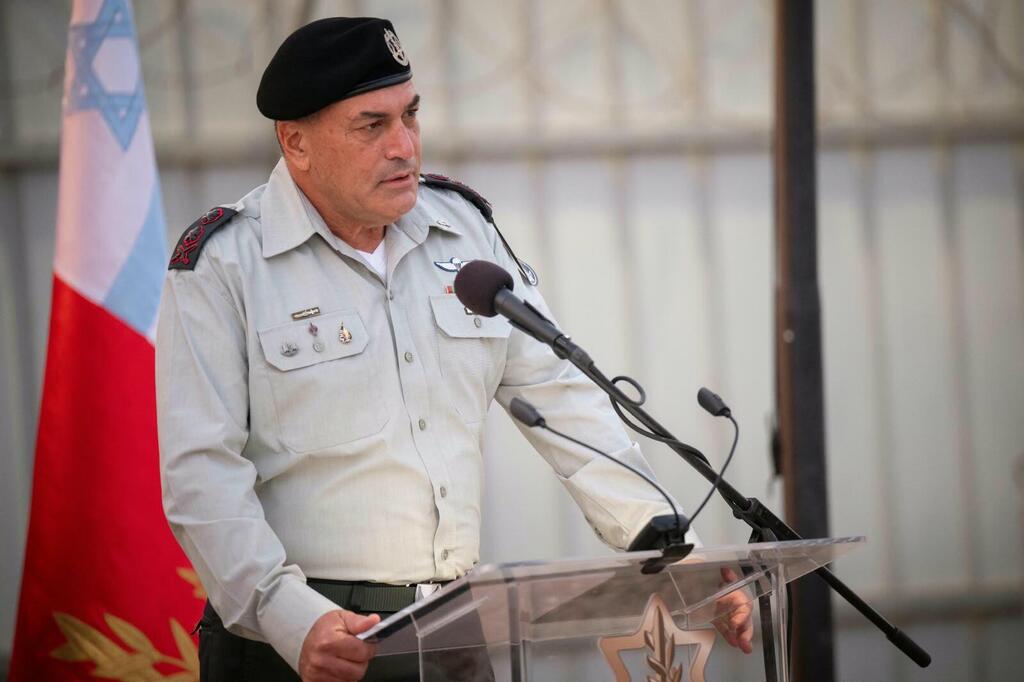
IDF Chief of Staff Eyal Zamir
(Photo: IDF Spokesperson's Unit)
In Lebanon, the lesson is to create depth. The IDF now operates on the assumption that it is wrong to wait for Radwan forces or Hezbollah fire capabilities to remain close to the border. A security zone of about 10 kilometers has been created, alongside activity intended to push the threat farther away and deny Hezbollah the ability to reestablish itself there.
This too is a fundamental shift: Instead of Israeli communities forming the first line, the area beyond the border is intended to become the forward line of defense.
In Syria, a deeper security zone has been established, extending up to about 15 kilometers, based on the understanding that the threat does not end at the fence.
Following the fall of the Assad regime and regional changes, the IDF has had to reassess the Syrian arena and the possibility that new threats could emerge from it. The decision to hold territory and create depth is intended to give the IDF more reaction time and greater room to maneuver. But that too comes with an obvious cost. The more territory the army holds across more fronts, the more troops it must deploy and the more reserves it must maintain.
In the West Bank, the change is of a different kind. Here, the IDF has largely shifted from pinpoint counterterrorism operations to campaigns aimed at dismantling terrorist infrastructure and preventing it from being rebuilt. Operations in Jenin, Tulkarm and Nur Shams have become more sustained campaigns, involving larger forces and an effort to alter the operational reality in the refugee camps.
The fact that the chief of staff added another divisional headquarters to the West Bank also reflects this shift. Two divisions now operate in Gaza, Lebanon and the West Bank rather than one, and the West Bank is no longer the same arena it was before October 7. The size of the population, the terrain, the threats and the scale of operational activity have created a need for greater forces and command structures.
Across all the fronts, the same idea repeats itself: Do not wait for the enemy to reach the fence or the community. Instead, create a space in which the enemy can be identified, stopped and engaged before getting there.
But this is precisely where the question of cost must be asked.
Greater depth means more troops. More outposts mean more manpower. More reserves mean more reservists. Greater offensive capability means more munitions, intelligence and budget.
And this is one of the IDF’s biggest contradictions after three years of war. On the one hand, it wants more available forces in every arena. On the other, it is grappling with exceptional burnout and manpower shortages.
Looking at the changes critically
The changes are also reaching force buildup. New frameworks have been established, battalions added, rapid-response units created, drone and remotely piloted aircraft capabilities expanded, intelligence collection and firepower increased and new structures formed to provide more strength within the sectors themselves.
About 40,000 reservists have been added to the military’s manpower rolls since the war began, tens of thousands of reservists have been reassigned, about 30 battalions have been added to the operational order of battle and mandatory service has been extended to 32 months.
It is an impressive list. But here too, it is important to remember what the list reveals beyond the achievement itself: The IDF of before October 7 was simply not built for the war it entered.
Three years of fighting forced it to add manpower, extend service, expand the reserves and establish units that did not previously exist. Some of these steps are the result of success and lessons learned. Others are corrections to gaps that were exposed only after the war had already begun. That is why it is still too early to speak of a new security doctrine as a finished product.
What is taking place today is, in practice, a major attempt by the IDF to rebuild itself: a military capable of dealing with surprise, a multifront war and enemies seeking to strike the home front, while at the same time holding captured areas over time and maintaining the readiness of its forces.
The most important lesson from October 7 is not only that the military needs more tanks, more soldiers or more outposts. The lesson is that an army must not fall in love with its own doctrine.
Three years ago, the IDF was certain it knew what the next war would look like. The enemy proved it wrong.
That is why these changes must also be viewed critically today. Until they are tested by the next surprise, there is no way to know whether they represent a deep transformation or merely a correction of failures exposed in the previous war.
Ultimately, a security doctrine is not tested in documents, presentations or the number of units established. It is tested at the moment when intelligence says one thing, the enemy does another and the entire system has to understand that within minutes.
That is where the IDF failed three years ago. And that is exactly where it will have to prove that this time it learned.