


Senior U.S. Army ground forces commanders watched nervously as a swarm of drones advanced toward them. Forty-nine drones flying at high speed in perfect coordination presented a difficult threat to counter. Beads of sweat appeared on their foreheads in the Arizona desert heat. Then the operator pressed a button and a high-powered microwave beam was fired at the swarm, bringing all of them down at once. “It fried them,” as the common phrase goes.
That 2024 event was a demonstration of the Leonidas defense system by the U.S. company Epirus, showcasing the capabilities of high-power microwave technology, or HPM. Early this year, the company again demonstrated that a mobile version of Leonidas could down a fiber-optic drone, similar to the first-person view (FPV) drones Hezbollah has used in recent months. The question now is increasingly relevant for the IDF: are HPM systems the ultimate answer to FPV drones?
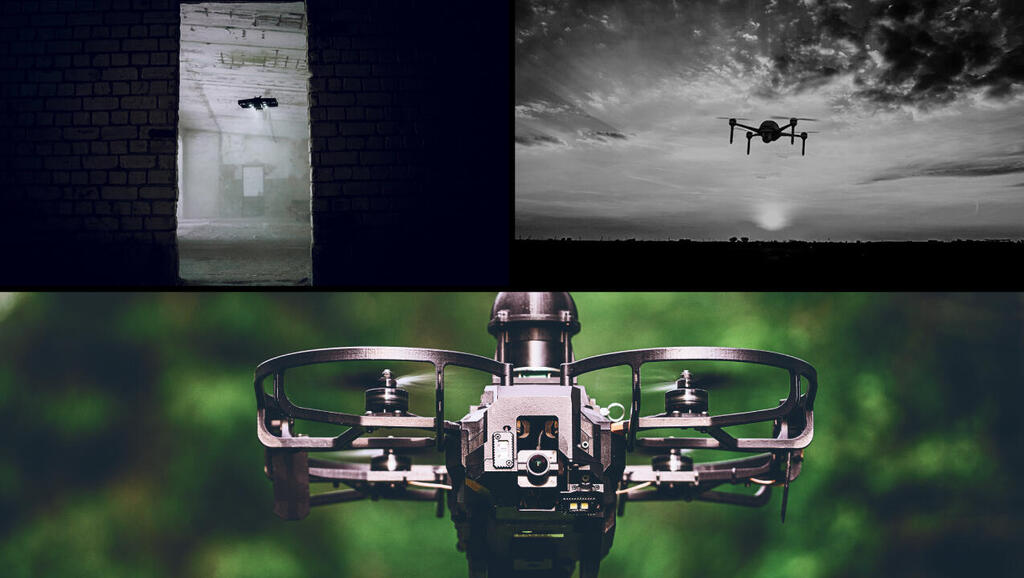
In recent months, Israel’s security establishment has come to view the drone threat as a strategic challenge, with implications for deterrence, defense spending and, above all, soldiers’ lives. Fiber-optic drones, difficult to detect and immune to jamming because they remain physically connected to their operators by cable, have killed and wounded numerous soldiers and officers.
Rarely has a single enemy weapon inflicted such heavy casualties while leaving the IDF without an effective countermeasure. Officials say a solution is emerging, but it will be complex: a coordinated network of detection, warning and interception systems powered by artificial intelligence and other advanced technologies, alongside changes in military doctrine. The goal is to stop a relatively simple weapon — a low-cost drone carrying a mortar shell that, once spotted overhead, may already be too close to intercept.
“We are using the ceasefire and the reduced intensity of fighting to accelerate everything we can,” said Lt. Col. D., head of the detection and tracking branch in the IDF Technology Division for the Ground Forces, in an interview with ynet. “The field conditions now allow us to do things we could not do during combat, to bring in systems that were hard for forces in the field to adopt. Since the ceasefire, all headquarters and technology personnel have switched to turbo mode. We feel we are on borrowed time and at any moment it could flare up again.”
According to him, the entire defense establishment is fully mobilized: “The energy in the IDF, the commitment of the people working on this threat, is something I have never experienced before in all my years. Across the entire front and in the resources allocated to us.”
'We have improved significantly'
The IDF is working in cooperation with the Directorate of Defense, Research and Development at the Ministry of Defense (DDR&D). The directorate has called on companies and defense startups to propose solutions and is intensely involved in sorting, testing and deploying systems that show potential. Has a solution been found? Not yet. But while two months ago there was not even a way to reliably detect incoming FPV drones, there has been progress in early warning and some ability to intercept them before impact.
“I would not say we are hermetic yet,” a security source said. “Unfortunately, soldiers will likely continue to be hit in the near term. But we have improved significantly.”
The war that began after October 7 changed many things, including the understanding that there is no time for long development cycles of build, test, refine and only then operational deployment. Any system that demonstrates effectiveness is quickly pushed into the field in the hope that even if it does not help, it will not harm.
Since May, dozens of new technologies have been tested, many demonstrated to the security establishment, some deployed to field units and several companies have already signed contracts to supply their systems.
One of the first tasks was mapping the field and dividing technologies into four categories. The first is detection and identification systems. Fiber-optic drones are extremely difficult to detect because they fly low between treetops and rooftops where standard radar struggles. Today, several companies have developed cameras, radars, microphones and advanced sensors such as LiDAR that can detect them.
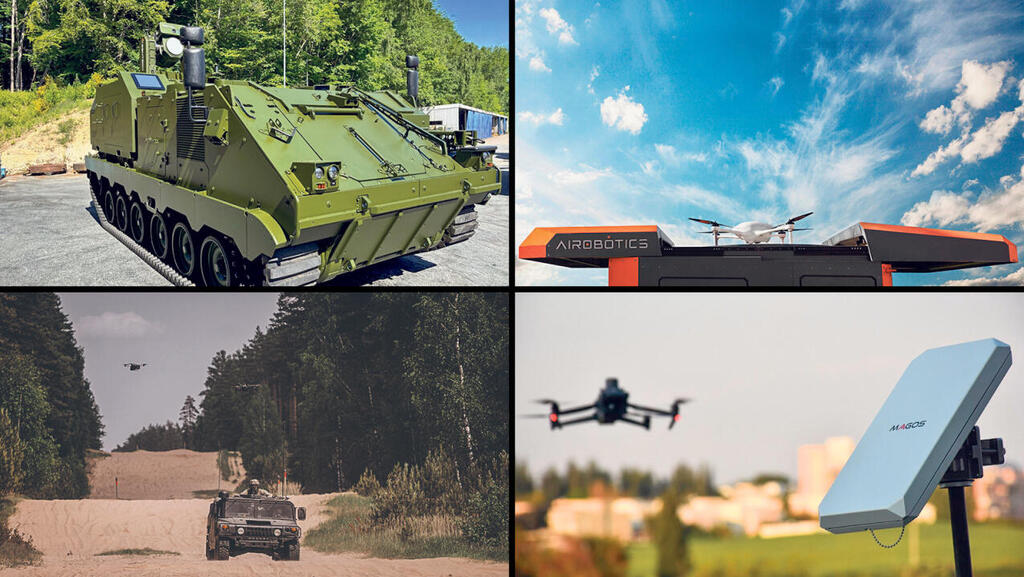
Top left clockwise: Esh-Tech's anti-drone system, Airobotics drone, Magos' solution to the drone threat, throwing a net at the attacking drone
(Photos: Esh-Tech, XTEND AI ROBOTICS, Airobotics)
This week it was revealed that the Defense Ministry signed a deal worth 21 million shekels ($5.7 million) with Magos to supply hundreds of short-range mobile radars that create a continuous “coverage cloud” for early detection. Using AI systems, such as those developed by Kela, the data is fused to produce precise targeting of incoming drones. Officials say this is the area showing the most satisfaction within the defense establishment.
The second category is passive defense. When a drone is detected, the instinct is to shoot it down, but that is not always effective. Operators from Hezbollah can maneuver drones quickly and accurately target exposed forces. As a result, one of the most effective solutions so far has been passive defense, namely metal netting. What began as improvised fishing nets from the Sea of Galilee has turned into an organized supply of thousands of square meters of tested netting proven effective against drones.
There are also more experimental systems such as cutting barriers designed to sever the fiber-optic cable trailing behind drones, causing them to crash. These have worked well in demonstrations but have not yet proven themselves in the field.
Shooting down drones
The IDF also seeks to actively intercept drones, but this is difficult. In units operating in southern Lebanon, soldiers are tasked with shooting down drones, but small-arms fire has proven largely ineffective. This led to development of kinetic interception technologies, including improved 5.56 mm frangible ammunition that expands the firing spread.
“SMASH,” a smart sighting system developed by Smart Shooter, uses AI to lock on and release fire at the precise moment for a hit. Each solution alone shows only moderate effectiveness, but combined they have produced better results and several successful interceptions.
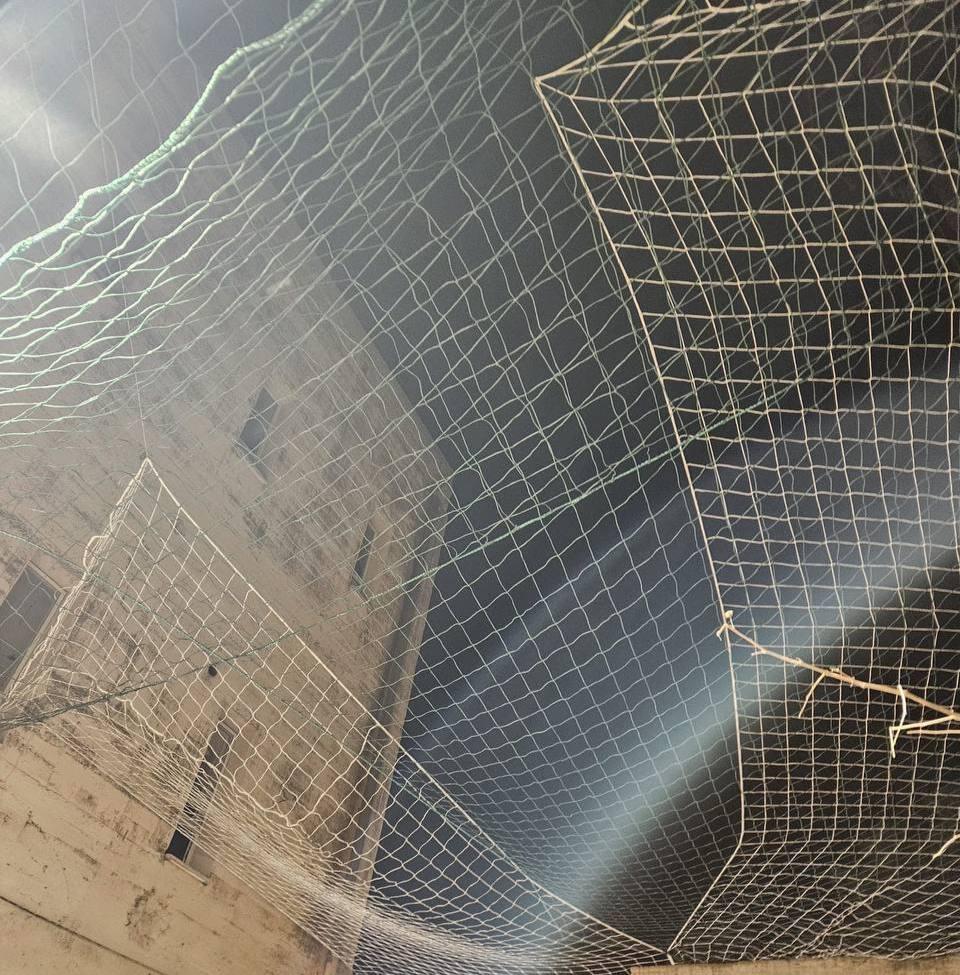
What began as improvised fishing nets from the Sea of Galilee has turned into an organized supply
The army has also tested shotgun-style net-firing weapons and automated machine guns developed by companies such as Smart Shooter, Elbit and Rafael. While promising on paper, field results have been mixed.
The fourth category is the most advanced: technological interception using counter-drones that either fire nets, collide with targets or detonate near them. Companies such as Israel Aerospace Industries, Elbit, Rafael and U.S.-based Ondas are active in this field. Rapid progress has been made and some systems are already deployed operationally. Missile-based interceptor drones are also under development but are not yet mature.
The most promising area, according to defense officials, is directed energy weapons such as lasers and microwaves. Rafael’s Iron Beam laser system has not yet demonstrated decisive operational performance, though mobile laser systems are already deployed in some cases. High-power microwave systems are being developed by major Israeli defense industries in cooperation with U.S. firms, according to foreign reports, and are seen as a potential “Iron Dome of the next generation.”
'We are not there yet'
Lt. Col. D. said the IDF has built a tailored “fire kit” for each unit depending on its mobility and operational profile. “A moving force gets one solution, an armored force gets another. I ask each unit what I can bring them and what is fastest to deploy. We are aligning the ecosystem so everything works together.”
He said hundreds of systems have already been deployed but progress is still slower than desired. “I feel it is not fast enough, and I relate to that frustration. We are not fast enough. That is why we invested in infrastructure to accelerate change.”
FPV drones remain a growing challenge because they constantly evolve. Even if a solution is found today, it may be bypassed tomorrow. “If until now we were one step behind the enemy, our investments in infrastructure and technological building blocks are helping us accelerate. We may soon be a step and a half ahead, but it will never end. This threat evolves quickly, so we must constantly adapt and try to anticipate the next change.”
Cooperation between the IDF and DDR&D is well known, but pressure to accelerate deployment has created some friction. While DDR&D uses a “traffic light” system to classify technologies, red for rejected, yellow for potential and green for approved, the IDF has pushed for faster operational evaluation.
“We have somewhat moved away from the traffic light system,” said Lt. Col. D. “We take systems that reached green status and push them forward. We test everything that crosses a performance threshold and bring it into the field quickly.”
Hezbollah drone strikes IDF forces in Lebanon


Asked how far Israel is from an effective operational solution, he replied: “We are making progress and have a good feeling. But are we there yet? No. We have not proven operational capability. There are many stages ahead. But I am very optimistic. Russia has not solved this and neither has the United States. I am confident we will because Israeli society is highly sensitive to the loss of life and when that happens resources open up and top minds get involved without ego.”
Lessons from the Russia-Ukraine war also shape expectations. “What is happening there is what we will experience in the future. Everything we are doing now is informed by what Russia and Ukraine have already done. Hezbollah will likely do the same. The future is already there and we are importing insights from it.”
On lasers, he added: “Based on my experience I believe lasers will provide a breakthrough. But there is no silver bullet. It is about building a broad set of solutions working in synergy. Each has a relative advantage, but none can solve the problem alone.”
Economic momentum
Israel’s defense tech market has been booming over the past two years, especially in counter-drone systems. The push is driven by operational need but also strong financial incentives, with billions of dollars at stake in domestic and future export deals.
Companies such as XTEND sell full systems rather than individual drones. Ondas reportedly received an order worth about $8 million from a major defense customer according to foreign reports. Robotican and XTEND have also secured major contracts, while Smart Shooter has won Pentagon deals worth tens of millions of dollars.
Israel Aerospace Industries is also active in the field through its subsidiary Airobotics, which develops autonomous drone systems and counter-drone capabilities. Its systems, including the Iron Drone platform, are designed to intercept hostile drones using autonomous interceptor drones that can be deployed without human pilots, adding another layer to the growing ecosystem of kinetic interception solutions.
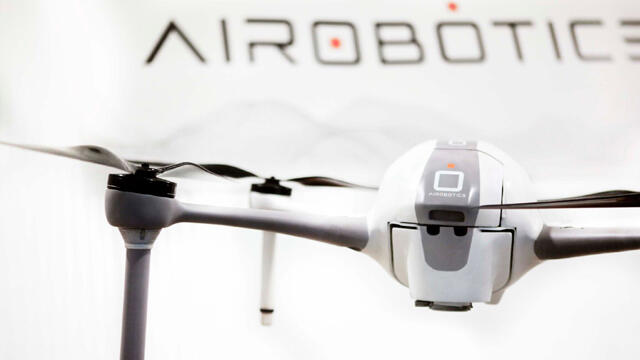
Airobotics develops autonomous drone systems and counter-drone capabilities
(Photo: Airobotics)
U.S. companies such as Anduril and Fortem sell interceptor drones at far higher prices, ranging from tens of thousands to hundreds of thousands of dollars per unit.
Israeli firms that succeed in global markets are securing large contracts. XTEND has won multiple Israeli and U.S. defense contracts. Smart Shooter has also secured deals with the Pentagon and the U.S. military.
At present, the fight against FPV drones is largely dominated by startups and mid-sized defense firms. The three major Israeli defense companies, Rafael, Elbit Systems and Israel Aerospace Industries, declined to participate in this report, though their executives continue to speak publicly about progress.
Elbit CEO Bezhalel "Butzi" Machlis said the company has solutions that will reach the field soon, including energy weapons for swarms. Rafael CEO Yoav Turgeman said counter-drone systems are in advanced development and the company has partnered with Spear UAV on detection and interception systems. Israel Aerospace Industries Chairman Boaz Levy said a solution to the drone threat is expected within weeks.
In practice, however, it is startups that are already reaching operational deployment. Systems such as XTEND’s Iron Drone Raider, Robotican’s net-throwing drones and XTEND interceptor platforms are already in use in northern operations. Arawnus, a subsidiary of Israel Shipyards, has developed a man-portable system that detects drones using radar, cameras and LiDAR and launches nets from the ground. Esh-Tech has developed a lightweight tactical laser system firing five pulses per second, which the defense establishment views with high expectations.
Innoviz CEO Omer Keilaf said the company is working with Kela and other firms to process data from sensors. “Our product is already in mass production. The same sensor is going into Mercedes vehicles, but we also provide 3D perception above and around vehicles,” he said.
'Who moved the cheese'
Investment activity is following the momentum. Esh-Tech recently announced an $18 million funding round led by Kinetica and other defense-tech investors. CEO and co-founder Erez Riahi said the company is in talks with multiple customers, including overseas clients, and that its laser technology is being integrated into larger air defense systems.
XTEND CEO Aviv Shapira said the main challenge is keeping pace with evolving threats. “What characterizes this industry is that once you find a solution, the enemy changes its tactics.”
Ondas executive Saar, identified only by his first name for security reasons, said startups bring agility. “There is no single solution. We believe in a broad set of integrated tools for many scenarios.”
Ondas represents a new approach in Israel’s defense market, combining about 15 Israeli companies into a unified operating system that controls multiple tools. The company has already won several IDF tenders and is challenging traditional defense contractors.
“The big companies feel like someone moved their cheese,” said a security source.
Startups have clearly gained the edge in speed and flexibility. Large defense firms are slower to deploy systems, though some areas such as microwave weapons require their scale and funding. A race is underway among major companies to be first to field mature systems in what could become a massive global market.
The IDF has already expressed interest in HPM systems. DDR&D has reportedly evaluated procurement of Epirus’ Leonidas system. Rafael and Elbit are developing electromagnetic pulse capabilities that could integrate into existing systems such as the Trophy active protection system or operate as standalone drone defense platforms.
The question is when these systems will move from concept to reality. Lt. Col. D. remains cautious: “This field looks great in presentations but still has a long way to go before operational capability. HPM systems also face major challenges. Even when they become operational, they will need to be part of a layered system of detection, tracking and kinetic interception because they will not provide a complete solution on their own.”