


Prime Minister Benjamin Netanyahu is expected to depart Saturday night aboard the official Wing of Zion plane for a diplomatic visit to Washington, where he is expected to meet U.S. President Donald Trump and attend the memorial service for Sen. Lindsey Graham, who was considered for years one of Israel’s strongest supporters in Congress. Netanyahu is then expected to return to Israel, likely without staying through the weekend.
The date of the meeting with Trump has not yet been officially announced, but Israeli sources said it is expected to take place at the White House on Monday. It will be Netanyahu and Trump’s second diplomatic meeting this year, following their meeting in February, which was considered one of the most dramatic summits in U.S.-Israel relations and during which decisions were made that led to Operation Roaring Lion against Iran.
Gallery
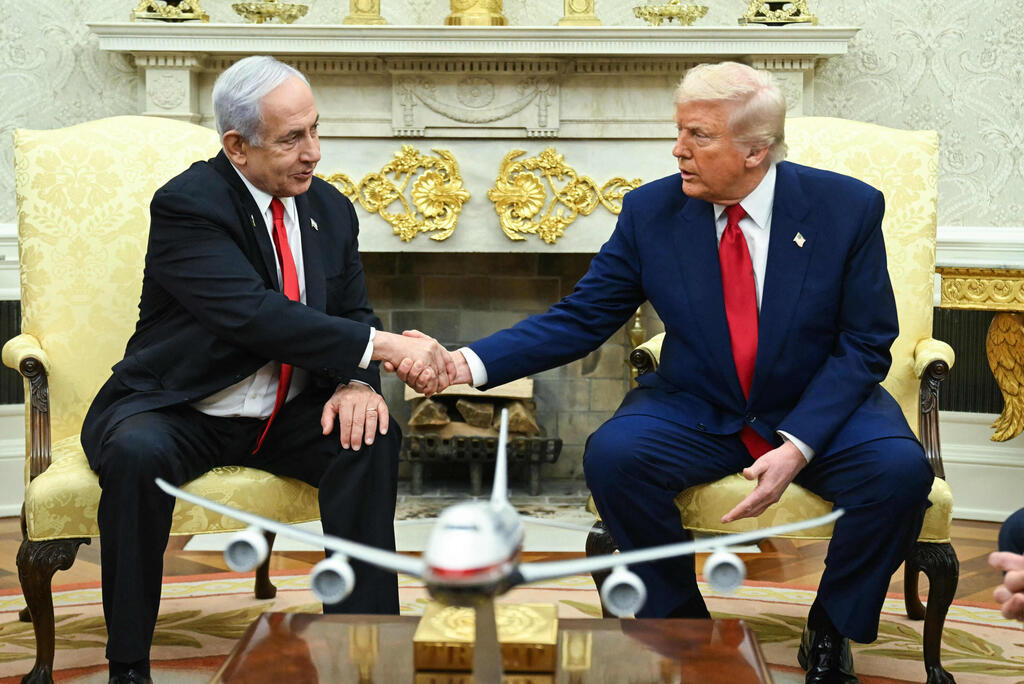
US President Donald Trump and Prime Minister Benjamin Netanyahu at an Oval Office meeting last year
(Photo: Saul Loeb / AFP)
But that summit also left a bitter taste among those close to Trump, with a feeling that Netanyahu and the Mossad had misled the American president into believing that the ayatollahs’ regime could be toppled in a few moves, when in retrospect it became clear that the Israeli plan was far from ripe. In Israel, however, some argue that Trump was the one who ultimately backed away from several moves, including the use of the Kurds, under pressure from Turkish President Recep Tayyip Erdogan, which had been a central element of the plan.
In all, this will be Netanyahu’s eighth visit to the United States since Trump returned to the White House at the beginning of last year — an unusual figure that reflects the direct and intensive relationship between the two leaders, though not necessarily the absence of disagreements.
Iran at the center of the talks
Netanyahu is arriving in Washington as Trump weighs his next steps against Tehran. The American president even warned in an interview with Fox News that if Iran does not return to the negotiating table, the United States could attack bridges, power stations and other infrastructure in Tehran as early as next week.
From Israel’s perspective, the main concern is not only the continued progress of Iran’s nuclear program, but also the possibility of a new agreement that Jerusalem would view as too conciliatory. For Israel, a bad agreement is a greater danger than no agreement at all. Israel would prefer continued heavy economic pressure and sanctions, but there are also officials in Jerusalem who believe the window of opportunity for a severe blow to the Iranian regime remains open through broad strikes on energy infrastructure, electricity systems and centers of government — a move they believe could undermine the regime’s stability.
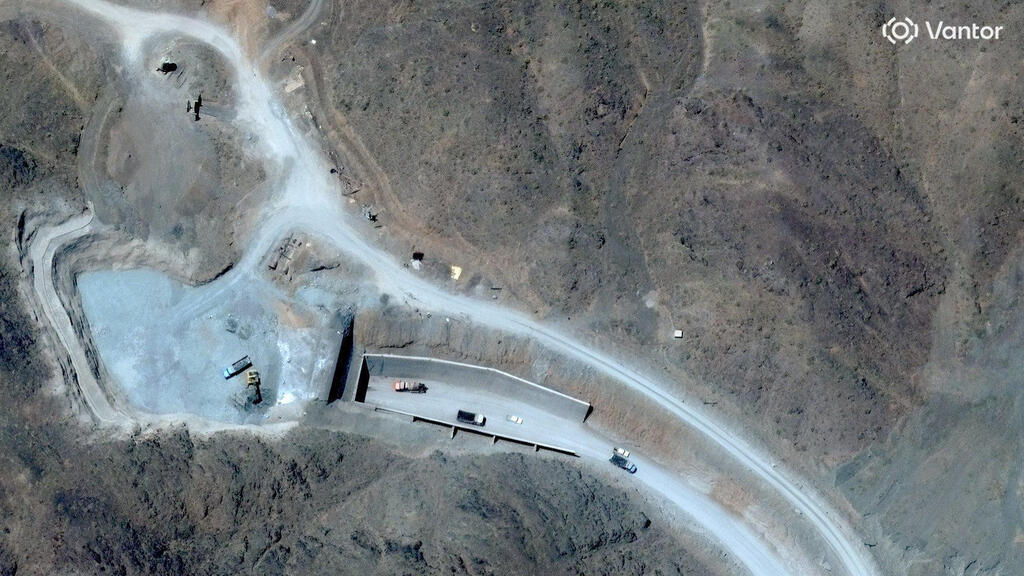
Iran's Pickaxe Mountain nuclear facility in a satellite image from June
(Photo: Vantor/Handout via Reuters)
At the same time, Israel is being very careful not to appear as though it is pushing the United States into another war. The Israeli message is therefore expected to be cautious: presenting a grave intelligence picture and emphasizing the dangers, while avoiding public pressure on Trump to renew the campaign.
According to reports, ahead of Netanyahu’s visit, a secret Israeli delegation arrived in Washington and presented senior administration officials with new intelligence on an underground nuclear facility Iran is building deep inside the mountain known as Pickaxe Mountain. It is one of the strategic assets that will require an American decision on whether to make do with economic pressure and deterrence, or return to the military option, including the possibility of using ground forces or again using bunker-busting bombs or cruise missiles to block the tunnels leading into the mountain. In recent days, Trump has spoken at length about his intention to strike Pickaxe Mountain.
Who sets the policy?
Behind the security discussions lies a personal and political dimension as well. Israeli officials acknowledge that Netanyahu’s standing in the White House is not the same as it was at the start of Trump’s second term. The American president does not hide that he sees himself as the one setting the line, and he has recently made remarks that were perceived in Jerusalem as humiliating toward the prime minister, including when he said, “Netanyahu knows who's boss.”
Trump says it is time for Israel to withdraw from Lebanon
(Video: Fox News)


In practice, Trump now holds the main levers of influence: security assistance, policy toward Iran, regional mediation and influence over normalization processes. Netanyahu will arrive at the meeting needing American cooperation no less than the White House needs coordination with Israel.
Friction in Syria
Another issue expected to come up is Israel’s presence in southern Syria. Trump has recently been pressuring Israel to begin withdrawals from security zones established after the war. Netanyahu, by contrast, intends to make clear that from Israel’s perspective, the conditions for such a move do not yet exist. Netanyahu has also made clear in closed conversations that Israel will not withdraw, even in the face of American pressure.
Jerusalem has no confidence that Syrian President Ahmad al-Sharaa can ensure security stability, prevent terrorist elements from infiltrating and protect minorities, foremost among them the Druze. Israel was also displeased by Trump’s remarks suggesting that the Syrian regime could also be given responsibility for handling Hezbollah. In the Syrian context, American pressure should be expected at least in the area of renewing negotiations between the countries.
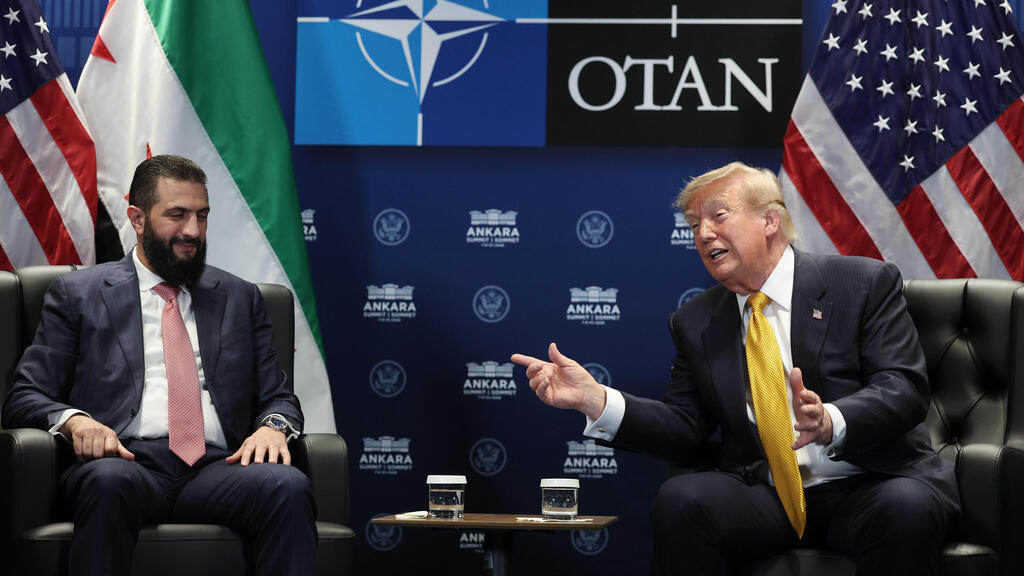
US President Donald Trump meets with Syrian President Ahmad al-Sharaa on the sidelines of the NATO Summit in Turkey
(Photo: Win McNamee/Getty Images)
The gaps between the sides exist, but the assessment at this stage is that Trump may not turn the issue into a direct confrontation unless he chooses to give it higher priority as part of his understandings with Turkey.
The discussion on Lebanon
The United States continues to advance contacts between Jerusalem and Beirut over implementation of security arrangements in southern Lebanon, and Washington is examining the possibility of a partial and gradual Israeli withdrawal as part of a pilot move. Netanyahu is expected to oppose any significant withdrawal, especially given the political situation in Israel and the approaching elections.
In principle, the Americans want Israel to move forward with withdrawals, while Israel wants the Lebanese army to move faster and more thoroughly in dismantling Hezbollah. The meeting in Rome between Israel and Lebanon was supposed to serve as a bridge to a meeting with larger teams next month. From Israel’s perspective, the security zones remain essential as long as there is no certainty that Hezbollah will not reestablish itself along the border. Trump, on the other hand, may see such a move as an opportunity to present a diplomatic achievement and demonstrate his influence in the region.
Disagreements over Gaza
There are also gaps over the Gaza Strip. Trump continues to push for the implementation of the plan he formulated, centered on advancing the gradual reconstruction of the Strip. Israel, by contrast, insists that any significant progress be conditioned on Hamas’ disarmament.
According to assessments, Trump may propose partial progress on reconstruction even before the organization is fully dismantled, at least in areas where Israel maintains security control. This is one of the issues on which a substantive disagreement between the two leaders is expected.
Normalization? Best not to expect too much
Although the U.S. administration continues to speak about expanding the Abraham Accords, the assessment is that no major breakthroughs are expected during the visit. Ideas may be raised for bringing additional countries into the circle of agreements, but diplomatic officials believe that under the current regional reality — and especially given Netanyahu’s international standing — it is difficult to see major Arab states making a dramatic move in the near future.
Netanyahu said Tuesday at the memorial ceremony for Ze’ev Jabotinsky that “thanks to the consistent cultivation of our strength, various countries are seeking closeness with us. This is the cooperation that is growing stronger between us, not in the spotlight, but it is happening, and not in one country, in more than one or two countries. And this also opens the future door to normalization and peace.”
Israel-Turkey tensions
Tensions between Israel and Turkey may also come up in the conversation. The Americans would like to neutralize Israel’s strong opposition to supplying F-35 fighter jets to Ankara, as well as jet engines for Turkey’s domestically developed stealth aircraft, the Kaan. However, Israel’s position is that if the United States is already planning to return Turkey to the F-35 program, it should at least “squeeze” concessions out of the Turks.
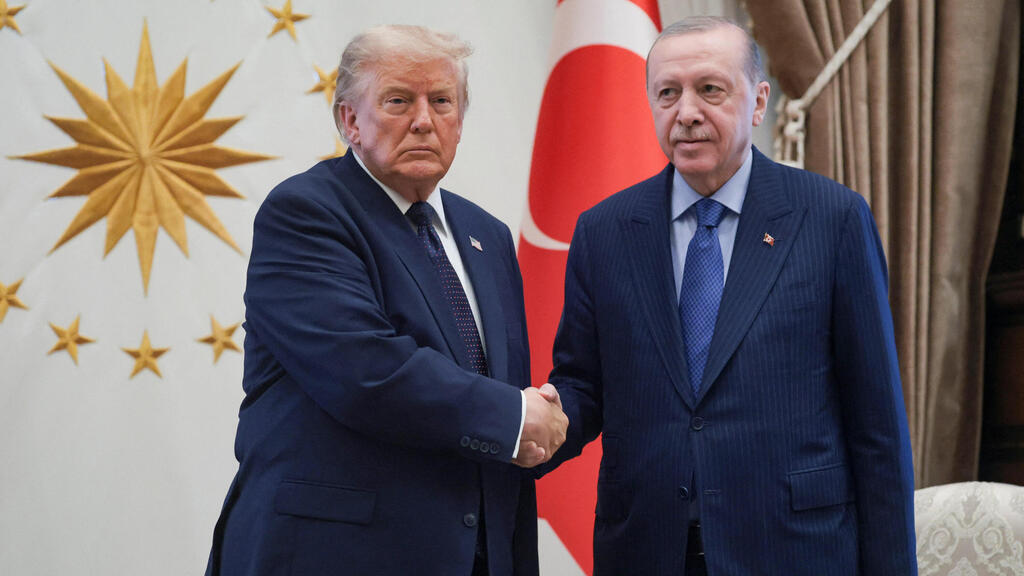
US President Donald Trump and Turkish President Recep Tayyip Erdogan meet in Ankara
( Photo: Jonathan Ernst/Reuters)
The tension between Israel and Turkey is so deep that it is doubtful there is any chance of reconciliation, but it may at least be possible to lower the flames and prevent escalation and clashes between the countries.
Personal politics will hover over the meeting
Alongside the diplomatic issues, a political conversation also is expected. Trump is aware that Netanyahu is facing a difficult election campaign and will try to assess his political situation and his chances of remaining in office. For the American president, this is also a question of political investment: how appropriate it is to grant Netanyahu public support, a future presidential visit to Israel or other gestures that could help him domestically.
Issues may also come up related to Trump’s past calls for Netanyahu to be pardoned, though it is unclear whether the matter remains high on the White House’s agenda. The bottom line is that the visit is not necessarily expected to end with dramatic announcements, but rather to serve mainly as a test of the relationship between the two leaders.
The central question is not whether Israel and the United States remain coordinated, but to what extent. On Iran, Lebanon, Syria and Gaza, there is agreement on the general goals, but not always on how to achieve them. The White House meeting will clarify whether Trump and Netanyahu can bridge the gaps, or whether their relationship is entering a stage in which cooperation continues while the political and diplomatic prices each side will be required to pay keep growing.