

It happened after the January 6, 2021, Capitol riot. Sen. Lindsey Graham decided that the president he had staunchly supported had crossed a line by effectively backing the masses of rioters who stormed one of the pillars of American democracy — and announced that he was breaking their alliance.
“Trump and I, we’ve had a hell of a journey. I hate it to end this way. Oh my God, I hate it. From my point of view, he’s been a consequential president,” an emotional Graham said after the rioters were removed from the Capitol and lawmakers returned to complete the certification of Joe Biden’s 2020 election victory, which Trump still refuses to accept.
Gallery
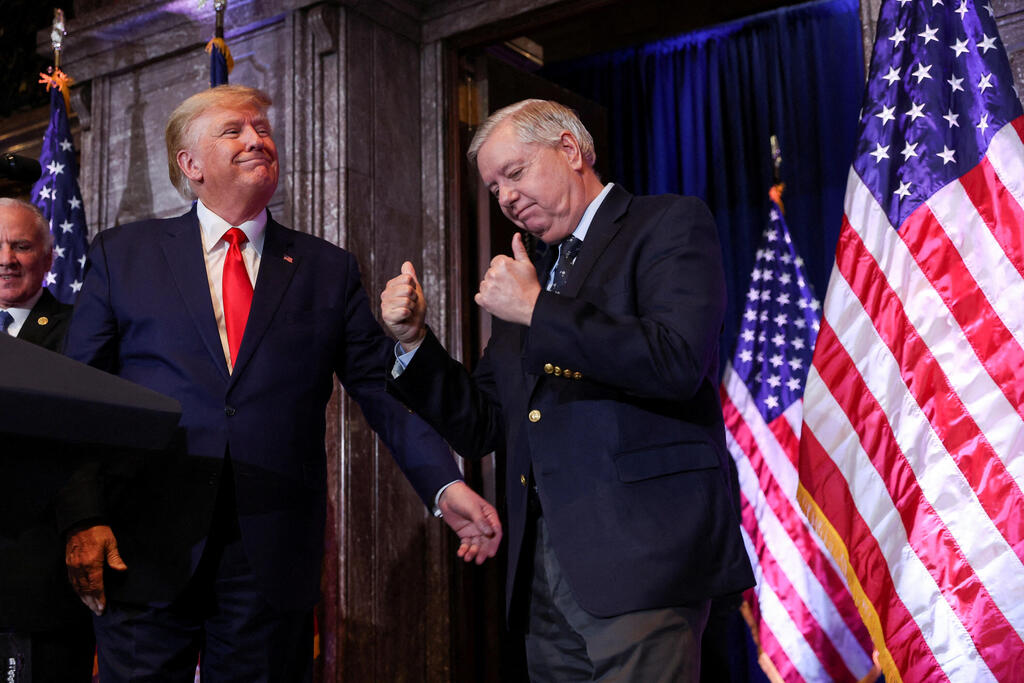
Graham with Trump, in 2013. Even the Capitol riots didn't stop the alliance
(Photo: REUTERS/Shannon Stapleton)
"All I can say is count me out. Enough is enough,” Graham said at the time.
But it was not enough.
Graham, the senior senator from South Carolina who died suddenly Saturday night at age 71, reportedly following a heart attack, realized that his party’s future was closely tied to Trump. Within a short time, he became one of Trump’s most loyal allies once again.
What appeared at the time to be a final rupture instead became another twist in the long and complicated relationship between the influential senator and the president who reshaped the Republican Party.
“Can we move forward without President Trump? The answer is no,” Graham said in May 2021, just four months after the January 6 riot. “I’ve determined we can’t grow without him.”
Trump, who called Graham a “true American patriot” on Sunday, expressed disbelief over the sudden death of the man who, particularly since Trump returned to the White House last year, had become an important adviser on a range of issues — especially regarding the war with Iran.
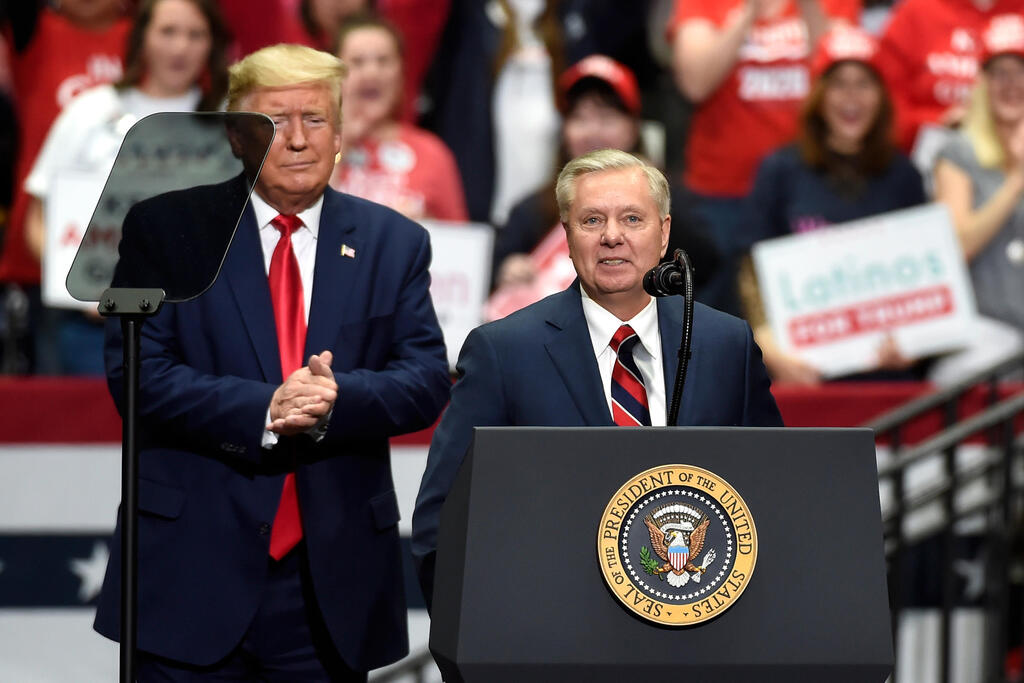
Graham with the president in 2020. 'Can we move forward without President Trump? The answer is no'
(Photo: AP Photo/Mike McCarn)
“I just can’t believe it,” Trump said in a phone interview with NBC’s “Meet the Press,” a program on which Graham had been scheduled to appear that day.
“He was like a member of the family,” Trump added, saying he had spoken with Graham “minutes” before the medical emergency.
According to Trump, Graham had just returned to the United States from a weekend trip to Ukraine, where he met with President Volodymyr Zelenskyy. The senator told him he was “tired” but felt fine.
Trump described Graham as a “fantastic” person and added that he possessed “a unique ability — he was able to deal with Democrats. If I had a problem with a Democrat, he could work it out.”
Immediately after that interview, Trump spoke with CNN and was asked about his past clashes with Graham, particularly when Graham challenged him in the 2016 Republican presidential primary.
“He ran against me, and he was, you know, formidable. He was a tough cookie. He was tough and smart. And that's where I got to know him, on the campaign,” Trump said. “And he was a smart guy. And it was a nasty campaign. He was tough and nasty. But I was nasty too. And it worked out fine.”
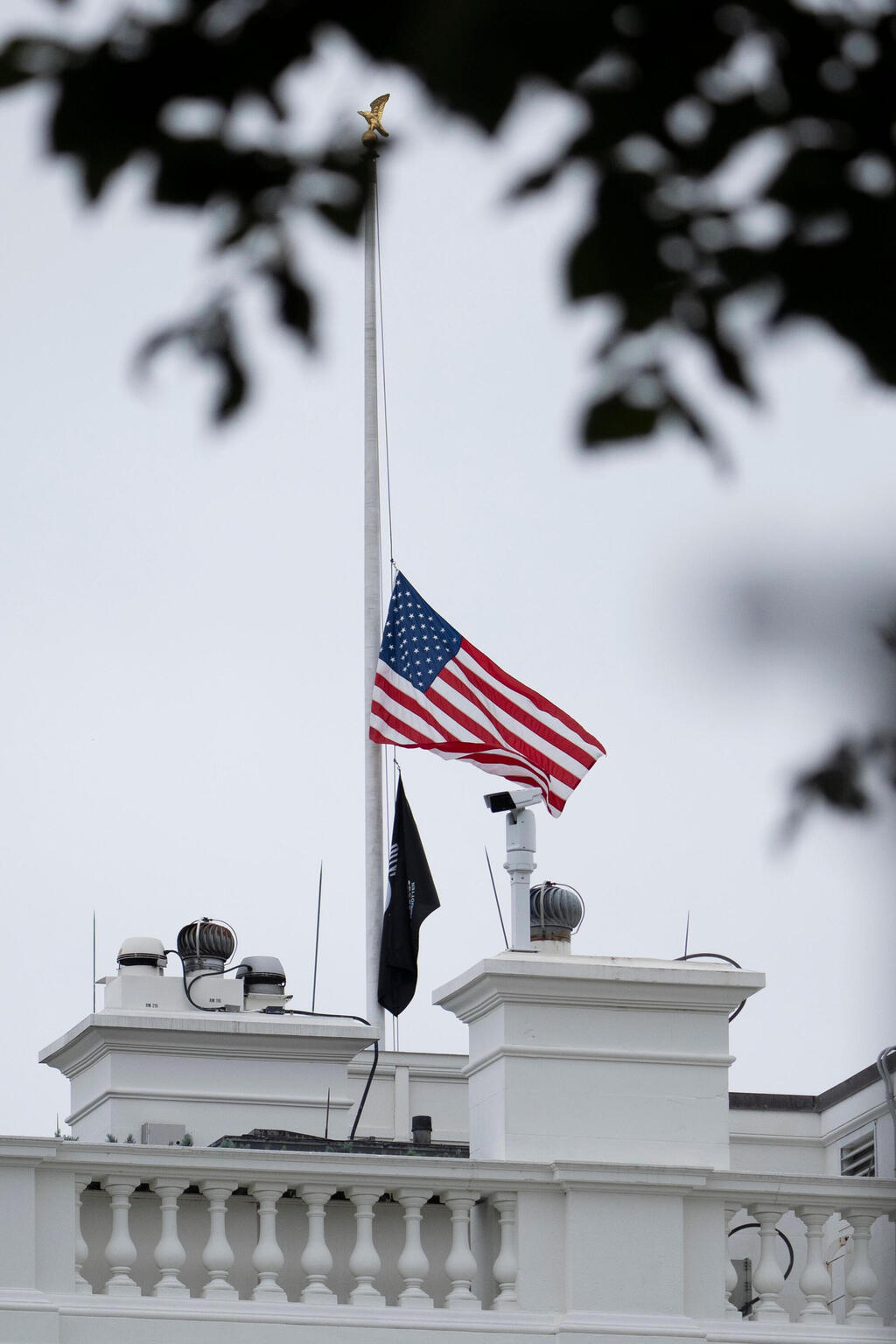
Later that evening, in another tribute to his late ally, Trump announced that he had ordered all flags at U.S. government facilities to be lowered to half-staff until Saturday at 6 p.m., meaning they would remain lowered for nearly a week.
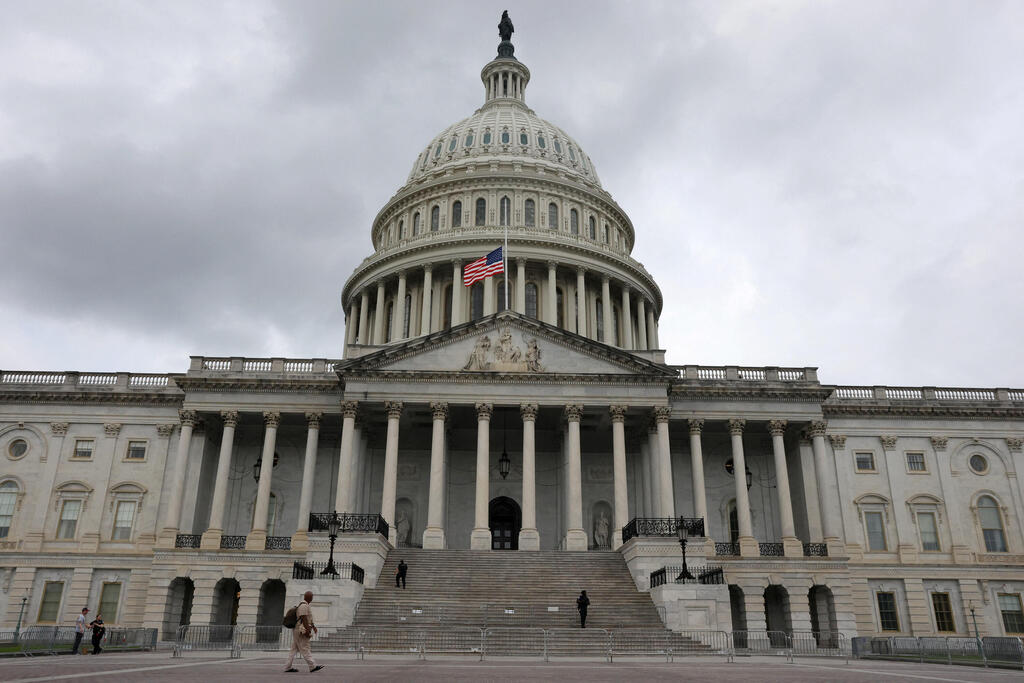
Trump announced that he had ordered all flags at US government facilities to be lowered to half-staff
(Photo: REUTERS/Leah Millis)
(Photo: AP Photo/Manuel Balce Ceneta)
Graham frequently advised Trump on foreign policy, particularly on issues involving Israel, Ukraine and Iran, and was a regular visitor to the White House. He was known for his sharp sense of humor, and White House deputy chief of staff Stephen Miller recalled, for example, that “at the end of a particularly thrilling and rollicking meeting in the Oval Office, Lindsey Graham turned to the room and said: ‘I’ve never had this much fun in my life.’”
Miller said the meetings Graham attended were “were filled with camaraderie, kinship and uproarious laughter.”
The beginning of Trump and Graham’s relationship was marked by intense rivalry, as both men took part in the race for the Republican presidential nomination in 2016.
In the early stages of the race, back in 2015, Trump was still considered a major underdog and frequently made headlines with highly controversial remarks. Among other things, he angered Graham by attacking his close friend, Arizona Sen. John McCain, whom Trump criticized over the fact that he had been captured during the Vietnam War.
“I like people who weren’t captured,” Trump said at the time. Graham responded by calling on him to “stop being a jackass” and said he was unfit to serve as president.
Trump, whose battles with the many candidates in the Republican primary drew significant public attention and helped fuel his campaign, did not let the attack go unanswered. In anger, he revealed Graham’s personal phone number during a campaign rally.
In response, Graham released a video that went viral, in which he dramatically destroyed several old phones. He smashed one with a golf club, cut others with a knife, set them on fire, placed one in a blender, dropped another from a height, burned one over a flame and put one in a toaster.
After Trump won the Republican nomination, Graham compared his victory to a kind of Republican suicide, saying the party had “shot itself in the head.” He also announced that he would refuse to vote for Trump in the November 2016 general election.
But after Trump entered the White House, it became clear that Graham had chosen to mend fences. The two began spending time together frequently and grew closer through their shared love of golf and what Graham described as a shared, “irreverent” sense of humor.
Graham saw his frequent golf outings with Trump as a significant political advantage, and their relationship strengthened after they spent more than 100 hours together on the course. He also frequently showered the president with extravagant praise — something Trump, naturally, enjoyed hearing.
In 2017, Graham joked that Trump had “destroyed” him in a round of golf — even more than he had during the presidential primary.
“Their true friendship could only be seen behind the curtain,” South Carolina Sen. Tim Scott said Sunday about their relationship.
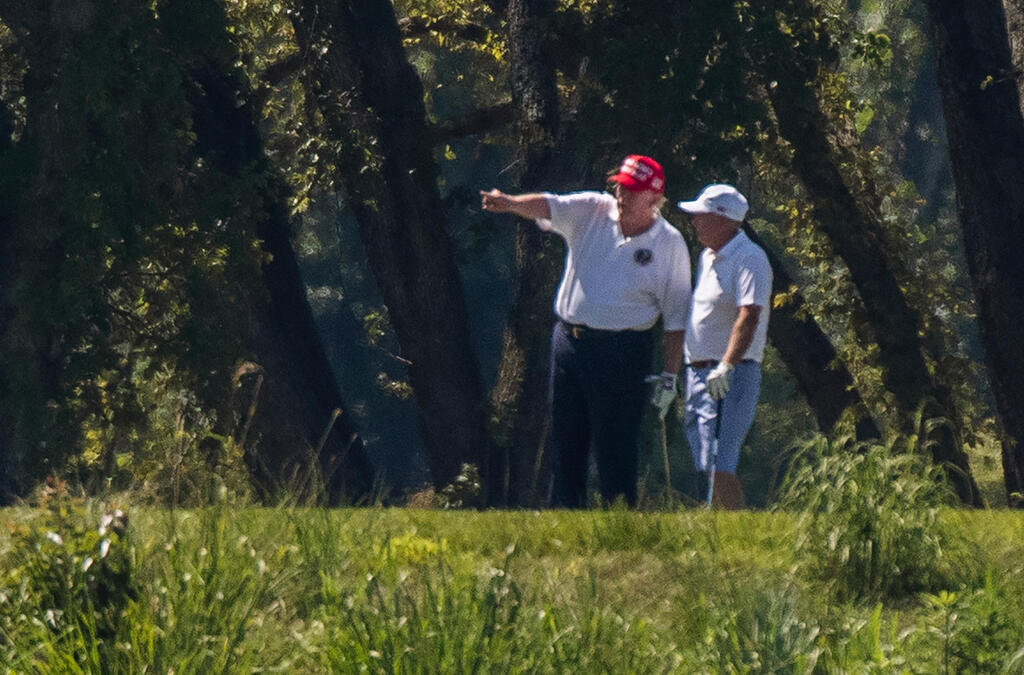
Their relationship strengthened after they spent more than 100 hours together on the course
(Photo: AP Photo/Manuel Balce Ceneta)
During Trump’s first term, Graham helped secure Senate approval for the three Supreme Court justices Trump appointed, supported major parts of the president’s agenda, including tax cuts, and became part of his inner circle to some extent.
He repeatedly said that Trump was “maturing” politically and learning while in office.
Graham’s close relationship with Trump stood in stark contrast to the dispute that emerged between the president and McCain, Graham’s close friend who remained far more independent. The divide reached its peak in 2017, when McCain unexpectedly opposed Trump’s proposal to repeal Barack Obama’s health care reform, known as Obamacare. His vote helped defeat the measure, which Graham had helped develop, by a single vote.
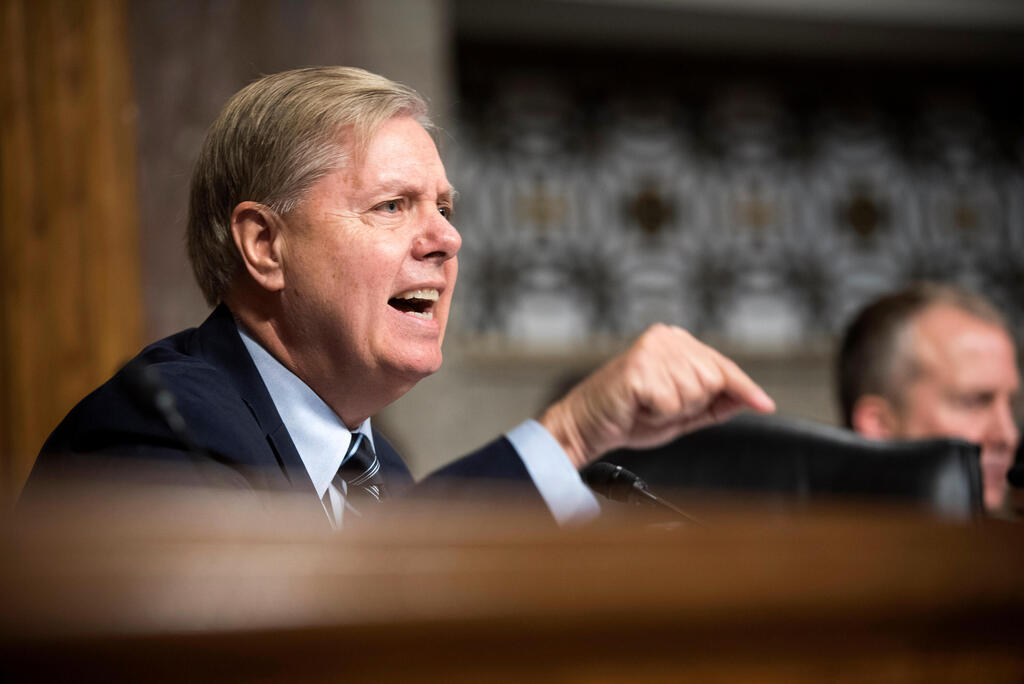
Graham in a Senate hearing, about a decade ago
(Photo: AP Photo/Kevin Wolf)
As mentioned, after the Capitol riot, Graham also distanced himself from Trump, joining other senior Republicans who felt the president’s leadership of the party had come to an end.
In a speech at the time, Graham said: “I have never been so humiliated and embarrassed for the country.”
But the split did not last long. Just weeks later, Trump invited Graham to play golf and have dinner at his Mar-a-Lago estate in Florida, and the two renewed their alliance.
During Trump’s 2024 presidential campaign, Graham became one of his most prominent defenders, appearing on numerous television networks on his behalf and promoting the use of American military power as part of the “America First” approach.
Trump rewarded Graham by endorsing him in the Republican primary in South Carolina, held just last month, where Graham again won the nomination for his Senate seat, which he had held for 23 years.
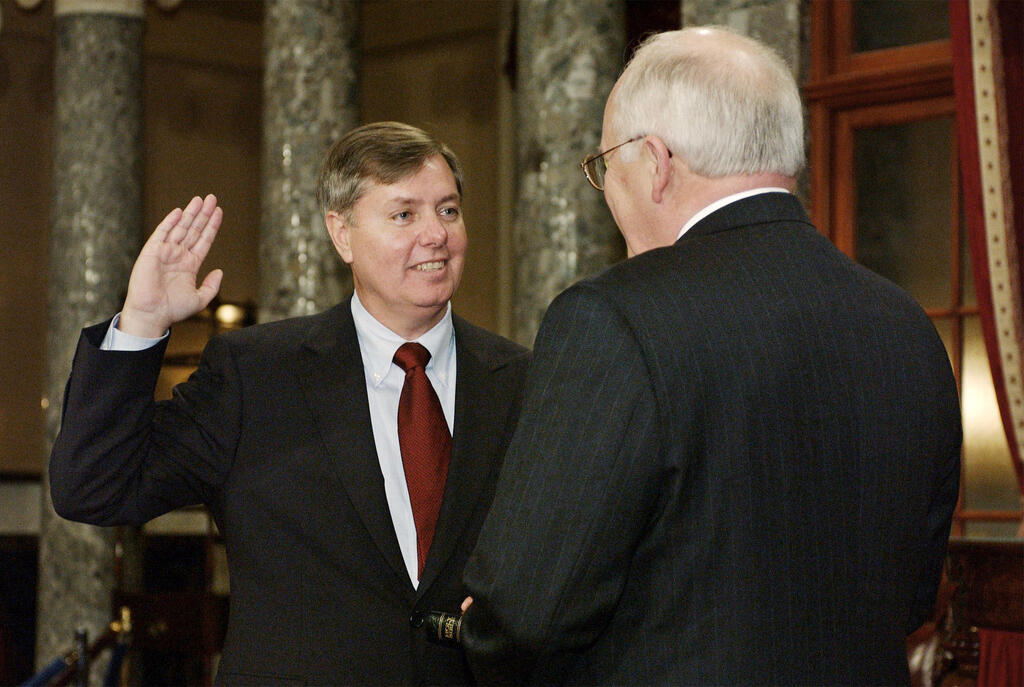
Lindsey Graham sworn in to the Senate in 2003
(Photo: AP Photos/Evan Vucci)
After winning the primary, Graham spoke about his deep admiration for Trump and jokingly described him as standing one step below God.
“I want to start with a bunch of thank yous. I want to thank the big guy, God. Trump comes later,” Graham laughed. “Mr. President, you’re not far behind God, but we’re gonna start with him.”
Graham’s death represents not only the loss of an important Senate ally for Trump, but also leaves Republicans without a reliable vote in the upper chamber of Congress, where they held a 53-47 majority over Democrats before his death.

Graham lays a wreath at Yad Vashem, in 2008, alongside Senators John McCain and Joe Lieberman
(Photo: REUTERS/Peter Andrews)
In practice, with Republican Sen. Mitch McConnell, the party’s elder statesman, having been hospitalized for nearly a month under unclear circumstances, the president’s room for maneuver in advancing policy initiatives and securing confirmation of senior appointments becomes considerably narrower.
Graham’s Senate seat will remain vacant until the South Carolina governor appoints a temporary replacement. Republicans will now also have to select a new candidate to run for the seat for a full six-year term in November’s election.
The new primary is expected to take place in two rounds next month. So far, no Republican has announced a bid, but Politico reported that Rep. Nancy Mace is considering entering the race. Mark Lynch, the candidate Graham defeated in last month’s original primary, is also considering running again, according to the report.
Despite his strong support for Trump, Graham never abandoned his traditional Republican views. Among other issues, he continued to strongly support aid to Ukraine, even as senior Trump administration officials expressed strong opposition to continued assistance over the past year and a half.
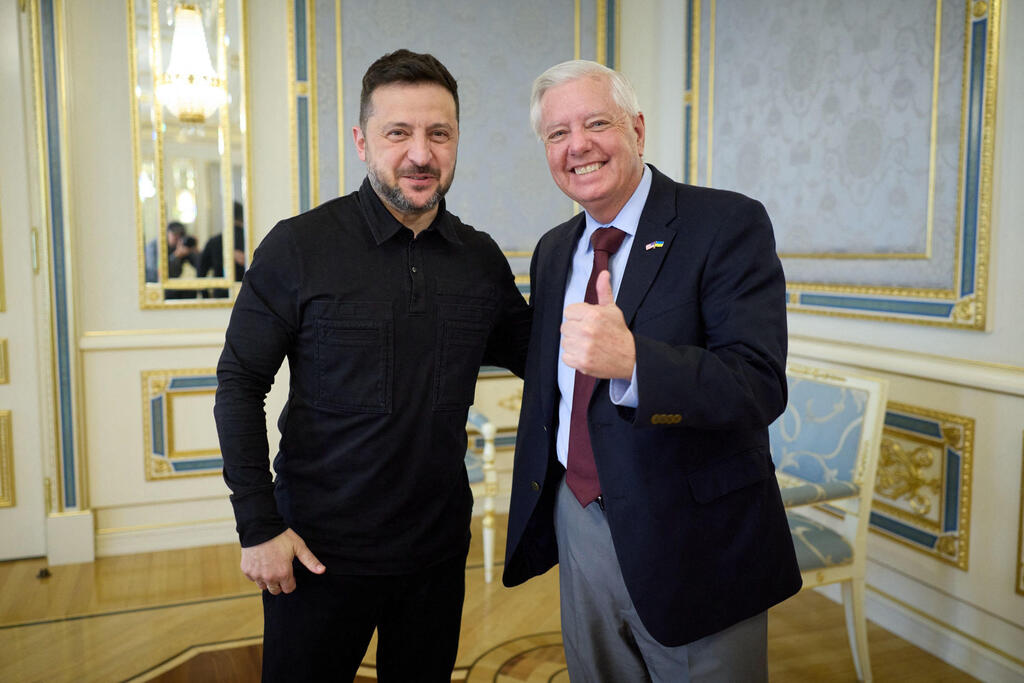
Graham had just returned to the United States from a weekend trip to Ukraine, where he met with President Volodymyr Zelenskyy
(Photo: Handout / UKRAINIAN PRESIDENTIAL PRESS SERVICE / AFP)
As noted, his death came shortly after he returned from another visit to Kyiv.
Graham was also considered one of Israel’s strongest supporters in Congress, particularly since the October 7 massacre and the war in Gaza, which have led to a significant decline in support for Israel among the American public, including within conservative circles.
His hawkish views were especially evident during the conflict with Iran. For years, Graham took an exceptionally tough stance toward Tehran, warning that the Islamic Republic’s nuclear program and regional ambitions posed an existential threat to Israel and to stability throughout the Middle East.
During the war, many in Trump’s MAGA movement criticized American involvement, arguing that it violated the “America First” policy Trump had promised to pursue. Against that criticism, Graham repeatedly emphasized the threat Iran posed to the United States.
“Israel’s security is America’s security,” he often declared.
Like many in Israel, Graham initially expressed reservations about the memorandum of understanding Trump signed with Iran last month. But he later said the effort should be given a chance — an initiative that now appears to have failed amid renewed escalation in the Gulf. He insisted that signing the memorandum did not represent an American failure.
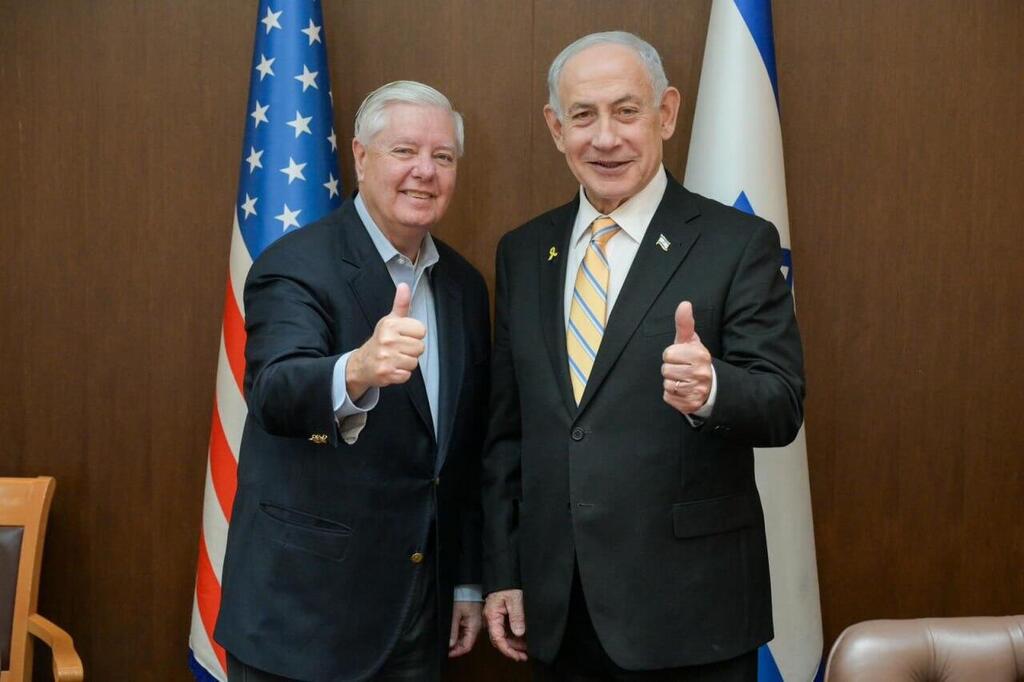
Graham with Prime Minister Netanyahu, during a visit to Israel in January of this year
(Photo: Maayan Toaf, GPO)
“To those who say Iran is stronger now than before, that is an insult to the American military and it is delusional thinking because the Iranian economy is in shambles,” he said about a month ago.
The news site Axios reported Sunday evening that in recent weeks Graham had continued working on behalf of Israel and had intensified efforts to advance his long-standing goal of achieving normalization between Israel and Saudi Arabia, an initiative he had promoted since the Biden administration.
According to the report, Graham believed that Iran’s weakening would provide Trump with a prime opportunity to revive normalization efforts. Trump himself attempted during talks with Iran over the memorandum of understanding to link the two issues, but ultimately did not insist on doing so.
Axios reported that Graham was expected to travel to Israel and Saudi Arabia in the coming weeks to assess the feasibility of restarting the initiative. He planned for the effort to gain momentum after Israel’s elections at the end of October and the U.S. midterm elections in early November, with the hope that an agreement could be completed before the new Congress was sworn in January 2027.
At the same time, according to the report, Graham believed that tensions with Iran and the ongoing struggle over control of the Strait of Hormuz had to be addressed first. He urged Trump to order a short but powerful military operation if efforts to reopen the strait failed.