


Hezbollah was significantly weakened as early as Operation Northern Arrows in the fall of 2024, and later as a result of Operation Rising Lion, which exposed its weaknesses and the vulnerability of its patrons in Tehran. Since then, the organization has lost most of its long-range and heavy missile arrays, and since Oct. 8, 2023, some 8,000 of its fighters and commanders have been killed out of a force of about 30,000. In addition, internal opposition to Hezbollah is growing by the day, including within the Shiite community, and Lebanon’s government is seeking an arrangement with Israel that would strip it of the legitimacy to wage a “resistance” war.
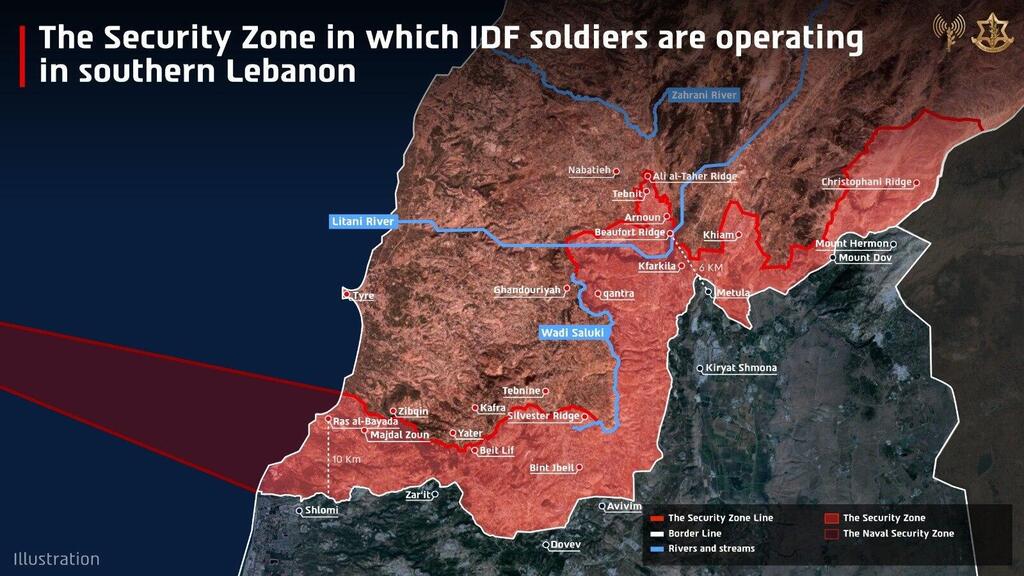
In this sense, Israel’s situation is immeasurably better than it was on the eve of the war. The threat to communities in the Galilee from direct fire and ground infiltrations has largely been removed, after the IDF positioned itself on the outskirts of Nabatieh and along the Beaufort and Ali Taher ridges. That made it possible to expose and destroy kilometers of combat tunnels Hezbollah had built so it could rain fire on the Galilee without fearing the Israeli Air Force.
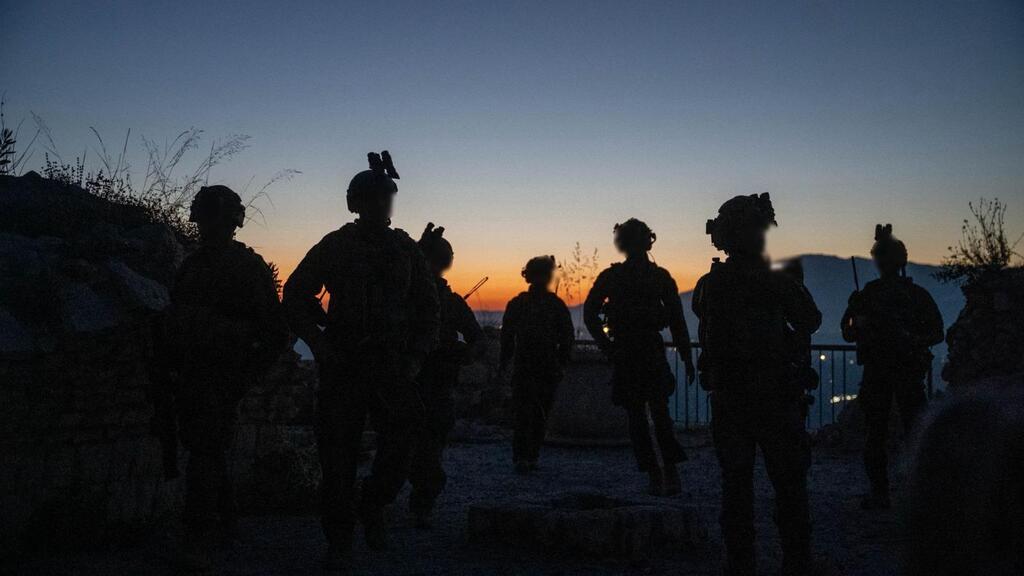
However, the organization still has the ability to prevent residents of northern Israel from living normal lives and to wage a sophisticated guerrilla war against the IDF between the border and the “yellow line” inside Lebanon. For that purpose, it has enough rockets, anti-tank missiles, UAVs and attack drones.
Hezbollah has not been decisively defeated and will not be until it is disarmed. In the current situation, only the IDF can do that, but to do so it would have to capture most of Lebanon.
The truth must be acknowledged: The IDF currently does not have the manpower, resources or plans required for such an operation. The memorandum of understanding Donald Trump signed with Iran has worsened the situation because Israel has lost another important portion of the freedom of action it had throughout Lebanon.
In the current complex situation, the IDF, with the approval of the political echelon, has adopted the following lines of action:
1. The IDF will continue defending the Galilee from the yellow line, which has again been moved north and west and now runs through the southern Nabatieh plateau to the sea. The area between the border and the yellow line is now called a “security area,” and the IDF will continue operating inside it to dismantle infrastructure discovered above and below ground, recently mainly on the Nabatieh plateau.
The memorandum includes a demand for withdrawal, but the political echelon rejected it in contacts with Washington. Moreover, Israel is not a signatory to the memorandum and therefore is not formally bound by its contents. The IDF says the issue will be discussed in negotiations with the Lebanese government, and at present there is no intention of withdrawing from the entire area, certainly not immediately.
(Photo: IDF)
2. Despite the Iranian threats and ultimatum, the IDF will not hesitate to strike in order to thwart and deter any actor, anywhere, from which launches toward northern Israel are carried out. This applies to people, sources of fire or buildings that pose a risk to forces.
It is reasonable to assume that Netanyahu, after the humiliating dressing-down he received from Trump in recent days, will not rush to order a strike in Beirut, but the Bekaa Valley is in the updated target bank.
3. The IDF demands that all Hezbollah operatives still south of the Litani River leave the area and move north of the new yellow line.
4. Residents of southern Lebanon whose villages are located inside the security area will not be allowed to return to their homes. This directive will be reviewed if an agreement is reached with the Lebanese government. The IDF is a partner in these negotiations, whose purpose is to stabilize the cease-fire, disarm Hezbollah where the Lebanese army can guarantee it and move toward normalization. As part of this, the IDF is preparing to evacuate several limited areas that will be transferred, on a trial basis, to Lebanese army control.
5. The IDF will continue implementing the new security concept, under which IDF forces physically separate terrorist organizations from border communities. This approach provides greater security for civilians, but soldiers stationed in fixed outposts become targets for guerrilla raids, roadside bombs and Hezbollah fire.
There is still no sufficient response to the threat of explosives-laden drones, especially those guided by fiber optics. Recently, however, the number of casualties has declined thanks to the IDF’s efforts to eliminate drone operators, a range of technological channels, field conduct methods and defensive networks.
Either way, the Lebanese story is far from over. The political echelon and the IDF will have to learn how to operate within the strange ceasefire that the Iranians imposed on us through Trump. At the same time, it must be recognized that the only path open to Israel to end the confrontation through a stable arrangement is serious diplomatic negotiations with the Lebanese government and the mobilization of Saudi and American economic support, which would strengthen President Aoun and his army so that he can normalize relations with Israel, distance Hezbollah from the border and prevent it from rebuilding with Iranian money.
Is the end of reserve duty in sight?
Israel’s security situation on the Iranian and Lebanese fronts has improved compared with October 7. The threats have not disappeared, but they have been pushed back and distanced geographically, and in the meantime operational experience has been accumulated that will enable better handling of future threats. The IDF has found itself stationed with 12 brigades inside 1,220 square kilometers of territory that before the massacre was under enemy control.
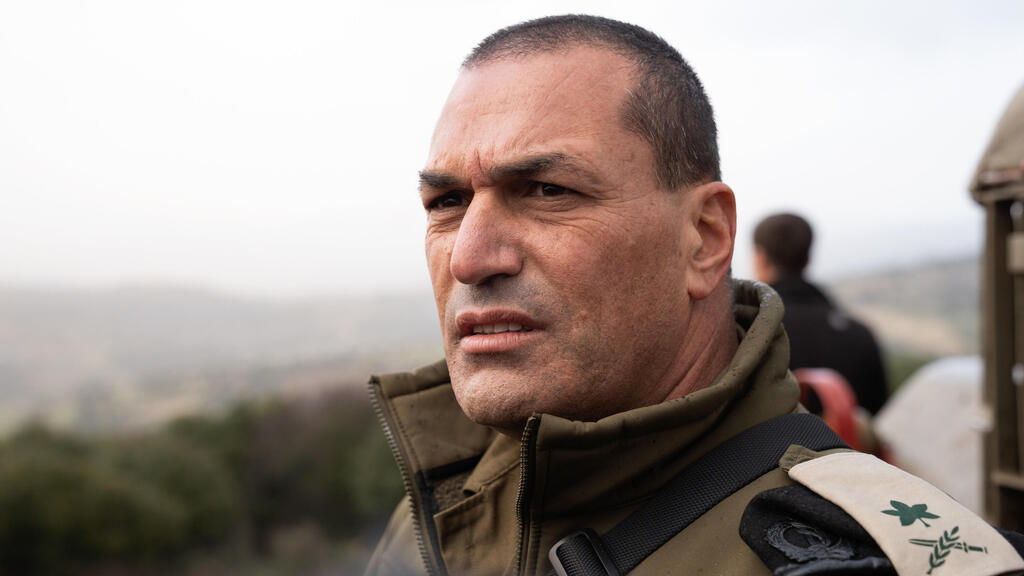
IDF chief informed his generals that in the coming days the IDF will begin gradually restoring its readiness
(Photo: Effie Sharir)
But all these fronts are still active, and fighting on them could resume at any moment. That is a situation a country will struggle to live with over time. National security is not determined by the number of missiles destroyed or tunnels demolished, but mainly by the ability to leverage military achievements into arrangements and diplomatic gains. At the moment, Israel lacks a diplomatic finishing move.
As a result of the trauma of the massacre, Israel has developed a security doctrine based on the assumption that every problem can and should be solved by force. As a result, it could miss a diplomatic arrangement in Lebanon that would neutralize Hezbollah for years, until Israel is able to deliver the final blow if necessary. Trump is managing our diplomatic and security affairs according to instincts and in line with his narcissistic and erratic character, which is why the end is not in sight.
The good news is that the chief of staff has taken the initiative and informed his generals that in the coming days the IDF will begin gradually restoring its readiness. The goal is for the regular combat force to return to a routine of training and operational deployment by the High Holidays, and for most reserve brigades to be released. It is not clear how this will happen when even the law extending mandatory service has not yet passed in the Knesset, but one should assume that Zamir knows what he is doing.