

While 20 living hostages were released Monday after more than two years in captivity in Gaza, only a few of the 28 deceased hostages have been returned so far.
“The wait for the bodies is a form of psychological terror. Families are given hope, then it’s taken from them,” said Dr. Idit Gutman, a clinical psychologist at Tel Aviv University.
Dr. Gilad Bodenheimer, head of the Mental Health Division at the Health Ministry, described the emotional complexities involved in reintegrating the freed hostages. “The returning hostages have to rebuild their sense of identity slowly. These processes take time, and they need a quiet, calm space in which to happen,” he told Ynet.
While Monday’s return of 20 living hostages after more than two years in Hamas captivity sparked joy throughout Israel, many families remain in limbo. Hamas has so far transferred only a few of the bodies of the 28 deceased hostages. More bodies are expected to be handed over to Israel on Wednesday, with forensic identification underway at the Institute of Forensic Medicine.
“These are going to be extremely tough days, which will involve anxiety over which bodies will be returned, how long identification will take, and the possibility of mistakes like was the case with the Bibas family. It’s going to be nerve-racking,” said Dr. Bodenheimer to Ynet.
According to him, the public is navigating a volatile emotional landscape - from euphoria over the return of the living hostages to the anguish over the return of dead hostages; in between, seeing released Palestinian prisoners, including some convicted of murdering their dearest ones.
“These are also days of reopened wounds for those injured on October 7 and for bereaved families. These are very painful days, and it’s crucial to remember that we all carry invisible wounds. We must be sensitive and supportive of one another."
Transfer of bodies to the Red Cross


Living in limbo
Many bereaved families are still waiting for closure by identifying their loved ones. “The families of deceased hostages are victims, and the impact on them is devastating,” said Gutman. “This is a horrific trauma that places their entire lives in a state of suspension, a nightmare with no certainty of an end. In many ways, the families are also held captive with their loved ones."
She said some families feel forgotten or pushed aside and fear that the celebration in the Knesset following the hostages’ return might create a false sense of closure in the public. “Not intentionally and not out of malice, but when people feel that it’s all behind us, the families of the deceased are still stuck in limbo and a state of painful uncertainty.”
Gallery
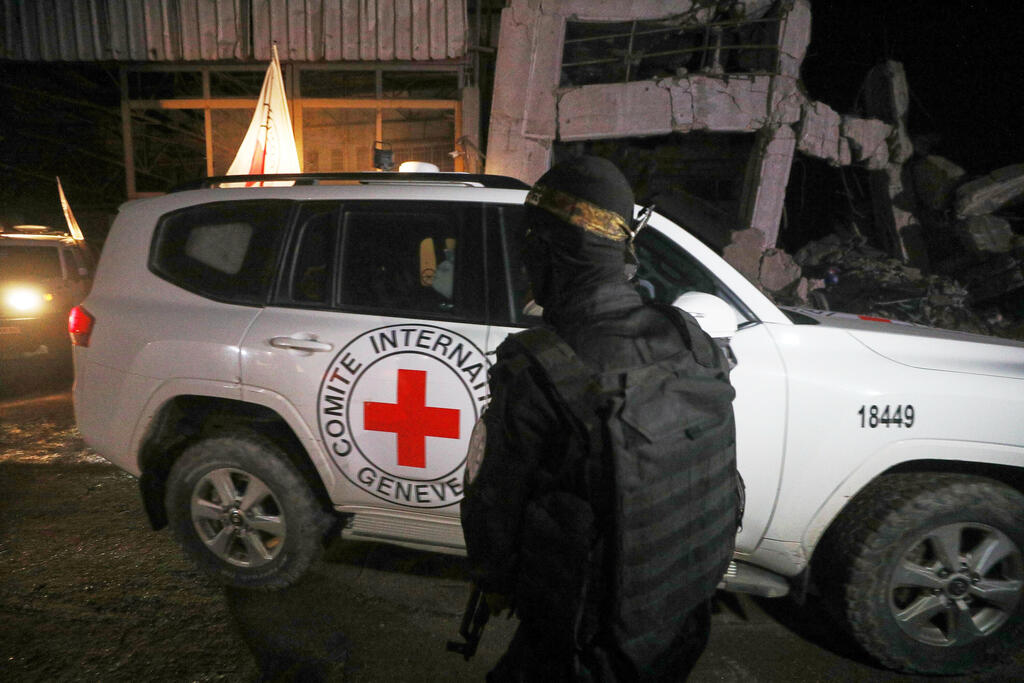
Hamas transferred the bodies of several deceased hostages to the Red Cross, but many remain behind
(Photo: AP Photo/Yousef Al Zanoun)
Gutman described the wait for the bodies as a form of psychological torment. “It’s a cruel form of torture. Just as Hamas once forced two hostages, Evyatar David and Guy Gilboa Dalal, to watch the release ceremony of their fellow captives, here too families are given the hope of finally achieving closure, only to have it denied."
‘Real meaning in closing the circle’
“In the natural course of mourning, there’s an element of denial,” Gutman added. “A feeling that’s familiar to nearly anyone who has lost someone close that ‘This can’t be real,’ that it must be some awful mistake."
This denial, she said, is common among the grieving. “People sometimes find themselves getting off a bus to chase someone who looks like the loved one they lost, only to face the painful reality that it’s just an illusion. For the families of deceased hostages, it’s almost impossible to move past denial without confirmation.”

Moments of national uplifting. Celebrations outside Rabin medical center
(Photo: Dima Vazinovich/Getty Images)
According to Gutman, the families’ denial and uncertainty are compounded by Hamas’ manipulation and lack of credibility.
“Take the case of Emily Hand, for example. They told her father she had died, when in fact she was being held captive. Some families feel they’re being misled, that there may have been a mistake or the intelligence is wrong. That’s why achieving closure is so important; it allows the families to begin the next stages of mourning."
Gutman added that the families of hostages have supported each other throughout the two years. “On one hand, they’re genuinely happy for those who have reunited with their dear ones. On the other hand, everyone wishes their own loved ones could return from the dead. That’s a legitimate feeling; envy is not a failing."
“And this applies not only to the families of deceased hostages. Many people who lost loved ones on October 7 feel they would give anything to have them back, no matter the cost, even if it meant enduring two years of torment and abuse.”
Gutman emphasized that the hostages’ return represents “a significant public achievement, a key component in national healing. People saw that they could influence events and help, not just sympathize. Now, those efforts can be directed toward supporting those still in need."
Bodenheimer visited Sheba Medical Center on Monday. “It was a peak day after a long period of preparation. All hospitals have experience in absorbing the returning hostages, and throughout the past two years, even when hope seemed slim, we held regular meetings with medical teams to draw lessons and stay ready. We held onto hope the entire time,” he told Ynet.
Rebuilding slowly and quietly
He stressed that rehabilitating the returnees is a long and challenging process. Lessons learned from previous hostage deals helped hospitals prepare for both the physical and psychological needs of those returning.
“We’re talking about people who were in captivity for two years. Their vision, quite literally, became that of a tunnel. They were not only confined to physical tunnels, but they also lost parts of their identity. Now they need to slowly rediscover who they are and return to functioning."
“In captivity, they made very few decisions. Now, they must regain the ability to make choices for themselves and re-enter family environments that were deeply impacted over the past two years. The hostages need time and space. People may expect a quick fix, but it doesn’t work that way."
Hospitals are working to provide a peaceful and quiet space, which is why hostages and their families are currently isolated in dedicated wards. “It allows them to take their first steps forward in safety.”
‘There’s no one-size-fits-all recovery’
“Trauma recovery looks different for everyone,” Bodenheimer said. “Every person has their own identity and coping tools that need to be honored. One person may need to fall apart and cry. Another might need to stay composed. Each is a valid way to process the experience."
He noted that returning from captivity also poses challenges for the entire family. “It’s almost like a rebirth. At first, everything revolves around the returnee’s needs. They’re returning from an environment where they had no desires or choices. They start at that point. Then they meet their family and must also face their family’s needs, and they need to find their way again into the family complex."
Although the Israeli public may feel close to the returnees, many of whom have become familiar figures through extensive media coverage, the reality is far more complex.
“In our minds, the returned hostages are celebrities. We feel we know them, we care about them and love them. But for them, it’s a very different experience. And that’s another challenge we have to acknowledge,” he said.