


In 1932, Ze’ev Jabotinsky published an essay that became foundational, at least for the Revisionist minority. Its title was “On Adventurism.” An avantura, in Yiddish, is something between an adventure and a brawl. An “adventurist,” a trouble-seeking daredevil, was a serious insult in the cautious world of the Jewish shtetl. Jabotinsky came along and argued, in the context of the struggle against the British White Paper, precisely the opposite. There are moments, he said, when such adventurers are needed, people who will change the world, who will be applauded only if they succeed and denounced immediately if they fail.
In his own words: “And where is it written, and what is the source of the indisputable conclusion, that among the many instruments of war there is no place for adventurism? The lesson of history is otherwise. History teaches that quite often even an unsuccessful adventure is an instrument of war. Particularly ‘when it is not the adventure of one individual, but of many individuals.’” He proposed “thumbing one’s nose,” as he put it in the essay, at the restrictions imposed by the British Mandate and immigrating to the Land of Israel.
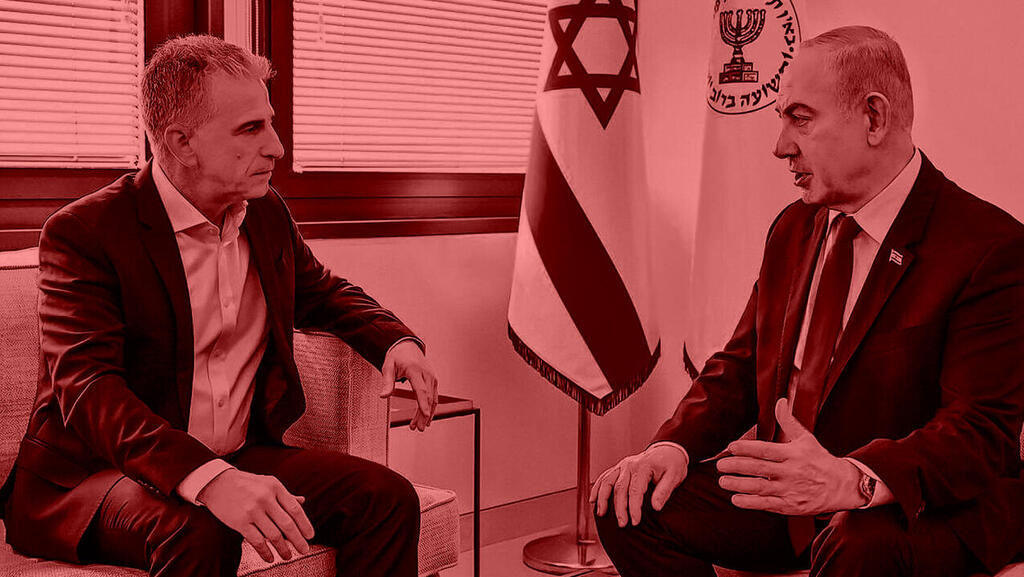
When one thinks about the ambitious plan to overthrow the regime in Iran, it is impossible not to think of the avantura. It is one thing to try to bring down the regime through economic pressure, influence operations and the sowing of fear and confusion, over time and through gradual attrition. But trying to recruit former Iranian president and Holocaust denier Mahmoud Ahmadinejad as an agent and install him as leader? Initiating a full-scale Kurdish invasion? That is the kind of project in which even superpowers can fail.
Israel tried to do it and invested enormous effort in the attempt. In recent weeks, The New York Times and Haaretz have published many intriguing details about it. The following account presents additional details about the most ambitious regional objective Israel has attempted to advance: regime change in a country of roughly 100 million people, a regional power, while at war and in coordination with the world’s sole superpower, the United States.
In a presentation delivered by the Mossad to the Security Cabinet on the eve of the operation, ministers were told that regime change would come within “one to three years.” It was an appropriate qualification; the Islamic Revolution itself did not happen in a day. But the music the ministers heard was different. “We understood,” one of them told me, “that we were going for rapid and sweeping regime change, with the killing of the current leader, a Kurdish invasion, Ahmadinejad as our agent and protesters in the streets.”
The first distinction is important. Again and again, the effort has been described as “a Mossad operation.” The Mossad was undoubtedly its driving force, its planner and its chief advocate. But this was an operation of the State of Israel, ordered by the Cabinet. It emerged from a conception that gradually became entrenched within the political leadership and was imposed on the defense establishment: There would be no solution to the Iranian nuclear crisis or to the confrontation with Iran without regime change.
An opportunity for regime change had emerged after the 12-day war and with Trump in the White House. Israel had to try, because the opportunity might pass. The price of inaction, even at the risk of failure, was higher than the price of action. Netanyahu said those words explicitly to the American president. And indeed, Benjamin Netanyahu was the father of the concept.

Israeli strikes on Iranian targets during the 12-day-war in June
These are not interpretations. The objectives of Operation Roaring Lion were never officially published for the public. But after conversations with a double-digit number of military and political sources, it is possible to understand that the central objective was to deeply damage, or remove, the threats Iran posed to the State of Israel by creating the military conditions for regime change in Iran. Those may not have been the precise words, but “creating the conditions for regime change” was the bottom line.
The formulation was the product of compromises, including with the IDF. From the first moment of the war, the military explained that it did not know how to bring about regime change by itself. For the General Staff, the principal effort was to inflict strategic damage on Iran and eliminate capabilities over time. Assistance to the Mossad, as the military saw it, was a secondary effort.
Why “creating the conditions” rather than “overthrowing the regime”? One security official offered this explanation: The IDF knew that it was a complex, perhaps impossible, objective. It did not want to be dragged into a war whose goal was so absolute that it could continue forever, and far beyond the limits of the IDF’s interceptor-missile inventory. Nevertheless, the Cabinet voted for an objective that was, in practice, an attempt at regime change.
It was an objective so vast, some would say megalomaniacal, that it required the allocation of immense resources and carried severe regional implications. In other words, the nuclear and ballistic missile programs may have been important, but they were not the holy grail. Nor were they the central message of the war that followed. While the 12-day war in June 2025, Operation Rising Lion, prioritized damage to Iran’s nuclear program and did indeed lead to the suspension of uranium enrichment, Operation Roaring Lion was intended to be the war that ended all wars. At least against Iran.
The result, as of this writing, is this: Iran’s military industry, particularly its ballistic missile production line, was severely damaged, and the damage to the nuclear program was deepened. The IDF inflicted grave losses on Iran, measurable in the hundreds of billions of dollars. Israeli intelligence demonstrated an extraordinary ability to penetrate the Iranian establishment. But if Roaring Lion’s objective was to create the conditions for regime change, the regime remains alive, functioning and ruling with an iron fist.
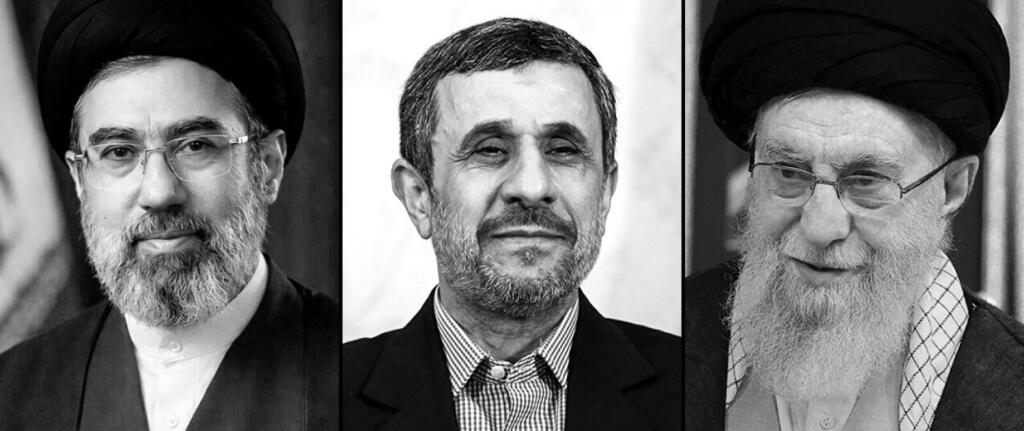
Khamenei Sr., right, Ahmadinejad, Khamenei Jr.
Foreign actors made sure to leak the details of the Israeli plan, including the asset, Mahmoud Ahmadinejad. Once the Israeli operation failed to achieve the objective that had been set, the regime could say it had won: “We won because we survived.”
That is not semantics. In the summer of 2025, the “axis of resistance” had been battered across the region, and Israelis, according to the polls, felt a sense of victory. In the summer of 2026, an overwhelming majority of Israelis do not believe Israel defeated Iran in the war. Only 11% believe Israel won, according to a Channel 12 News poll, while the axis of resistance appears to have recovered. The previous summer, the Iranians did not control the Strait of Hormuz. A year later, they hold a waterway critical to the global economy. The regime will not survive forever, but it is doubtful that the war “created the conditions” for its fall.
This is not a story about an adventure that simply went wrong. Many of those involved argue that the regime-change operation could have succeeded had the United States not changed its mind about some of its central components. There is not enough information to judge that claim, because parts of the plan remain in the dark. The story is one of systemic failure: how an enormous strategic objective, regime change, became an operational mission without the political leadership, the IDF and the Mossad ever truly agreeing on its nature, centrality, feasibility or on whether the tools matched the objective. In retrospect, most of those actors also disagree about the facts.
‘Appetite grows with eating’
The effort had been developing for years. The October 7 massacre and Supreme Leader Ali Khamenei’s decision to intervene repeatedly in the war through direct attacks on Israel led Prime Minister Benjamin Netanyahu to present the overthrow of the regime as a supreme objective of Israeli policy. At the same time, the Mossad was conducting a deep and impressive effort to penetrate the Iranian government.
As various investigations have reported, Mossad chief David “Dadi” Barnea met former Iranian president Mahmoud Ahmadinejad in Budapest, the product of contacts that had continued for a long time. Ahmadinejad emerged as a leading candidate for an alternative leadership within Iran. The fact that he had grown up inside the regime ostensibly made him a more credible figure. The political leadership was shown evidence-based analyses demonstrating Ahmadinejad’s strength and standing within Iranian public life, analyses that had repeatedly proved themselves.
Netanyahu encountered reasoned opposition from the IDF leadership of the time. Then-chief of staff Herzi Halevi and Military Intelligence Directorate chief Aharon Haliva said in closed discussions that Israel had only an extremely limited ability to deliberately engineer regime change in a country such as Iran. They warned that some of the approaches being presented, including by the Mossad, were pretentious and hollow when measured against the regime’s powerful control over Iranian society. Then-defense minister Yoav Gallant was not persuaded either. The IDF’s reservations continued after the leadership changed, into the terms of Chief of Staff Eyal Zamir and Military Intelligence chief Shlomi Binder.
Viewed from the outside, the military’s opposition might seem puzzling. What is wrong with toppling the regime? Why not try? The technical answer is that nothing comes free, and every major project comes at the expense of another. Defense policy is a matter of priorities. There is little appetite for dedicating enormous resources to a plan expected to fail.
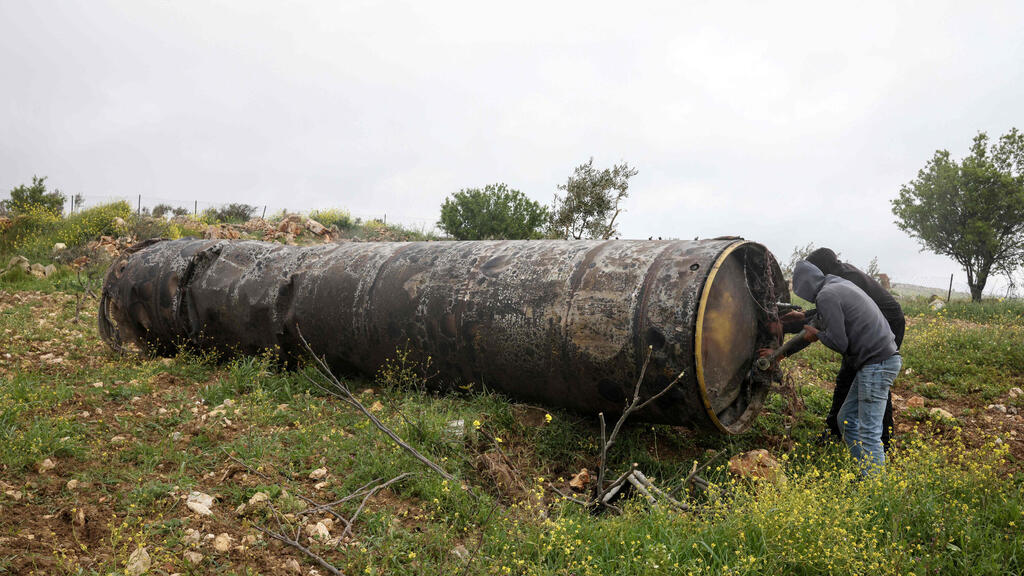
Iranian ballistic missile fragment in the West Bank
(Photo: Zain Jaafar/ AFP)
“As long as the Kurds were in the game, everyone signaled agreement. Once the Kurds were out, everything exploded,” one senior official said. Another added: “The astonishing thing is that after Trump ruled out Kurdish involvement, Netanyahu imposed the Mossad’s improvised new plan.” The strategic answer concerns the nature of the objective itself: If you try to overthrow the regime and fail, the ayatollahs have won.
After the 12-day war, something began to change. Iran had been defeated so visibly that, as one security official put it, “our eyes were opened.” Appetite grows with eating.
By the summer of 2025, it became clear that Iran was rebuilding its ballistic missile system faster than expected. Israel plainly could not afford repeated “rounds” against Iran in the style of the campaign between the wars, Israel’s long-running effort to degrade enemy capabilities between major conflicts. “We thought there was only one strategic solution: regime change,” a senior official involved in Cabinet and inner-Cabinet discussions told me. “Otherwise, we were condemned to keep emptying this bucket, sometimes with a teaspoon, sometimes with a ladle. It was not sustainable.”
By then, the prime minister and Mossad chief shared the belief that regime change could and should be attempted, and the Mossad was at the center of operational preparations for a coup. The IDF, for its part, identified renewed growth in the power of the Islamic Revolutionary Guard Corps. The military remained skeptical about overthrowing the regime but felt an urgent need to deal with Iran’s ballistic missile project and the remaining elements of its nuclear program.
Israel began investing extensive resources in preparations for another, broader war. The distinction is crucial: From the political leadership’s perspective, the plan was from the beginning an attempt to overthrow the Islamic Republic. The IDF, however, was thinking primarily about completing the strictly military tasks left unfinished from the previous round: ballistic missiles, military industry and the nuclear program. The Mossad estimated that the operation could and should be carried out in May or June 2026. The IDF spoke of the fall of 2026. Netanyahu applied constant pressure to move the timetable forward.
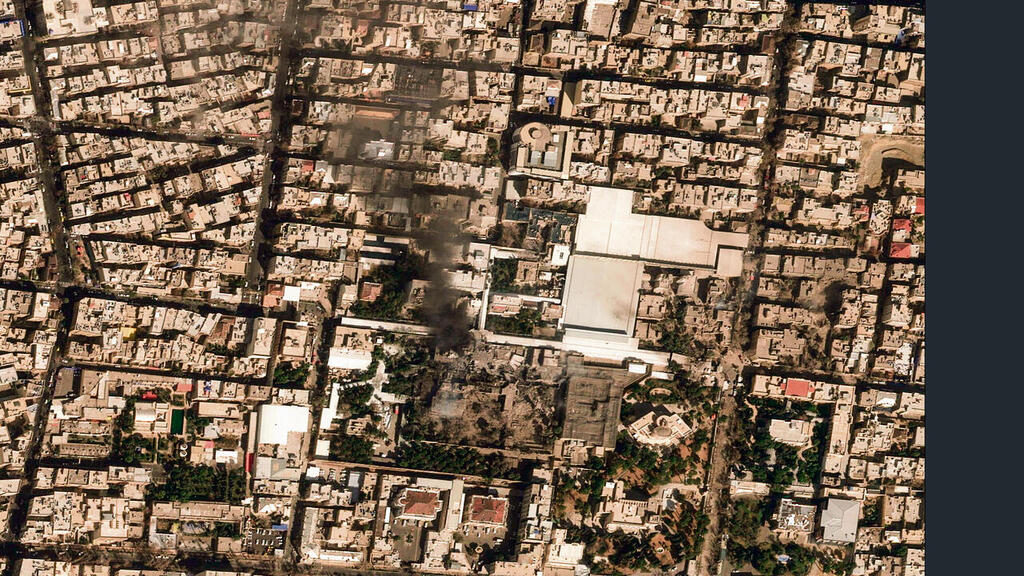
Scene of the assassination of Iranian leader Ali Khamenei. The regime can say: 'We won - because we survived'
In December 2025, mass protests and an uprising erupted in Iran. It can be assumed that the Mossad’s influence-operations division did everything it could to assist them. That was why it had been established. The regime responded with mass killing of Iranian civilians. If Operation Rising Lion in June 2025 ended with deep satisfaction throughout Israel’s defense establishment, Iran’s instability in December and January 2026 produced something close to euphoria. The footsteps of the Messiah seemed audible.
President Trump promised to come to the protesters’ aid. The Mossad and the IDF received an order from the prime minister to prepare for the great war and accelerate the operational plans. In January and February 2026, the entire Israeli system was focused on preparing for war. The plans were far from ready, particularly those related to overthrowing the regime. The key phrase was: “Do not miss the opportunity.”
The Mossad attempted to rapidly mature its contacts with Kurdish factions. These became a cornerstone of the coup plan. They would invade from the west, move from city to city, recruit more Kurds and Iranians generally, and charge toward Tehran. At the same time, after the initial stage of bombing, the masses would pour into the streets as they had in December 2025. A perfect storm.
According to published accounts, Israel supplied weapons and attempted to build a Kurdish coalition. It is worth pausing here. Israeli intelligence officers who spent many years working on Iran believe that any reliance on the Kurds, on its face, was “a complete and wild delusion.” The Mossad’s answer was essentially this: Iran is our department. We understand it. The Kurds will not take over Iran. Their principal role will be to occupy the regime’s forces while the public brings it down.
Many of the complications surrounding the Kurds were political. How could several rival factions be brought to act together, and in a way that might move Iran toward political change? Among other things, Israel required the Kurdish forces to use Iran’s monarchist flag, bearing the lion associated with the Pahlavi dynasty, rather than the Kurdish flag. Israel also arranged the supply of those flags.
The planning went into considerable detail. The Mossad sought to reduce the risk that Kurdish forces would carry out pogroms across Iran during the invasion. They were required to accept what was called “the Ten Commandments”: no murder, looting, theft, rape or war crimes. “If you deviate from this,” the Israelis warned the Kurds, “the Israeli Air Force will not protect you. The Iranians will slaughter you.”
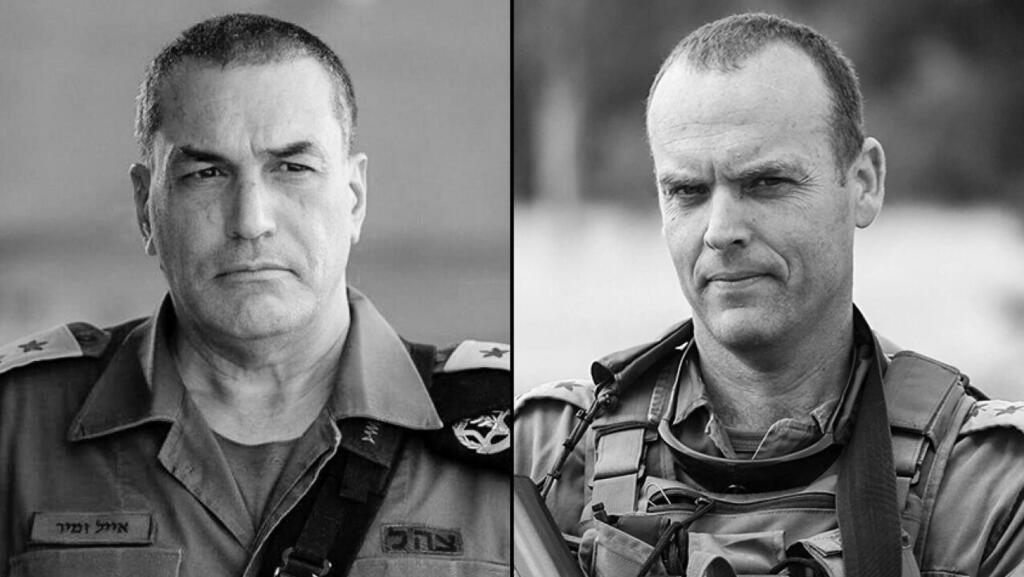
Binder, right, gave pessimistic report, Zamir had operational vision
The Air Force was a central component. Israel did not tell the White House, President Trump or the CIA that the plan consisted merely of a Kurdish invasion. It described the operation explicitly as joint action by Kurdish forces and the Israeli Air Force. The Air Force was supposed to open ground corridors for the Kurds and address threats as they emerged. The initial force, expected to number about 15,000 fighters, would liberate cities and recruit more Iranians until “150,000 to 200,000” people were advancing toward Tehran with Israeli air support.
Before that, numerous other steps were supposed to take place, including uprisings by additional minorities and, sometime after the opening attack, enormous demonstrations by civilians across Iran. The IDF likes the Hebrew word tichlul, meaning the integration and coordination of an entire operation. In Israel, the military is the body that integrates wars.
An investigation by Michael Hauser Tov reported that Military Intelligence strongly opposed the regime-change operation and that its Research Division produced an assessment finding that its chances of success were low. Such a report was indeed written. Military Intelligence chief Maj. Gen. Shlomi Binder concluded that the probability of the regime’s collapse was low.
The assessment included professional reasoning. It argued, for example, that the Kurds were difficult to rely on and that the extent of American support was “unclear.” Military Intelligence also warned that the regime would immediately shut down the internet, sharply reducing the ability to coordinate a revolution. Another crucial warning can be added: The Research Division believed that if the regime-change effort failed, the danger of Iran breaking out toward a nuclear weapon would increase. That was “a risk that had to be contained.”
This was a dramatic assessment, delivered in a written report. It warned that the cost of failure in the regime-change effort could be extraordinarily high. Many Iran experts now believe that Mojtaba Khamenei is indeed considering a breakout toward a bomb. “The correct conclusion from the December-January protests should have been that the regime had won the battle for survival,” a highly experienced security official told me. “The demonstrators were killed. Their friends withdrew. The regime used lethal force. That is an argument against trying to overthrow it two months later.”
These are important points. Iran experts around the world react with something close to contempt when they hear the details of Israel’s plan. In their view, the Islamic Republic’s enormous apparatus could not be brought down by such an external threat, certainly not during a war. On its face, Military Intelligence’s skepticism proved precise and justified. Unfortunately.
The Mossad tells a completely different story. Its officials say there was no objection from Military Intelligence, but rather extraordinary cooperation. When I spoke with political decision-makers, including some who sharply criticized the Mossad’s regime-change plan, they said they had never heard severe warnings from the IDF about the operation. In fact, they said they had heard no objections at all, not in the consultations of the narrow political Cabinet composed of coalition party leaders, and not in the Security Cabinet meeting that authorized the prime minister and defense minister to proceed.
“Do you really think,” one of them told me, “that we could have heard all of those grim assessments, that there was no chance, that the Kurds were not serious, that the Americans were not with us, that Iran might break out toward a nuclear weapon and that the plan would fail, without it triggering a broad discussion?”
Another minister said: “The IDF more or less agreed. And if it objected, it spoke quietly. This was not only the Mossad’s plan. It was an objective of the war. The IDF participated and believed in it. If it did not believe in it that strongly, the message never reached us.” I spoke with several people who sat in those rooms. All offered similar accounts: “The IDF went along completely.”
The IDF rejects that description in the strongest terms. Military officials say every category of doubt and risk was presented in the relevant meetings, both orally and in writing, and that the record is documented. How can that be reconciled with the ministers’ statements? Former senior defense officials respond that ministers sometimes hear what they want to hear. When something fails, they no longer remember hearing the warnings beforehand.
An unavoidable question follows: In which discussions and before which forums were those warnings delivered? The full Security Cabinet barely discussed the complete plan because of fears of leaks. What remained were meetings of the smaller Cabinet and restricted sessions with the prime minister and defense minister.
There is no doubt that Netanyahu received a Military Intelligence Research Division report expressing severe skepticism about the chances of regime change. Did he prevent the criticism from being presented fully to the Cabinet, including the Cabinet that approved the war? More fundamentally, what explains the extreme factual divide between ministers and the Mossad on one side, and the IDF on the other?
Between ‘bulls***’ and ‘ridiculous’
On February 11, the Israeli briefing for the American president took place. Mossad chief Dadi Barnea and IDF Chief of Staff Eyal Zamir presented Israel’s operational vision. The Israelis did not know what journalists Maggie Haberman and Jonathan Swan would later report: Senior U.S. officials who heard Israel’s presentations about the war, particularly the regime-change plan, were not persuaded. They thought it was “bulls***,” to quote Secretary of State Marco Rubio, or “ridiculous,” according to Barnea’s American counterpart, the CIA director.
Several days later, Israeli officials say, the green light arrived from the White House. The war began 17 days afterward. A Cabinet meeting was held at the last moment merely to obtain the ministers’ rubber stamp, a familiar procedure during the Netanyahu era. The assassination of Khamenei and members of his household then went forward.
The IDF began preparing to provide air support for the Kurds but prioritized critical targets first. Kurdish forces were prepared to launch the invasion with 48 hours’ notice, but the order was never given. Details began to leak.
Roughly a week after the war began, the American president stopped the Kurdish plan. It was reported that Turkish President Recep Tayyip Erdoğan had intervened and called Trump. Erdoğan later said that a Kurdish invasion of Iran could have prompted a Turkish response and even a deterioration into war between Turkey and Israel. Three days later, Israeli officials understood that Washington had closed the door on a Kurdish invasion of Iran.
The Mossad could have offered a simple response: There was a plan. It was halted. The “failure” or “lack of success” in overthrowing the regime cannot be judged because the order to activate the plan was never given. There were additional assets, other methods and allies who were never activated. There was no guarantee of success, but the Mossad was not even allowed to try.
“The Mossad failed to deliver much of what it had promised even before the Kurdish element collapsed,” one minister told me. “People began asking whether we were dealing with fantasists.”
According to most officials involved in the decisions, there was an atmosphere of consensus and relatively harmonious cooperation at the top of Israel’s defense establishment until the Kurdish initiative failed. There was an objective, connected to creating the “conditions” for a revolution in Iran. The IDF called it “severely damaging the regime.” The Mossad was far more ambitious. That coalition managed to operate together.
But once the White House said no, everything changed. Netanyahu and Barnea both insisted that there was still more to do, or at least more to attempt. Within 48 hours, the Mossad produced a rapid, improvised plan, “patch upon patch,” as one participant described it. The Mossad made clear that this was no longer the plan, but a last-minute effort, and lowered expectations.
If apparent harmony had prevailed within the Israeli system until then, agreement disintegrated during the second phase. The IDF, the chief of staff and several ministers believed that the halting effort to bring about regime change was wasting precious resources: flight hours, munitions and, above all, the rapidly diminishing time remaining before the war had to end. The arguments were fierce.
“In the first phase, when the Kurds were part of the plan, everyone agreed, or at least presented themselves that way. Once the Kurds were out, everything exploded,” a senior official told me. Another added: “The astonishing thing is that, after Trump ruled out Kurdish involvement, Netanyahu imposed the Mossad’s new improvised plan. Another fantasy that obviously would not work.”
Under the improvised plan, the Israeli Air Force attempted to hunt down Basij militia checkpoints, while Netanyahu publicly called on Iranians to take to the streets during Nowruz, the Persian New Year. Israel placed hopes in that appeal. The Iranians remained at home.
“We paid a heavy price for the alternative plan,” one decision-maker said. “Resources are limited. The Air Force did not do everything it could have done against the nuclear program. We were running after other things.”
There is no doubt that Netanyahu received a Military Intelligence report expressing severe doubts about the prospects of regime change. Did he prevent the criticism from being fully presented to the Cabinet, including the Cabinet that approved the war? And what explains such an extreme factual gap between the ministers and the Mossad on one side and the IDF on the other?
A political formula
The full story is broader than what has been described here. The Mossad plan contained additional, highly significant and relatively persuasive elements that have not been published. Their omission may create the impression that the plan was much thinner than what the organization genuinely attempted to implement. But even the limited details described here raise severe questions.
The ministers, the IDF and the Mossad offer different accounts of the war’s purpose. The IDF treated the Mossad’s operation to overthrow the regime as an effort it was assisting, not as an essential objective. The ministers saw regime change as an important goal, even if it was not necessarily achievable immediately. The Mossad viewed it as the war’s central objective.
The wording of the war aim, “creating the conditions” for regime change, emerged from an attempt to paper over profound disagreements. The result was a political formula, a welding together of words intended to leave everyone satisfied. It was not a clear objective for a war.
The Mossad says the IDF did not oppose its original plan at all, even behind the scenes. The IDF says it presented the plan’s uncertainties and risks in detail. Ministers say they were not shown clear military criticism of the attempt to bring about regime change. They also say the Mossad failed to deliver even before the Kurdish initiative was stopped. That factual gap is intolerable.
Judging by their reactions, the overwhelming majority of Iran experts in Israel and abroad view the Mossad plan, including a Kurdish invasion, minority uprisings, additional measures and the recruitment of Ahmadinejad, as a fiasco. The Mossad insisted it was a realistic, convincing and credible framework, supported by empirical proof. That professional gap is unacceptable.
It was possible to predict that Turkey would oppose a Kurdish force attempting to seize control of a sovereign country, particularly on behalf of Israel. Anyone familiar with the U.S. administration knows of Trump’s close relationship with Erdoğan. How did Israel embark on such an operation without preparing for possible Turkish opposition? Who held the Erdoğan file?
In defense of the adventure
The campaign against Iran is not over. The deep damage to Iran’s military and nuclear industries is beyond dispute. The regime’s distress is a fundamental reality, reflected in inflation and severe economic hardship. At times, very small acts and forces bring down empires, including states larger and more powerful than Iran. Far fewer than 15,000 armed men brought down the Soviet Union.
Who knows? Had Trump approved the Kurdish invasion, perhaps the regime would have been destabilized or at least dragged into civil war. Had that happened, everyone would have praised the Mossad’s avantura. In an undertaking like this, you need to succeed only once.
Those are necessary words. But they are not persuasive.
An uprising began in Iran in December 2025. Together with the country’s weakness after Operation Rising Lion, Trump’s promise to protect the protesters, the American success in Venezuela and the extraordinary capabilities demonstrated by Israeli Military Intelligence and the Air Force, an atmosphere developed in which everything seemed possible. Including regime change.
Netanyahu, with the scent of elections in his nostrils, pushed and pushed hard. That was precisely the moment when Cabinet ministers and security officials should have recognized the obvious danger: a bridge too far.
More seriously, no comprehensive staff process examined the campaign as a whole. Anyone who wants to make kings must understand kingdoms.
What would happen to Israel’s standing in the United States if it publicly pushed Washington toward an all-out war against Iran? The answer: a severe, perhaps fatal, collapse. How might Turkey disrupt the Kurdish initiative? With a single telephone call. If the supreme leader were killed, might the door open to dangerous radicalization? It did.
Above all, Israel did not understand, and to this moment still does not understand, American conduct surrounding the Strait of Hormuz. “It is a mystery,” one knowledgeable official told me.
It is not merely a mystery. It is a failure of Israeli coordination with the United States. Hormuz was, and remains, Iran’s most important strategic achievement of the war.
In the late Netanyahu era, the phrase “the limits of power” has disappeared. Israel’s defense establishment is engaged in a relentless war of attrition against a belligerent political leadership that recognizes no limits. The National Security Council does not function as an effective policy-planning body, particularly during wartime. The Defense Ministry’s diplomatic-security division is paralyzed. The professional ranks of the Foreign Ministry are ignored. There is no independent, functioning team around the prime minister.
That was the situation on February 28, when Israel went to war. It remains the situation today, perhaps on the eve of another confrontation.