

The assassination of Izz al-Din al-Haddad, head of Hamas’ military wing in Gaza, is an important achievement. He was a bad man who took part in planning the murderous Oct. 7 attack on Israel. Removing someone like that from the battlefield has operational, moral and public value. It also sends an important message: Whoever harms us lives on borrowed time. But despite the significance of the achievement, it is probably too early to celebrate with baklava.
Whenever news breaks of a targeted killing, there is a sense of satisfaction. Justice has been served. A person who symbolized evil, cruelty and danger is gone. That is entirely natural. Human beings need closure. We prefer action to waiting, immediate results to long processes and images of dead terrorists to tedious discussions about infrastructure, sovereignty, education and lines drawn in various colors.
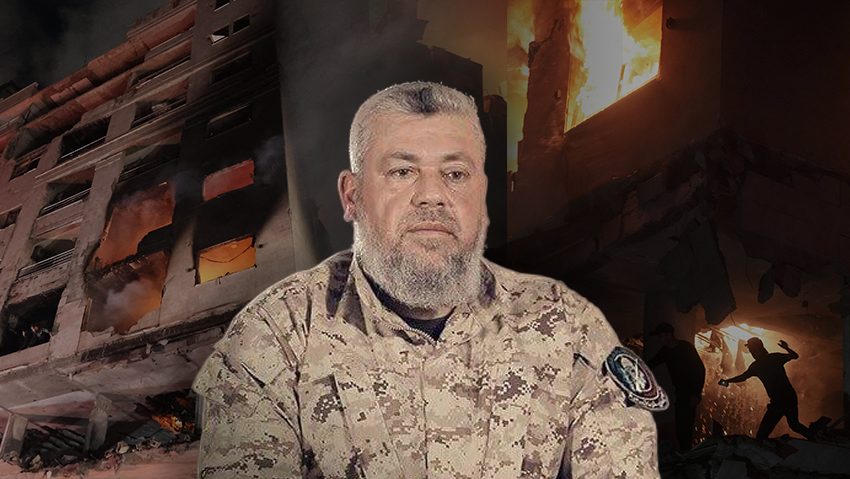
Izz al-Din al-Haddad
(Photo: Omar AL-QATTAA / AFP, AP Photo/Jehad Alshrafi)
Behavioral economics calls this present bias. We tend to value small immediate gains more highly than larger future gains. A targeted killing is an immediate achievement. So is a bombing. They photograph well, generate headlines and create a sense of victory and momentum. Preventing organizational recovery or building an alternative governing structure, by contrast, are future achievements. They require complex processes: dismantling incentives, drying up sources of power, creating regional arrangements and strengthening local non-jihadist forces. None of that looks as good on television.
And we consume targeted killings the way we consume news: a climax, a brief sense of satisfaction and then anticipation for the next episode. As if our security were a Netflix series that does not know when to end.
The assumption that killing the head of the snake would lead to the collapse of the entire system may have been true in the last century. Today, organizations such as Hamas, Hezbollah, the Houthis and the Iranian regime are not a single person. They are systems. They have hierarchies, funding channels, propaganda, collective identities, external support and the ability to recover. The question, therefore, is not only which snake’s head we eliminated, but what happens to the system afterward.
Since Oct. 7, Israel has killed a long list of senior figures in Hamas, Hezbollah, Iran and among the Houthis: Saleh al-Arouri, Mohammed Deif, Ismail Haniyeh, Yahya Sinwar, Mohammed Sinwar, Hassan Nasrallah, Hashem Safieddine and Fuad Shukr, among others, and now Haddad. It is a list that reflects extraordinary intelligence and operational capabilities. Very few countries in the world are capable of operating this way over time and across several fronts simultaneously.
No one disappeared
But despite killing an average of roughly three “heads of the snake” in each organization, none of them disappeared. Not even the Houthis, whom many Israelis had barely heard of beforehand. Hamas has been severely weakened, but still maintains a grip on Gaza. Hezbollah has suffered heavy blows, but continues to make life miserable for residents of northern Israel and to attack soldiers. The Houthis remain an irritant in the regional arena. Iran has taken significant hits, but its ideology, system and strategic ambitions have not evaporated.
We removed many heads. The question is whether we also struck hard enough at the body that keeps growing them back. Even Transportation Minister Miri Regev acknowledged this week in an interview that promises of “total victory” never truly meant eliminating the threat entirely.
 Prof. Guy HochmanPhoto: Yuval Taboul
The debate, therefore, is not about the killings themselves. It is about what they are meant to achieve and what comes afterward. If this is the first stage of a strategy to strangle the organization from every direction — damaging command capabilities, preventing the crowning of successors and creating a reality in which the group struggles to recover — then there is a chance of reaching something closer to total victory.
But if the killing itself is the objective, and afterward we simply wait for the name of the next target, then this is less an achievement than a remake of “Groundhog Day”: assassination, successor, assassination, successor. At least in the original film, Bill Murray realized he had to change something about himself before he could wake up to a new morning.
Perhaps we, too, will escape the loop once we realize we are probably doing something wrong. Each time we win the battle and lose the war.
Yes, there is also a moral problem
Because unpleasant as it may be to say, there is also a moral issue here. Not because force should not be used against those who seek to destroy us. “The righteous shall rejoice when he seeth the vengeance; he shall wash his feet in the blood of the wicked.” Rather, because there is a difference between using the power and sophistication of our military to carve a few more notches into the rifle stock and eliminating the existential threat to Israel.
A targeted killing, therefore, should be a moment of cautious satisfaction, not euphoria. It is good that there are fewer monsters walking the earth. And it is important that our enemies know in advance that anyone who tries to harm us seals his own fate. But instead of gambling on the name of the next target, perhaps we should remember this: The future may seem distant, but eventually it arrives. We should think about that, too.
A targeted killing is sometimes a necessary beginning. But it cannot be the end of the story. Our security is not measured by the number of arch-terrorists eliminated, but by the number of organizations still capable of producing new ones.
- The writer is an expert in behavioral economics and decision-making and a faculty member at the Baruch Ivcher School of Psychology at Reichman University.