

After Operation Rising Lion, Prime Minister Benjamin Netanyahu boasted that Israel had removed two immediate existential threats: the threat of nuclear annihilation and, in his words, the threat of annihilation by 20,000 ballistic missiles. “Had we not acted now, the State of Israel would soon have faced the danger of destruction,” Netanyahu said.
Eight months later, Israel is once again warning the world that Iran’s ballistic missile program threatens the entire region. Tehran insists the issue is a “red line” in negotiations with the United States and, at least publicly, refuses to discuss it. The very fact that Washington plans to continue talks despite Iran’s refusal has raised concerns in Israel.
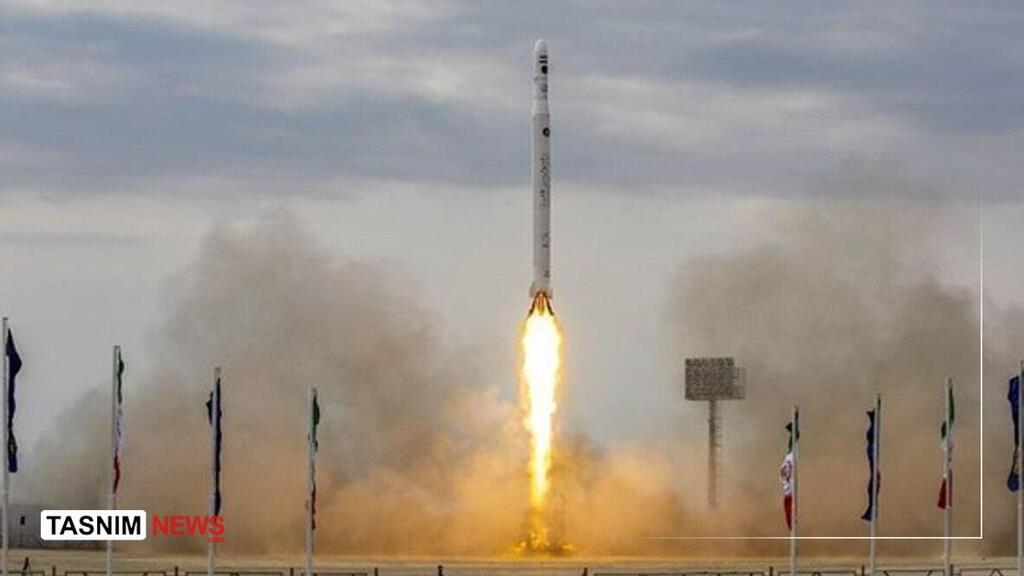
Just before Netanyahu departs for the United States to present Israel’s demand to President Donald Trump not to waive limits on Iran’s ballistic missiles—and not to settle for a nuclear-only agreement—ynet lays out the Iranian missile program threatening the region, and the key questions surrounding it.
How do the missiles work?
Iran’s ballistic missiles, like any standard ballistic missile, go through three stages after launch: acceleration, during which the engines propel the missile to the required speed; free flight in space, without engine thrust, until it reaches the apex of its ballistic arc; and descent, as it reenters the atmosphere. The missile loses most of its speed but continues traveling at thousands of kilometers per hour. During the penetration phase, the warhead usually reenters the atmosphere until it explodes over the target or is intercepted.
What has happened since Operation Rising Lion?
After the June 2025 war, Israeli assessments suggested that about 200 missile launchers—roughly half to two-thirds of Iran’s ballistic launcher inventory—had been destroyed. When it comes to missile numbers, however, the picture is very different. In June, the military said Tehran had already decided—before the war—to ramp up production to 2,500 to 8,000 missiles per year.
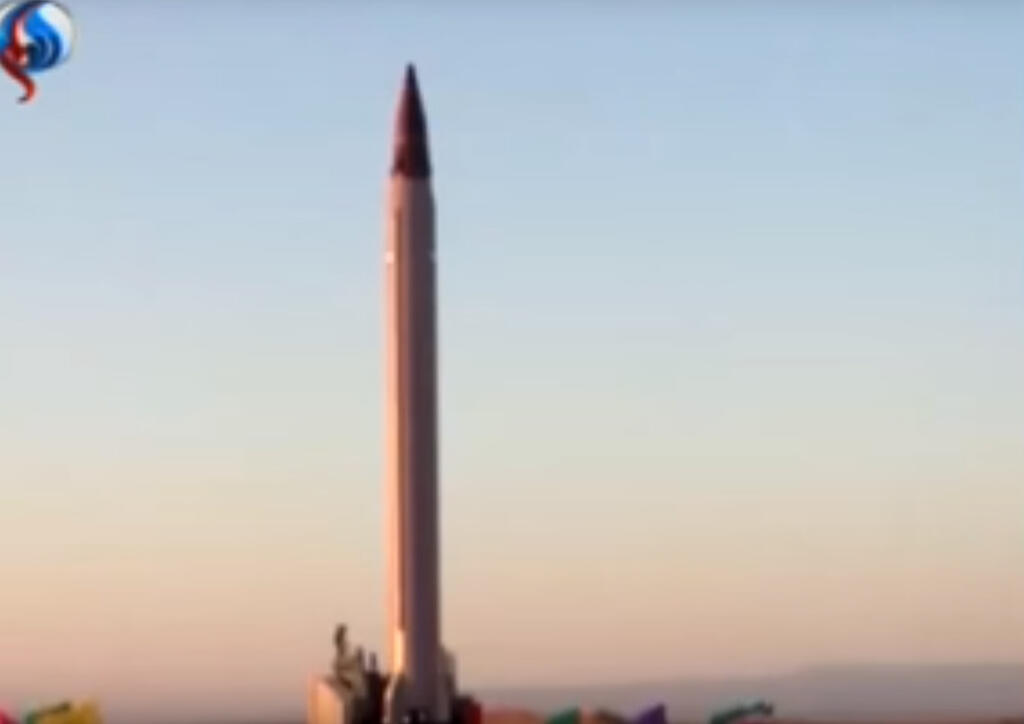
Imad missile, which has a range of approximately 1,700 km
Military analyst Ron Ben-Yishai noted that Iran is now producing hundreds of ballistic missiles every month. Most are liquid-fueled, but some are precision missiles using solid fuel. The quality is not particularly high, he said, but the sheer quantity would make it difficult for U.S. and Israeli air-defense systems to intercept them all.
How do the missiles serve Iran?
The mere existence of the missiles—without launching them—serves Tehran no less. Lessons drawn by the regime from the 12-day war led it to understand that missiles constitute a deterrent—perhaps almost the only one it has left—as long as it lacks a functioning nuclear program or the ability to develop nuclear weapons. In the West, the missiles are seen as a conventional threat to the entire Middle East—but not only that: they could also be used to carry nuclear warheads should Iran develop them.
Which Iranian missiles can reach Israel?
Iran has ballistic missiles of various ranges. According to Iranian statements, the maximum range is about 2,500 kilometers. According to the Washington-based CSIS think tank, Iran possesses several missiles capable of striking Israel—some of which were used in the 12-day war: Sejil, a solid-fueled missile with a range of about 2,000 km; Emad, liquid-fueled, with a range of about 1,700 km; Qadr, with a range of about 2,000 km; and Khorramshahr, also with a range of about 2,000 km, designed to carry a very heavy warhead of up to 1.8 tons.
What can hit U.S. bases?
According to another research institute, Iran’s ballistic missile program includes missiles capable of striking all U.S. bases in the Middle East. These include Shahab-1, with a range of about 300 km; Zolfaghar, about 700 km; Shahab-3, about 800–1,000 km; and additional models.
Underground base uncovered in Iran for storing missiles and various weapons


Iran’s missiles are divided into families. According to Calcalist, the Shahab family is the most widespread in Iran’s arsenal. Most are liquid-fueled and therefore require fueling before launch—something that complicates operations and creates “intelligence noise.” The family includes the older Shahab-3 missiles; the Emad, described by Iran as highly accurate; the Qadr, a two-stage missile that includes a solid-fuel engine to shorten launch preparations; and the Qiam, whose range is too short to reach Israel.
Where are the launch sites?
Many Iranian launch sites are located in and around Tehran. During Operation Rising Lion, Israel nearly paralyzed missile launches from western Iran—the area closest to Israel—effectively limiting Iran’s ability to fire shorter-range missiles. In addition, Iran is known to operate underground “missile cities” in several provinces, including Kermanshah in western Iran, Semnan in the north, and the Persian Gulf region.
Where else have Iranian missiles proven themselves?
In Israel, some Iranian missiles caused significant destruction. During Operation Rising Lion, Israel’s air-defense systems intercepted hundreds of ballistic missiles, but those that got through caused extensive damage and killed 29 people. The interception rate stood at 86%. The missiles that struck left images of shattered apartments and buildings destroyed entirely, with many others still standing but heavily damaged.
Iran has not used its missiles only against Israel. Last June, Tehran fired 13 missiles at the Al Udeid base in Qatar in response to U.S. participation in the bombing of the Fordow nuclear facility. Iran has threatened that next time it will not give the Americans advance notice, as it did in Qatar—an attack in which no one was hurt. In 2024, Iran claimed it bombed a “Mossad headquarters” in Iraqi Kurdistan, causing extensive damage to a building, though there is no proof or clear link that it served the intelligence agency.
Iran has also launched missiles at Pakistan and absorbed retaliatory fire, and in 2020, following the killing of Qassem Soleimani, fired missiles at Ain al-Asad base in Iraq, where U.S. forces were stationed. The most memorable attack—one in which the U.S. and Saudi Arabia believe Iran was involved—was the 2019 strike on Saudi Aramco oil facilities. Iran denied involvement, but Riyadh and Washington were convinced the Islamic Republic was behind it.
What does Israel want?
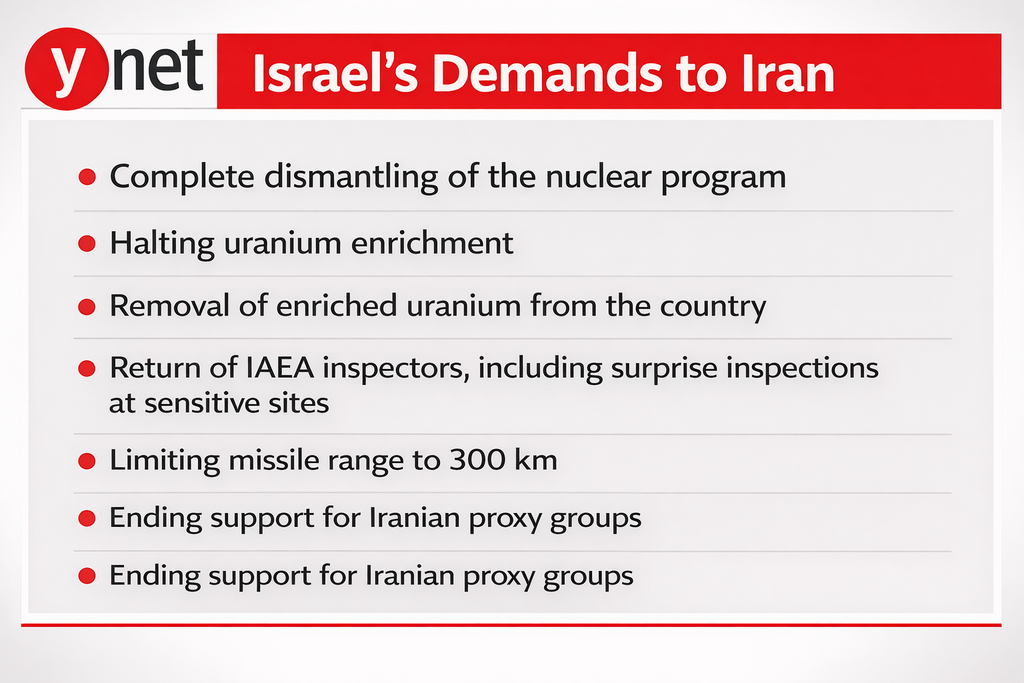
Israel fears that President Trump, by engaging in negotiations with Iran, does not see the ballistic missile program as a red line. Netanyahu therefore plans to fly to Washington to deliver the message that Iran is at a point of weakness—and that this is an opportunity to dismantle it. His core message to Trump will be that these missiles pose an existential threat to Israel in the ranges and quantities Iran is planning, and that Israel must once and for all be ensured freedom from the threat of annihilation.
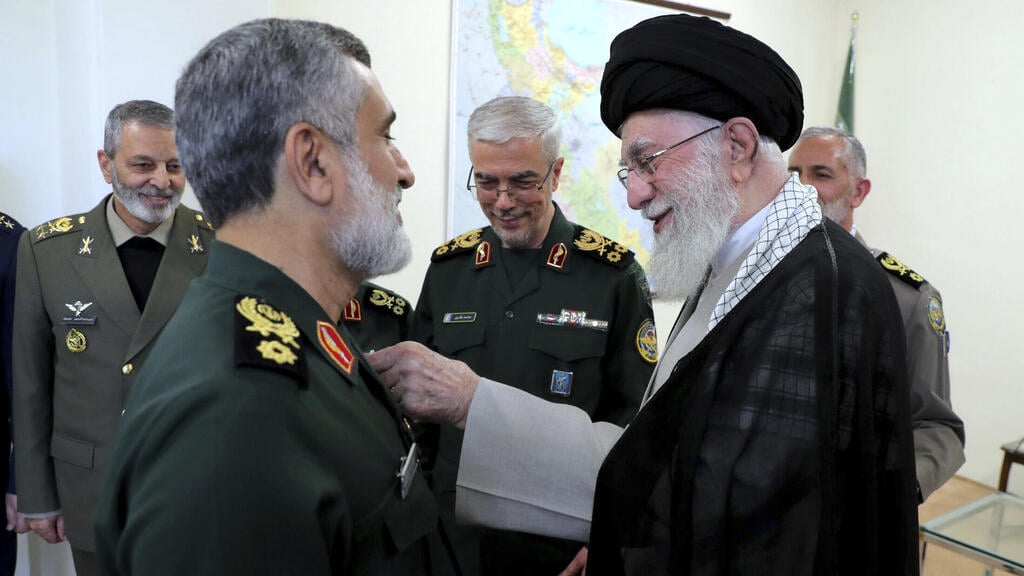
Khamenei awards decoration to Commander Hajizadeh
(Photo: Office of the Iranian Supreme Leader via AP)
What is Iran's position on restrictions?
Tehran refuses—at least publicly—to discuss any limits on its ballistic missile program, signaling that it sees the missiles as a defensive tool, especially now that its nuclear program is no longer functioning. Last week, figures in the Islamic Revolutionary Guard Corps claimed that, thanks to the missile program, the United States refrained from attacking Iran and instead chose negotiations. “The United States returned to negotiations in humility,” said IRGC official Yadollah Javani.
Who built the program?
According to The Wall Street Journal, the missile arsenal was the life’s work of Amir Ali Hajizadeh, commander of the IRGC’s Aerospace Force, who was killed at the outset of Operation Rising Lion.
Hajizadeh joined the IRGC during the Iran-Iraq War, when the Guards were assigned the mission. In 2009, after taking command of the force, he drove the missile program to a new level. Hajizadeh planned Iran’s response to the killing of Soleimani and was also documented as responsible for Iranian attacks on Israel in April 2024 and October of that year.
“The foreigners around us are not secure, but Iran is at the peak of stability,” Hajizadeh said in a 2015 interview with Iranian state television.