



Nearly a month has passed since a group of countries, led by France, recognized a Palestinian state during a session of the UN General Assembly. Even before the recognition, Israeli officials held extensive discussions about how to respond to the diplomatic wave, and Prime Minister Benjamin Netanyahu promised ahead of his recent trip to the United States: “The response to the latest attempt to force upon us a terror state in the heart of our land will be given after my return from the United States. Stand by.”
However, current assessments suggest that the response has been shelved and may not materialize at all, after U.S. President Donald Trump publicly vetoed any Israeli annexation of the West Bank or parts of it—a step that had been floated in Israel as a potential response. The American position has sparked concern in Israel that the lack of an official response could embolden additional countries to recognize a Palestinian state in the near future.
US President Donald Trump rules out any Israeli annexation of the West Bank
(Video: Reuters)


Ahead of the UN vote, Israel had threatened firm diplomatic retaliation, particularly against France and President Emmanuel Macron, who championed the recognition effort. Hardliners in Netanyahu’s government called for annexing all of the West Bank, or at least the Jordan Valley. The Prime Minister’s Office said a decision would be postponed until after Netanyahu’s meeting with Trump. But even after his return, no steps were taken. Instead, Trump’s veto effectively removed the most significant response from the table.
The Foreign Ministry had recommended closing the French consulate in Jerusalem, but France warned it would retaliate with diplomatic measures of its own. French media reported that Paris was prepared to reduce the Mossad intelligence agency's footprint in France and expel Israeli diplomats. The UK also warned Israel that any retaliatory action would trigger immediate countermeasures.
‘Waiting for instructions from the White House’
Israel officially condemned the recognizing countries—France, Britain, Australia, Canada, Portugal, Monaco, Luxembourg, Malta and San Marino (Belgium and Andorra also recognized the Palestinian state but imposed conditions)—but took no further action.
Senior officials in Jerusalem confirmed that no decisions have been made and said there were "other dramatic matters" in recent weeks. They cited the high-profile hostage deal, the end of the war and Trump’s historic visit to Israel as events that had diverted attention. “In any case, a bit of discretion never hurts,” one official said.
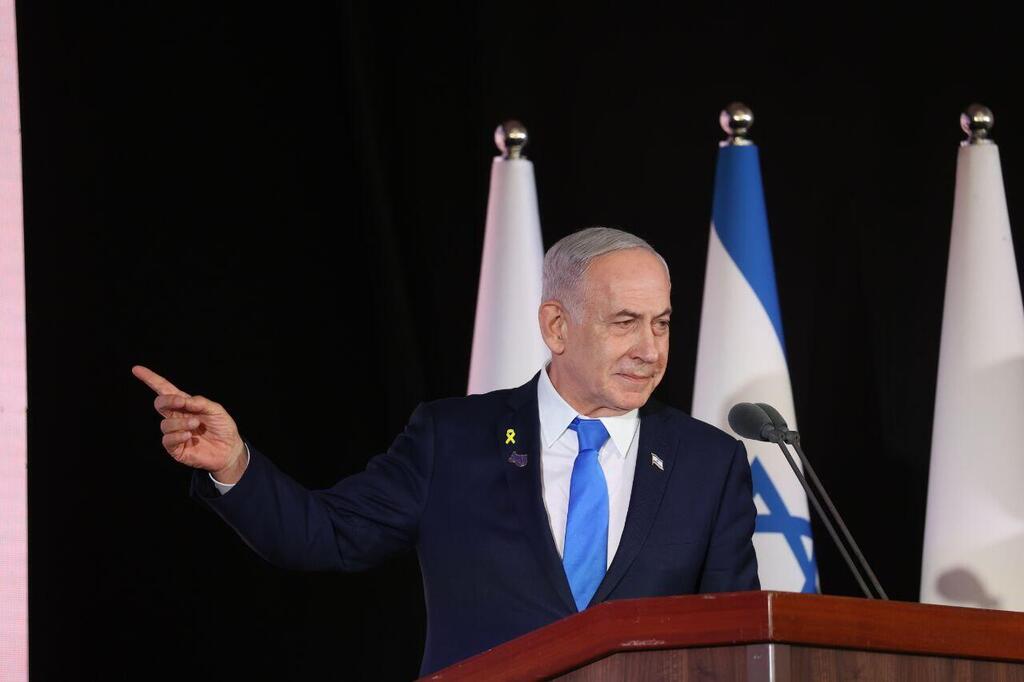
Prime Minister Benjamin Netanyahu
(Photo: Alex Kolomoisky)
Still, critics see that explanation as a pretext. The lack of response, they argue, undermines Israeli deterrence and could open the door for additional recognitions by countries such as Japan, South Korea, the Netherlands, Italy and New Zealand—all of which refrained from joining the current wave.
A senior political source said the absence of a response signals a loss of relevance: “Trump tells us what’s in and what’s out. We’re not leading—just following.” The source added: “COGAT may still be coordinating with international actors regarding aid, but everyone else is either pretending to influence the process or just waiting for instructions from the White House. It seems we’re letting this just fade away.”