

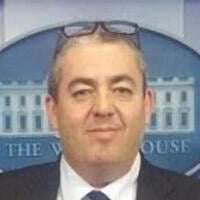
The farewell ceremony for outgoing Mossad chief David Barnea was held Monday night after a delay caused by a lengthy call between Prime Minister Benjamin Netanyahu and U.S. President Donald Trump on the ceasefire in Lebanon.
Incoming Mossad chief Roman Gofman, whose appointment was cleared by the High Court of Justice just hours earlier, arrived at the ceremony with Netanyahu. The two shook hands with Barnea, who mentioned Gofman twice in his speech, telling him, “Be strong and courageous, and good luck,” and adding, “We are counting on you.”
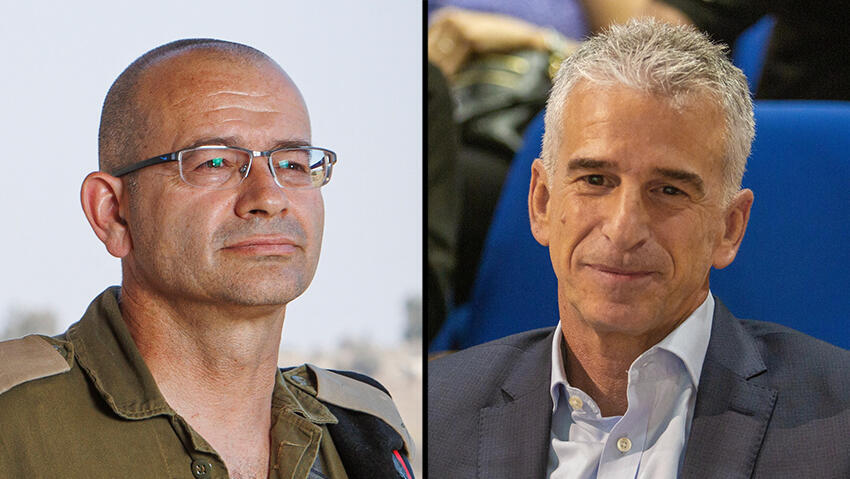
Netanyahu praised Barnea in remarks at the ceremony, which lasted more than two hours. Former prime minister Naftali Bennett also attended and applauded parts of Netanyahu’s speech. Defense Minister Israel Katz did not attend, while Knesset Speaker Amir Ohana arrived directly from the airport after returning from New York.
Barnea praised Netanyahu for decisions he had made, thanked President Isaac Herzog for assisting the Mossad with diplomatic ties and commended Military Intelligence chief Shlomi Binder and Shin Bet chief David Zini.
Referring to Iran, Barnea said, “Now is the time to collect on the debt and eliminate the mullah regime entirely.”
Herzog also addressed the ceremony, telling Barnea: “During your tenure as Mossad chief, you wrote a golden chapter in the history of Israel’s security — a chapter of deepening operational capabilities in and against Iran, a chapter in which our enemies learned again that the State of Israel’s arm is long, sharp, sophisticated and cool-headed.”
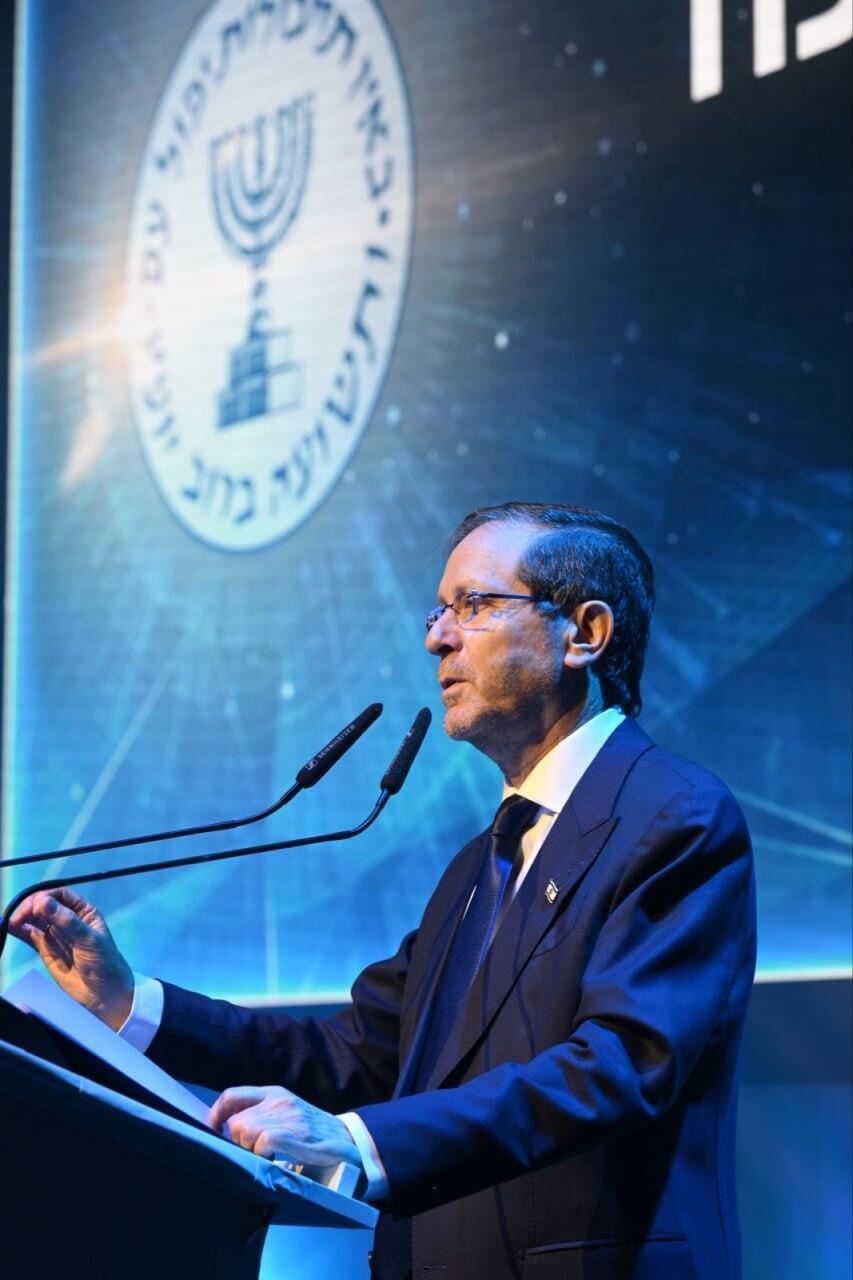
President Isaac Herzog
(Photo: GPO)
Gofman is entering the role after the High Court rejected petitions against the appointment of Netanyahu’s military secretary. Justices Ofer Grosskopf and Alex Stein rejected the petitions, while Justice Daphne Barak-Erez dissented, saying the vetting process should continue.
Gofman’s appointment also follows the unusual circumstance of opposition from the outgoing Mossad chief. Unlike most Mossad directors in recent decades, Gofman comes from the military and the Prime Minister’s Office rather than from inside the agency. Barnea and many senior Mossad officials had preferred an internal candidate, arguing that a clandestine operational agency should be led by someone familiar with its personnel and methods. Supporters of the appointment said Gofman’s command and operational experience could bring a fresh perspective during a complex security period.
Gofman takes over at one of the most challenging moments the agency has faced in recent years. His central mission will be preventing Iran from obtaining a nuclear weapon, while also confronting its ballistic missile program, blocking aid to Tehran’s proxies and overseeing covert operations across multiple theaters.
The Mossad under Gofman will also be tasked with monitoring whether Iran is violating any future agreement, advancing its nuclear program, accelerating missile production or smuggling weapons to Gaza and to Arab citizens of Israel.
Counterterrorism is expected to remain high on the agency’s agenda, amid assessments that Iran, weakened and seeking revenge, will try to target Israelis and Jews abroad. The Mossad will be required to operate globally to prevent attacks on Israeli institutions and Jewish communities, particularly after the deadly Hanukkah attack at Bondi Beach in Sydney.
Gofman enters the job without experience in the intelligence community and will have to prove he is suited to lead Mossad, rather than being appointed because of loyalty to Netanyahu. Before he took office, one senior Mossad official, the head of the Tevel division, known as D., announced he was leaving the agency. Additional senior departures are expected.