


Prime Minister Benjamin Netanyahu is set to depart early Sunday morning aboard the Wing of Zion aircraft for a high-stakes diplomatic summit with U.S. President Donald Trump, where the two will discuss a wide range of political, security and regional issues. The goal is to reach decisions on the most pressing matters on the agenda, led by Iran, Syria, Lebanon, the disarmament of Hamas and a move to the second phase of the president’s plan for the Gaza Strip. The meeting is the first between the two leaders since Netanyahu sought a pardon in his trial, encouraged by the American president.
Netanyahu arrives at the White House earlier this year
(Video: Guardian News)


The Netanyahu–Trump meeting will take place at Mar-a-Lago, the president’s private estate in Florida. While the prime minister’s exact flight schedule has not yet been finalized, it is known that the meeting is expected to be held on Monday afternoon U.S. time, meaning the overnight between Monday and Tuesday in Israel. A trilateral summit involving Netanyahu, Trump and Egyptian President Abdel Fattah el-Sissi is no longer on the agenda, despite the gas agreement signed between Jerusalem and Cairo. Sissi is believed to fear that a joint photo with Netanyahu amid the prolonged war in Gaza could harm his standing at home.
On the way to Florida, the Wing of Zion is expected to make a refueling stop, possibly at Joint Base Andrews near Washington. A second meeting between Netanyahu and Trump has not yet been scheduled, but as in past visits, it is likely to take place.
Gallery
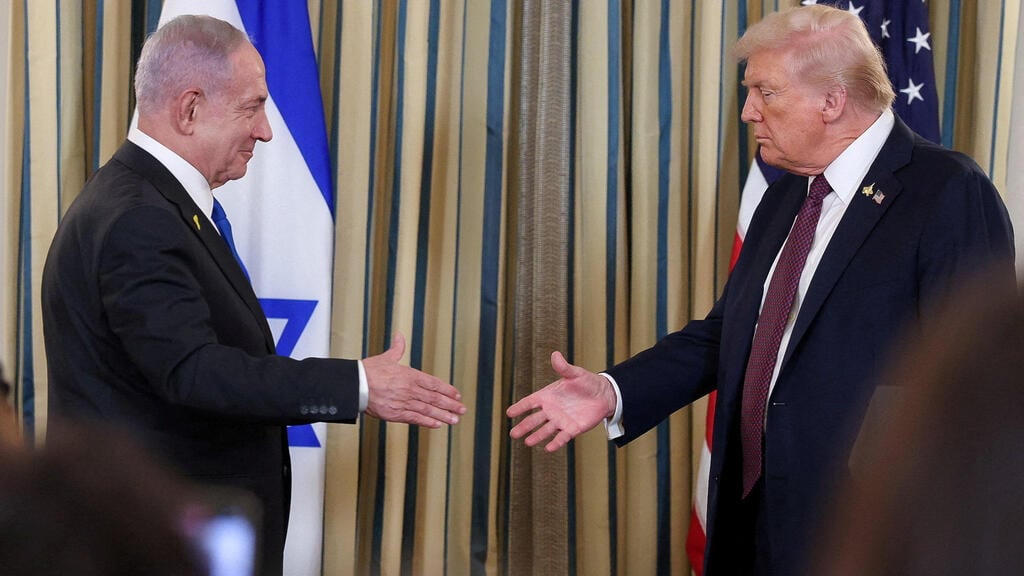
Netanyahu and Trump at a press conference at the White House in September
(Photo: Jonathan Ernst/Reuters)
From Israel’s perspective, Iran will be the central issue. Netanyahu is expected to present Trump with updated intelligence on Iran’s progress in accelerating its ballistic missile program and in renewing support for its proxies through weapons and cash smuggling.
According to a senior political source, there is a need to coordinate positions in light of Iran’s advances. Netanyahu will also present Trump with the options on the table if necessary: a U.S.-Iran agreement that addresses all outstanding issues; an Israeli military strike; or a joint Israeli-American strike.
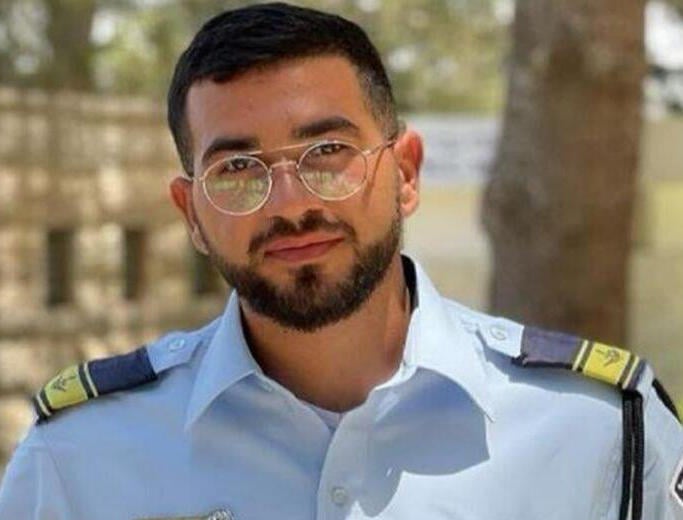
The last hostage in Gaza, Ran Gvili
(Photo: Israel Police spokesperson)
In Israel, officials understand that the Americans are not eager for another military confrontation with Iran following the historic Midnight Hammer operation and the June strikes on Iranian nuclear facilities in Fordow, Natanz and Isfahan. Jerusalem hopes that Trump will at least give Netanyahu a green light, should an Israeli strike become necessary. What is clear, Israeli officials say, is that Iran drew conclusions from the 12-day war and Operation Rising Lion – but the wrong conclusions.
The second most important issue on the agenda will be Gaza. Netanyahu and Trump are expected to discuss how to complete the first phase and move to the second phase of the president’s plan, while the body of Sgt. Maj. Ran Gvili, the last Israeli hostage, remains in Hamas captivity, despite the terror group’s commitments under the agreement. Gvili’s mother, Talik, will join the flight and is also expected to be invited to meet Trump, following his remarks suggesting that all hostages have already been returned.
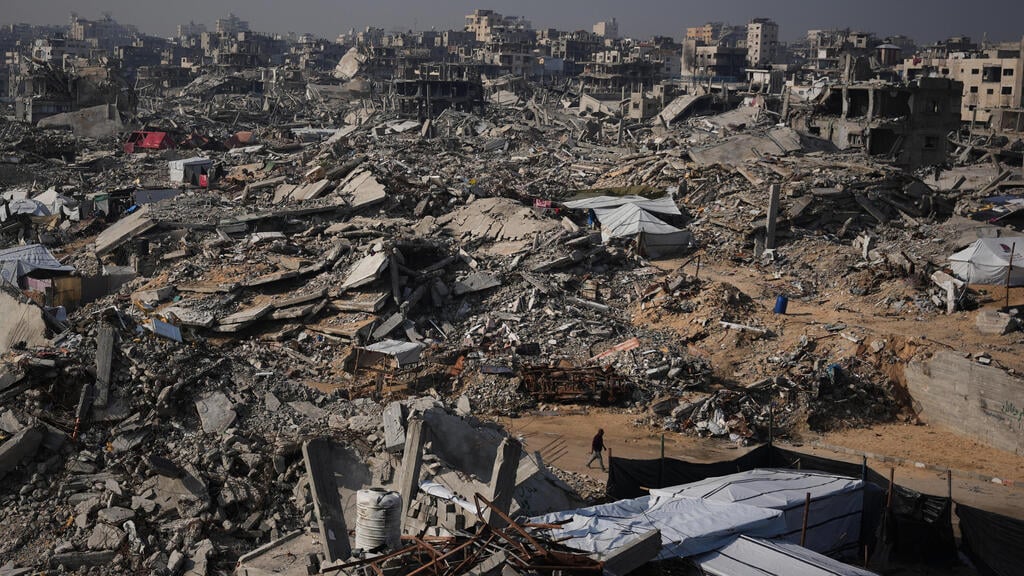
Destruction in Gaza City
(Photo: Abdel Kareem Hana/AP)
A senior political source said of the matter: “We are completing all the efforts and could have begun Phase II long ago, but Hamas is blocking it – apparently deliberately.”
The source also addressed Wednesday’s roadside bomb incident in Rafah, in which a Golani Brigade officer was lightly wounded, calling it a “significant violation.” According to the source, “Hamas operatives are not doing what is required to return Ran Gvili, and not by chance. Israel insists that Hamas be disarmed and Gaza demilitarized – not as a slogan or a show, but truly, real disarmament, which alone can offer a chance for a better future for Gaza’s residents. The Israeli message will be that ‘there is no point in starting Phase B without agreeing on Hamas’ disarmament.’”
In the background is Israeli concern over a Hamas maneuver in which, with the help of mediators, the organization would stage a symbolic handover of weapons, while keeping its real arsenal for a rainy day.
“The Americans want to move quickly and begin the reconstruction project as soon as possible, for example in Rafah,” the source said, against the backdrop of a Wall Street Journal report on “Project Sunrise,” the so-called “Gaza Riviera” initiative being promoted by presidential envoys Steve Witkoff and Jared Kushner for the massive rehabilitation of the Strip. According to the report, the pilot project is planned for Gaza’s southernmost city.
“The Americans also want to advance the establishment of a technocratic body to govern Gaza under the Peace Council,” the source added. “There is an attempt to bring in forces identified with the Palestinian Authority, and although Israel has so far blocked this, the Americans may press the issue.”
Trump and Netanyahu are also expected to discuss the establishment of an international stabilization force for Gaza, the ISF, which the Americans have struggled to assemble. Washington wants Turkey to be part of that force, but for Jerusalem this is a red line.
Another chance for al-Sharaa, amid tensions with Turkey
Another topic expected to come up in the meeting is the tension between Israel and Turkey, and the inflammatory statements by Turkish President Recep Tayyip Erdogan, who has repeatedly compared Netanyahu to Nazi leader Adolf Hitler. This comes amid reports of the formation of a joint Israel-Greece-Cyprus framework to curb Turkish influence in the region, and escalating exchanges between Jerusalem and Ankara. Just Wednesday morning, Israel was labeled “the No. 1 threat” on the front page of the Turkish newspaper Yeni Şafak, widely seen as a mouthpiece for Erdogan.
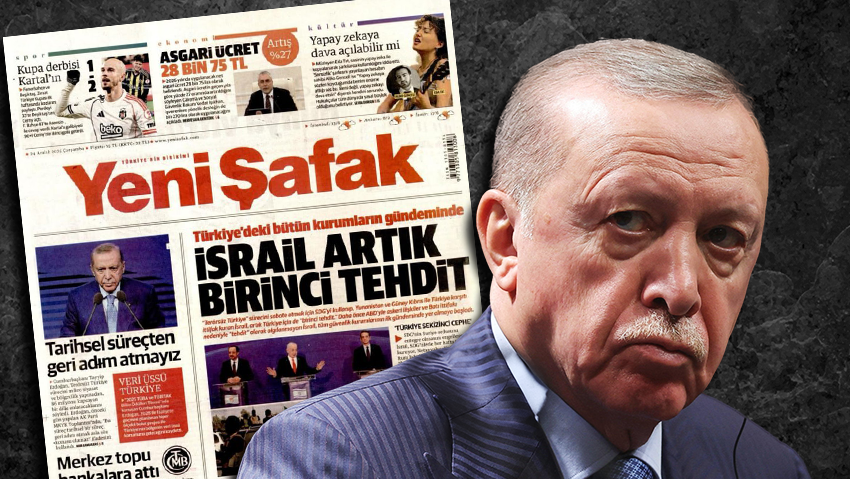
, Israel was labeled “the No. 1 threat” on the front page of the Turkish newspaper Yeni Şafak, widely seen as a mouthpiece for Erdogan
(Photo: Umit Bektas/Reuters)
Netanyahu is expected to raise Israel’s opposition to supplying advanced F-35 fighter jets to Turkey, after Trump has already approved such a deal with Saudi Arabia. In this context, Netanyahu will also discuss with Trump the next U.S.-Israel security assistance agreement, as the current one, signed under former president Barack Obama, is set to expire in 2028. The two leaders will also address the preservation of Israel’s qualitative military edge in light of U.S. arms deals planned with countries in the region.
They are also expected to discuss the ceasefire in Lebanon and the deadline given to the government in Beirut to disarm Hezbollah south of the Litani River. The Americans do not want to see an escalation in Lebanon, but Israel argues that while the Lebanese government may want to disarm Hezbollah, it lacks the real capability to do so. Netanyahu will seek to coordinate positions with Trump on the Lebanese front.
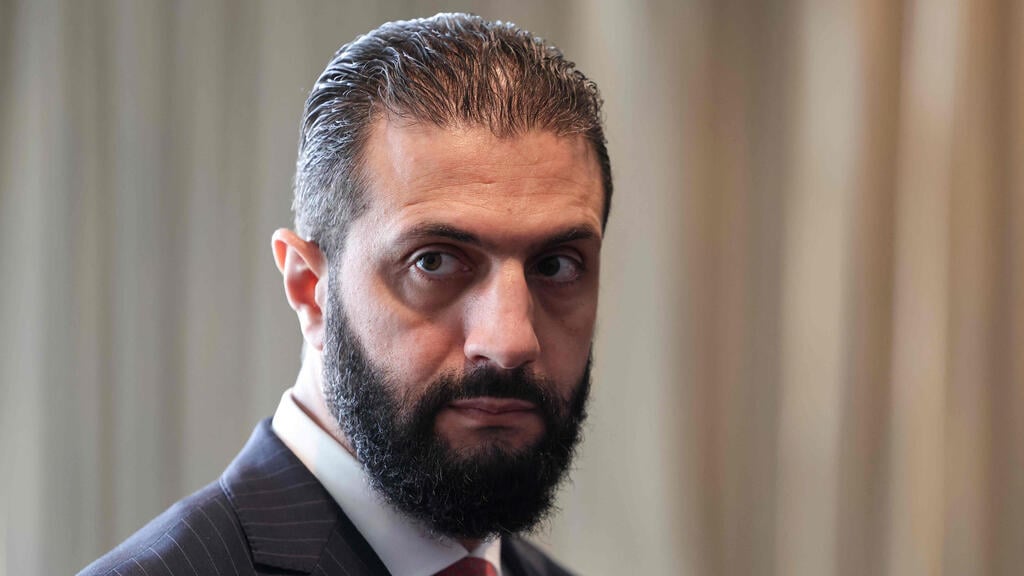
Syrian President Ahmad al-Sharaa
(Photo: Ludovic Marin / POOL / AFP)
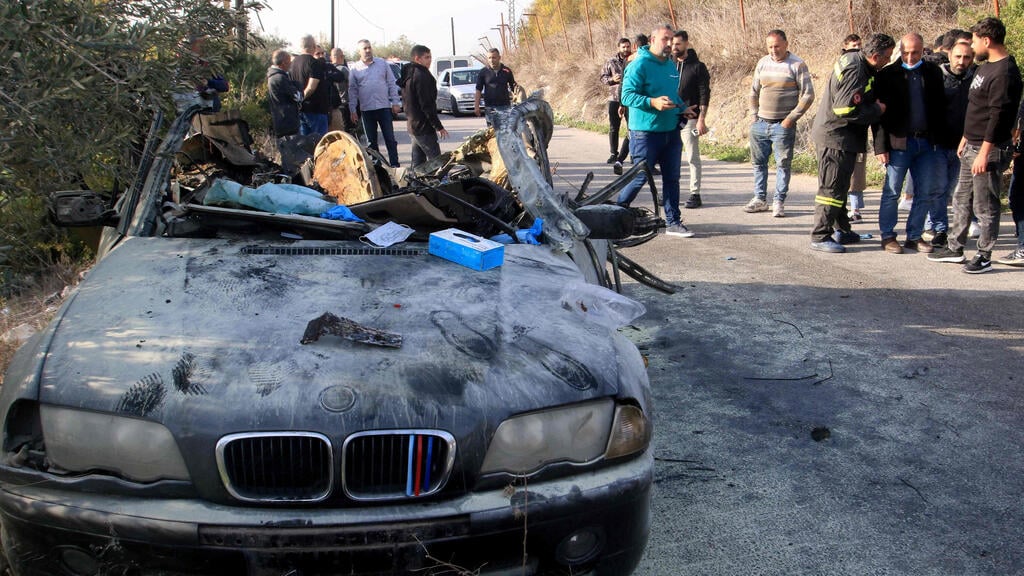
Israel attacked a vehicle in southern Lebanon
(Photo: Mahmoud Zayyat / AFP)
Another issue on the agenda is Syria. President Ahmad al-Sharaa has found a receptive ear in the White House, while talks between Israel and Syria on a security arrangement have stalled. Netanyahu needs to appoint an Israeli representative to replace outgoing minister Ron Dermer in contacts with Damascus. The Americans are pressing to renew the talks as soon as possible, and the issue could be resolved at Mar-a-Lago. It is already clear that Trump will push Netanyahu to give al-Sharaa another chance.
A senior political source said the importance of the trip is regional: “There are many things on the table. We need to discuss them all and decide what to do. The prime minister is traveling to apply pressure to bring about the end of Phase I in Gaza, and the very fact of the trip and his physical presence applies pressure.”
In Israel, officials understand that within Trump’s circle there are those pressing to move to Phase II and telling the president that Israel is being stubborn. “In the end, everything has to be settled between the leaders,” the source stressed.
Until Rani returns
Israel is conditioning progress to Phase II of the plan on the return of Yamam fighter Ran Gvili, who was killed in battle near Kibbutz Alumim on October 7, and on agreements regarding disarmament. Netanyahu has brought Gvili’s mother, Talik, on the Wing of Zion flight, and she and other family members are expected to meet Trump at Mar-a-Lago. Trump has already stated twice that all hostages have been returned, and Israel is keen to show the Americans that there is still one Israeli hostage who has not been brought home.
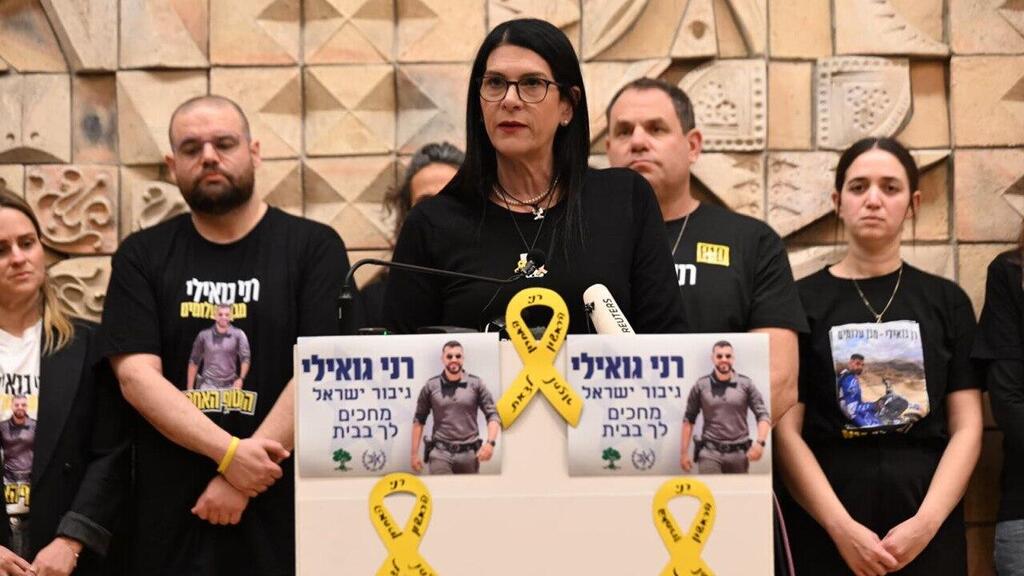
Talik Gvili speaks to reporters on Wednesday
(Photo: Paulina Pettimer)
Meanwhile, the coordinator for prisoners and missing persons, Brig. Gen. (res.) Gal Hirsch, traveled to Cairo at Netanyahu’s instruction, where he met with senior officials and representatives of the mediating countries. The meetings focused on efforts and operational details to recover Gvili, with participants from the IDF, Shin Bet and Mossad. Israel passed the mediators the names of terrorists who held the fallen hostage and know where he is buried. Hamas has so far refused to interrogate them, raising Israeli concern that the group does not want to return Gvili in order to avoid moving to Phase II, which troubles Hamas due to the disarmament issue.
A senior political source said of Hirsch’s talks in Cairo: “There were in-depth discussions, going down to details, information sharing, planning and conclusions on further efforts to locate Ran Gvili, of blessed memory. There are indications of a commitment by the mediators to make the necessary efforts to secure his return.”