


The number 2,000—the official count of those killed in Israel’s ongoing war—only begins to convey the horror of Oct. 7, the agony of captivity and the devastation that followed. Yet it is enough to mark how profoundly the past two years have differed from anything in Israel’s history.
On the eve of the hostages’ return—both the living and the fallen—the number stands as a stark reminder of the price paid in this war, and of the cost of bringing them home. The 2,000th fatality is Master Sergeant (res.) Shmuel Gad Rahamim, 31, of Giv’at Ze’ev, who was critically wounded last Tuesday by an accidental grenade explosion at an IDF post in Khan Younis. His death was cleared for publication Saturday night.
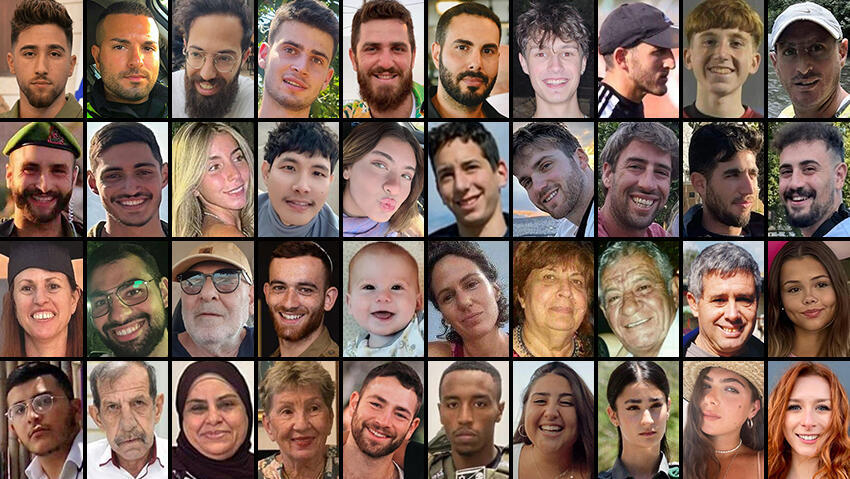
The tragedy occurred exactly two years after the Hamas massacre of Oct. 7, 2023—the deadliest day for Jews since the Holocaust. During the attack and ensuing battles in southern Israel, 1,120 civilians and soldiers were killed—804 men and 316 women. Another 86 hostages abducted that day were later found to have been murdered, most of them on Oct. 7 itself.
Rahamim is the 915th IDF soldier to fall in the war. In addition, 43 members of civilian alert squads, 100 Israel Police officers, nine Shin Bet agents and eight Israel Prison Service personnel have been killed. Among the 2,000 total dead, 393 are women and 1,607 men.
The most recent female victim added to the list is Sarah Mendelson, a longtime leader in the Bnei Akiva youth movement affectionately known as “Sarita,” who was murdered in a terror attack in Jerusalem on Sept. 8. Four women officers—the highest-ranking among female casualties—were killed in action: Cpt. Shir Eilat, an observation officer; Cpt. Sahar Saudyan, an Iron Dome officer; Cpt. Eden Nimri, a Sky Rider officer who saved 17 soldiers at the Nahal Oz outpost on October 7; and Cpt. Ron Zarfati, murdered with her partner Idan Harmati at the Nova music festival. The only woman killed in combat inside Gaza was paramedic Staff Sgt. Agam Naim, who died in Rafah in September 2024.

(Photo: IDF, courtesy of the families)
The Gaza front remains the central theater of fighting. 1,733 people were killed in or near the enclave, including 25 from rocket fire. In clashes with Hezbollah in Lebanon, 134 Israelis were killed; 24 in the West Bank; and 34 in the brief 12-day war with Iran.
Terror attacks also claimed lives elsewhere: 56 in Israel and 11 abroad, including victims in Washington, Colorado, Los Angeles, the UAE, Egypt and Manchester.
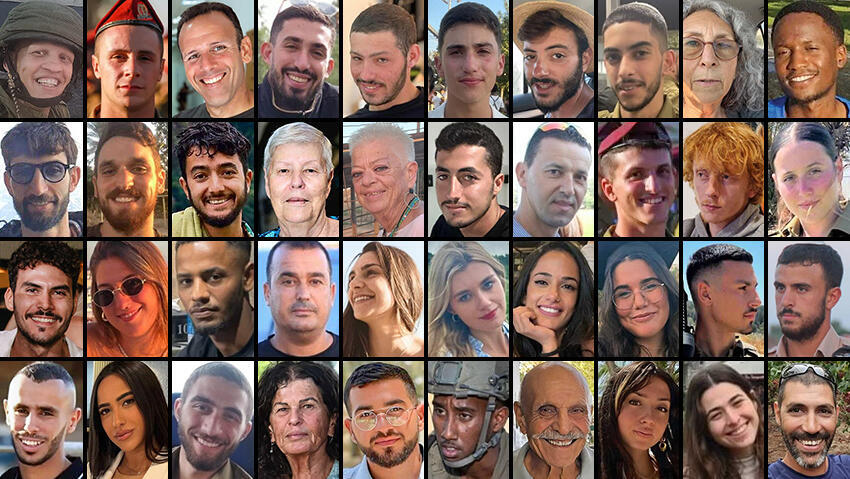
Houthi forces in Yemen have launched hundreds of drones and ballistic missiles at Israel. In the past month, around 20 people were injured when a drone struck a tourist area in Eilat. Only one Israeli was killed by Houthi fire—Yevgeny Freder, who died in Tel Aviv in July 2024. Another Israeli, Benjamin Bleacher, 68, of Rishon Lezion, died of cardiac arrest during an air raid in December 2024.
(Photo: IDF, courtesy of the families)
Two soldiers, Sgt. Daniel Aviv Haim Sofer and Cpl. Tal Dror, were killed in northern Israel by a drone launched from Iraq. In Syria, one soldier, Sgt. Niv Dayag, died in a military vehicle accident.
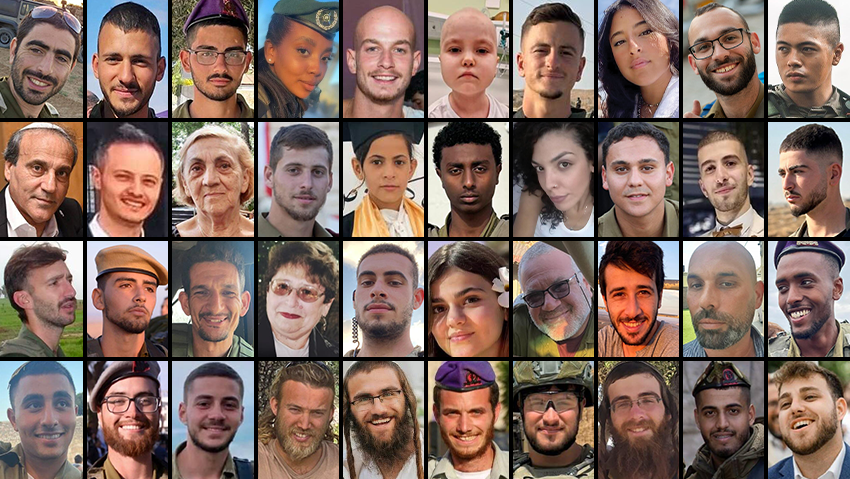
Of all the war’s fatalities, 458 soldiers were killed in fighting against Hamas in Gaza (excluding Oct. 7 battles), 57 in Lebanon and 10 in the West Bank.
Hezbollah’s rocket and drone attacks proved deadlier than Hamas’: 54 Israelis were killed by rockets and missiles, and 16 by drones launched from Lebanon. Thirty were killed by Iranian missiles during the June war and 23 by rockets from Gaza.
(Photo: IDF, courtesy of the families)
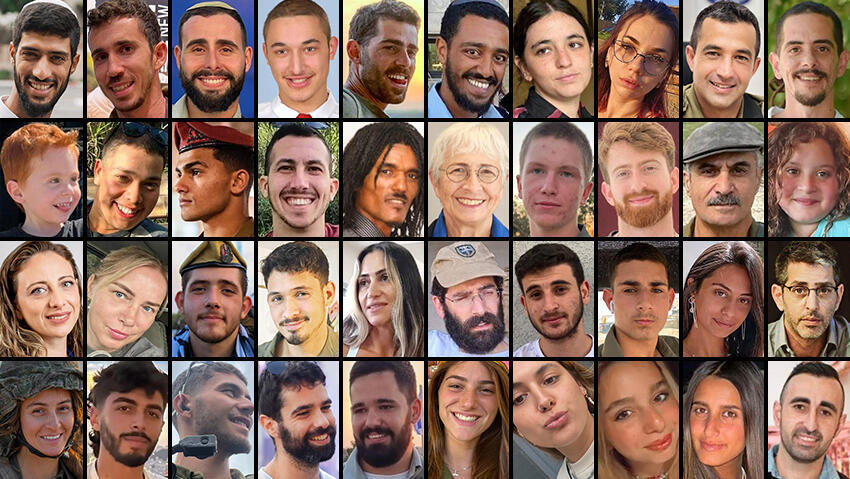
The majority of those killed—1,137—were between the ages of 18 and 30. Among them were 616 aged 18–22 and 521 aged 23–30. But the list also includes infants and children. The youngest victim was Naama Abu Rashed, a 14-hour-old newborn whose mother was wounded on Oct. 7 while nine months pregnant. A year later, she gave birth again in the same hospital where Naama had died.
Ravid Chaim Gez, born after his mother was murdered in a shooting near Bruchin, died at 15 days old. Kfir Bibas, abducted at nine months with his mother Shiri, 32, and older brother Ariel, 4, was later murdered in Gaza. Mila Cohen, 10 months old, was the youngest victim at Kibbutz Be’eri.
Other young victims include six children under ten—among them Omer, 2, Shahar, 5, and Arbel, 5, Kedem-Siman Tov, murdered with their parents; Ethan, 5, and Aline, 8, Kapshetar, killed with their parents near Ashkelon; and Yazan Zakaria Abu Jamaa, 5, killed by a rocket near his home.
(Photo: IDF, courtesy of the families)
Two Ukrainian-Israeli children, Nastia Borik, 7, and Konstantin Totvich, 9, who came for cancer treatment, were killed by an Iranian missile in Bat Yam. In total, 61 children under 17 were killed in the war, including 12 in a Hezbollah rocket strike on the Druze town of Majdal Shams.
Six IDF colonels have been killed: Asaf Hamami, whose body remains in Hamas hands; Yehonatan Steinberg, the first soldier declared dead; Roy Levy, commander of the Multidimensional Unit; Ehsan Daxa, commander of the 401st Brigade; Itzhak Ben Basat, of the Golani Brigade; and Lion Bar, a reservist who rescued dozens of civilians on Oct. 7 and was killed the next day.
Among those killed were seven 18-year-old soldiers and four Israelis over the age of 90. The oldest victim was Ivette Shmilovitz, 95, a Holocaust survivor killed by an Iranian missile in Petah Tikva. Moshe Ridler, 91, known as “the grandfather of Kibbutz Holit,” was murdered with his caregiver in the Oct. 7 massacre. Gina Semiatich, 90, was summarily executed by terrorists in her home in Kissufim, and Bella Ashkenazi, 90, was killed by an Iranian missile in Bat Yam.
Two thousand names. Two thousand stories. A nation changed forever.